Green beans
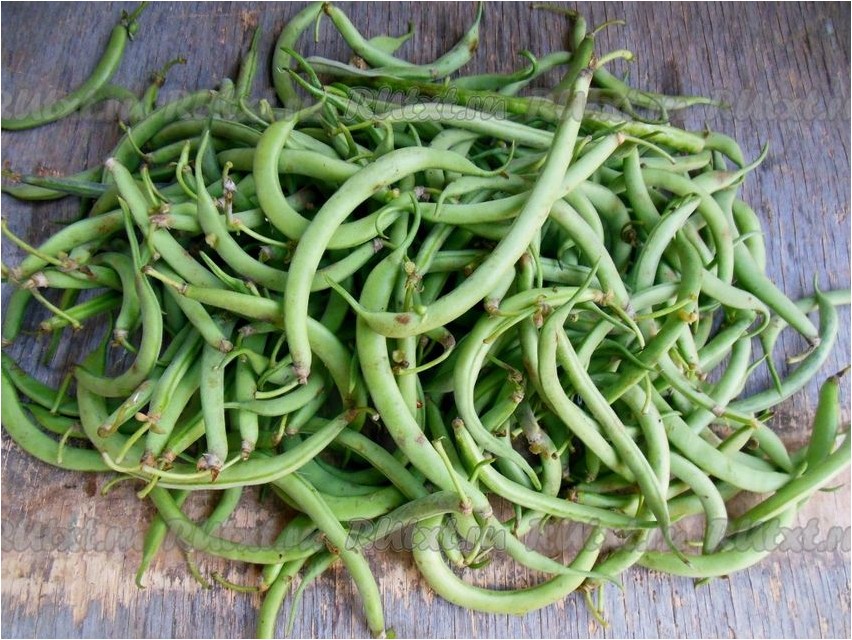
Green beans are a climbing or bush plant native to Central and South America. This crop is often called green beans.
History
Green beans have been known to mankind since time immemorial. This culture was especially valued by the ancient Romans, who consumed beans not only for food, but also widely used them for cosmetic purposes — they made decorative powder from this valuable product, which had a softening effect and smoothed out wrinkles. Moreover, beans were one of the most important components of the face masks of the great Cleopatra.
Beans first came to Europe only in the 16th century — Spanish and Dutch sailors brought this crop from distant South America. And a little later, beans appeared on the territory of Russia — in those ancient times they were called “French beans”. True, at first this crop was cultivated exclusively for decorative purposes — beans began to be eaten only in the 18th century. Currently, there are over fifty varieties of green beans in the world.
Description
Green beans can be either bush or climbing. And its color can be purple, yellow, green or white with quite interesting purple streaks. Occasionally you can find beans with pink pods. Bush beans, compared to their climbing counterparts, are less thermophilic and do not require support at all. And climbing beans almost always produce many more pods.
The difference between green beans and regular beans
Green beans differ from ordinary beans in that they are usually eaten in whole pods without opening them. At the same time, only young green pods are edible; moreover, they are considered to be an integral component of modern dietary cuisine. But overripe pods are not suitable for eating — they become harsh, dry and take a very long time to cook.
Sowing
It’s definitely not a good idea to sow bean seeds too early — they can easily die during frost. The best time for sowing green beans in central Russia is considered to be the period from the twentieth to the twenty-fifth of May — as a rule, the soil has time to warm up thoroughly by this time. If the soil on the site is quite heavy and warms up with great difficulty, then it is quite acceptable to postpone the sowing of this crop to the beginning of summer. True, too heavy and acidic soils are completely unsuitable for its favorable development, but beans will thrive on fertile and light soils.

Ideally, the germination rate of green beans should be at least 90%. And before you start sowing it, it is recommended to properly prepare the seeds. The best temperature for their development will be from eighteen to twenty-five degrees.
If after sowing green beans the weather becomes quite cold, the plants may be affected by various ailments. And during drought, flowers often begin to fall off.
In order to get an early harvest, you can plant green beans in seedlings. Experienced gardeners have noted that seedlings take root best next to beets, cucumbers, potatoes or cabbage — green beans in this case do not even require fertilizing. But celery or onions have a depressing effect on beans.
Diseases and pests
Green beans suffer quite often from various diseases and pests. Most often it is affected by a disease such as anthracnose. Bacterial spotting is no less harmful.
And among the pests, the greatest damage to this crop is caused by slugs, which very actively eat young plants. If green beans are grown in greenhouses, then they can also be damaged by spider mites.