Norwegian cinquefoil
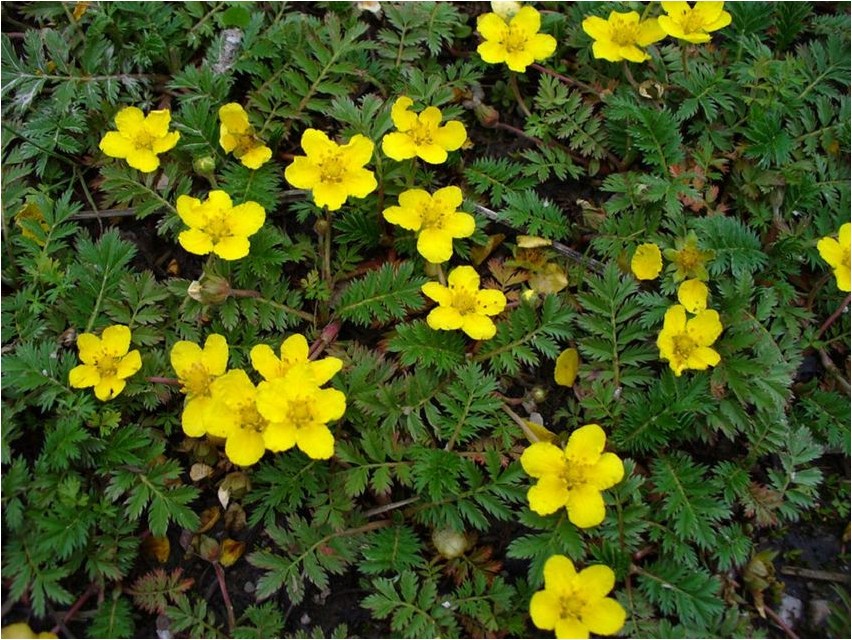
Norwegian cinquefoil is one of the plants of the family called Rosaceae; in Latin the name of this plant will be as follows: Potentilla norvegica L.
As for the name of the Norwegian cinquefoil family itself, in Latin it will be: Rosaceae Juss.
Description of Norwegian cinquefoil
Norwegian cinquefoil is an annual, biennial, three-year or four-year plant, the height of which will vary between fifteen and twenty centimeters. The root of this plant will be simple. The stems of this plant are simple, they will usually be straight, they can be either single or in several pieces. The stems of the Norwegian cinquefoil will be multi-leafed, branched at the top, and will also be covered with hard protruding hairs. The leaves of this plant will be trifoliate, and sometimes they may be protruding and hairy. The flowers of the Norwegian cinquefoil are quite numerous. The calyx of this plant is hairy, the petals will be small, they can be either equal or shorter than the sepals. Norwegian cinquefoil blooms from June to September.
Under natural conditions, this plant is found in the territory of Moldova, the Far East, Ukraine, Western and Eastern Siberia, as well as in all regions of the European part of Russia, with the exception of the Lower Volga region. For growth, Norwegian cinquefoil prefers vegetable gardens, wastelands, edges of fields and roads, clearings, places near houses and along river banks.
Description of the medicinal properties of Norwegian cinquefoil
Norwegian cinquefoil is endowed with very valuable healing properties, and it is recommended to use the rhizomes and grass of this plant for medicinal purposes. The concept of grass includes the flowers, stems and leaves of this plant.
The presence of such valuable healing properties should be explained by the content of tannins in the rhizomes of this plant, while the grass contains tannins and carotene, and the leaves contain phenol carboxylic acids and their following derivatives: quercetin, kaempferol, caffeic, ellagic and ferulic acids in hydrolyzate. A decoction prepared from the roots of this plant is recommended for use against scrofula and angina. It should be noted that Norwegian cinquefoil is endowed with the ability to exhibit antibacterial activity.

For angina pectoris, it is recommended to use the following very effective remedy based on the dry rhizomes of this plant: to prepare such a very healing remedy based on Norwegian cinquefoil, it is recommended to take one tablespoon of crushed dry rhizomes of this plant per three hundred milliliters of water. The resulting medicinal mixture should be boiled over low heat for about six to seven minutes, after which such a medicinal mixture based on this plant should be infused for at least two hours, after which such a medicinal decoction based on Norwegian cinquefoil should be very carefully filtered. Take this healing remedy based on this plant three to four times a day, one-third of a glass. It is noteworthy that in order to achieve the greatest effectiveness when taking such a medicinal product, it is recommended not only to strictly follow all the rules for preparing such a medicinal product based on Norwegian cinquefoil, but also to carefully follow all the rules for taking such a medicinal product. It should be noted that only in this case will the use of a healing agent bring a positive result, which will be noticeable quite quickly.





