Camellia japonica
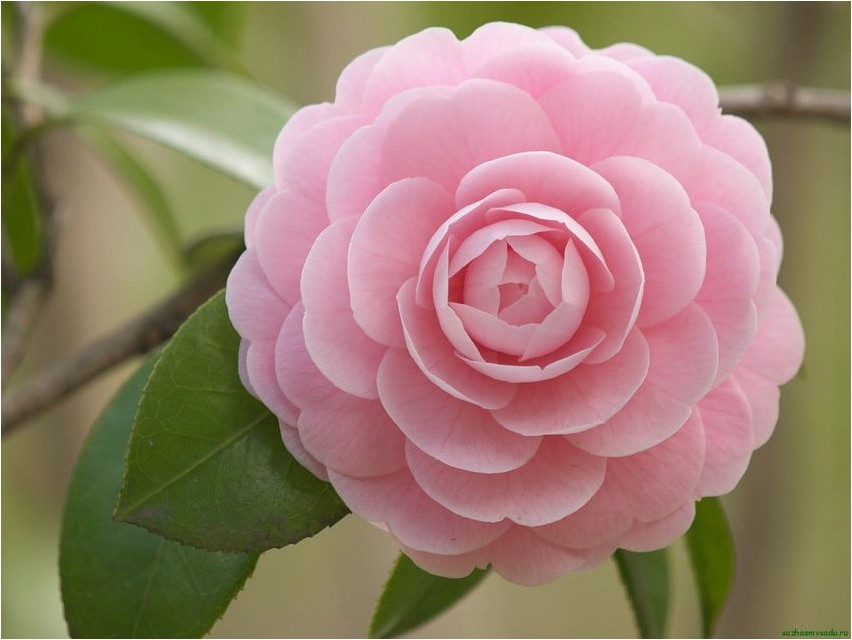
Camellia japonica is one of the plants of the family called tea plants; in Latin the name of this plant is as follows: Camellia japonica.
As for the name of the family itself, in Latin it will be: Theaceae.
Description of Camellia japonica
For favorable cultivation of this plant, it will be necessary to provide a sunny light regime, as well as moderate watering throughout the summer period. As for air humidity, it must be kept at a high level. The life form of Camellia japonica is an evergreen shrub. It should be noted that this plant is slightly poisonous.
Camellia japonica is considered an excellent plant for growing in a greenhouse or winter garden. If you plan to grow this plant indoors, then you should remember that the plant will require a certain air humidity, degree of illumination and temperature conditions. It is noteworthy that the height of Japanese camellia can reach even two to three meters.
Description of the features of care and cultivation of Japanese camellia
In order for the plant to develop normally, it should be replanted approximately once every two to three years. This plant can be replanted not only in the spring, but also after the end of the flowering period. For replanting, you should choose standard size pots. As for the composition of the soil mixture, you can mix one part each of turf soil, peat and sand, as well as two parts of leaf soil. In addition, it is also possible to use ready-made soil, which is intended for growing hydrangeas and azaleas. The acidity of the soil can be either slightly acidic or acidic.
It is important to remember that Japanese camellia will be quite painful to pruning. As for watering this plant, soft and acidified water should be used, while lime water is extremely undesirable. The shedding of buds of this plant can occur due to too hot temperatures and insufficient air humidity, as well as due to excessive moisture or drying out of the soil. Camellia japonica can be affected by scale insects, aphids, spider mites, and also mealybugs.

During the formation of buds of this plant, as well as throughout flowering, it is recommended to fertilize approximately two to three times a month. As for the summer season, such feeding will be required once a month.
Throughout the rest period, the optimal temperature should be kept in the range between ten and fifteen degrees Celsius. In addition, we should not forget about moderate watering of the plant at this time. The dormant period of Camellia japonica is quite unusual and occurs in the summer season: it begins in May and lasts until August.
Reproduction of this plant occurs vegetatively. For this, semi-lignified cuttings are used, and root formation stimulants should also be used. Rooting will take approximately one and a half to two months. However, propagation through seeds is also permissible. To do this, you should use fresh seeds, because they will very quickly lose their viability.
It should be noted that gardeners recommend trying to ensure a temperature of about five to six degrees for one month in winter. Such measures will ensure that the plant will delight with its abundant and long-lasting flowering. Throughout the entire period of bud formation and flowering, this plant will require the use of additional lighting, and pots of Japanese camellia cannot be moved from place to place.