Andromeda
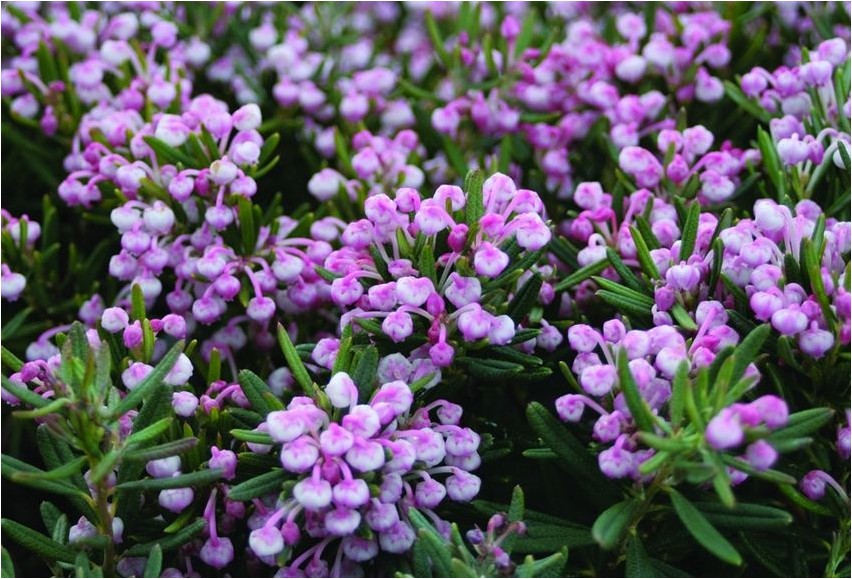
Andromeda (lat. Andromeda) is a low-growing evergreen shrub from the Heather family.
Another name is podbel. However, andromeda also has a number of other names — consumptive grass, white leaf, drunken grass, wild rosemary, swamp, drunken swamp, barren grass, tundra and barren bush.
Description
Andromeda is a drought-resistant woody plant, or to be more precise, a very attractive, beautifully flowering low-growing shrub. As a rule, the height of adult plants ranges from fifteen to sixty centimeters.
The long rhizomes of andromeda have the shape of a cord and are common to a great variety of above-ground shoots. Moreover, this plant is characterized by mycorrhiza, that is, a mutually beneficial symbiosis of plant roots with fungal mycelium.
Andromeda”s leaves are always lanceolate-elongated and shiny, with edges curling down. They are usually dark green above, and below the leaves become dull white due to a waxy coating.
The flowers of this plant are invariably small and bell-shaped. As for the color of these drooping flowers, it can be white, as well as light pink or even deep pink or dark red. As a rule, the flowering period covers the time period from April to June, in addition, in some cases this plant can bloom again — already in the fall!

Andromeda fruits usually ripen in August and September. These fruits have the form of five-locular capsules, characterized by a spherical-oblate shape and opening along the backs of the carpels that form them.
Where does it grow
Most often, andromeda can be seen in tundra or forest zones, in North America and Eurasia. This plant is especially abundant in damp coniferous forests and peat bogs. And the andromeda growing in the mountains is endowed with the ability to rise all the way to the very bottom of the alpine belt!
Usage
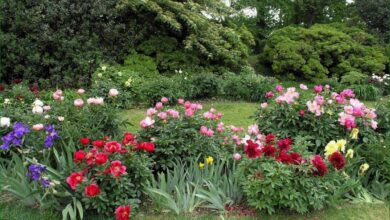
Andromeda is quite widely used in ornamental gardening — it will be an excellent decoration for almost any area! Andromeda will look especially good in rock gardens, where it is most often combined with many other representatives of the large Heather family.
Andromeda also produces honey, however, this honey is completely unsuitable for human consumption. Do not forget that in general this plant is generally poisonous — its flowers and leaves are literally replete with the glycoside andromedotoxin, so caution when handling this amazing plant will never hurt! However, andromeda leaves are quite successfully used in folk medicine to treat pulmonary tuberculosis, rheumatism and a number of gynecological ailments.
Andromeda is also used to obtain dyes — the leaves and shoots of this plant are very rich in tannin, which stains fabrics black.
Growing and care
It is best to plant andromeda in light areas, however, slight shading will also be quite acceptable. As for soil conditions, Andromeda is moderately demanding of them — the ideal option for it would be medium-light or light, slightly acidic or acidic, well-moistened and properly drained soils. In addition, regular mulching with peat will be very useful for this plant.
As for propagation of this beauty, it is usually carried out using seeds or apical cuttings. By the way, andromeda grows extremely slowly — as a rule, its annual growth almost never exceeds three centimeters!