Bluebell Siberian
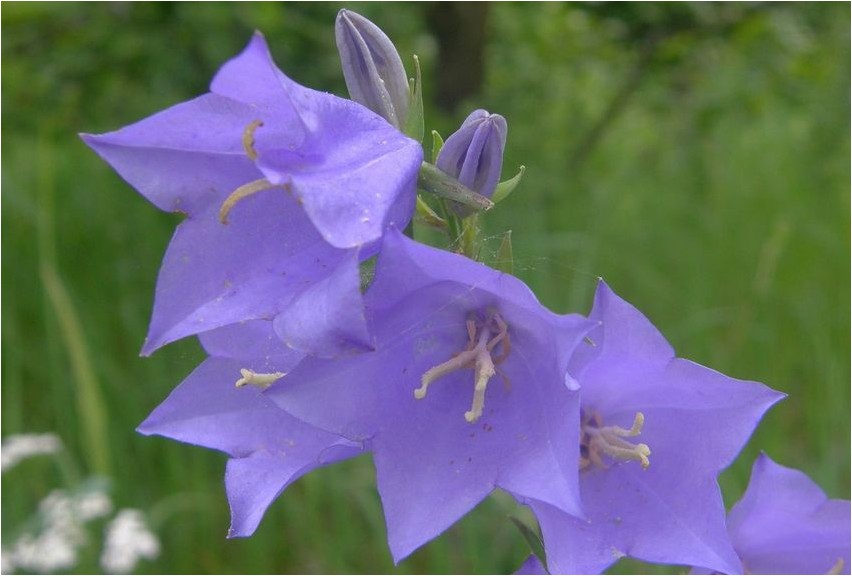
The Siberian bellflower is one of the plants of the family called bellflowers; in Latin the name of this plant will be as follows: Campanula sibirica L.
As for the name of the Siberian bellflower family itself, in Latin it will be: Campanulaceae Juss.
Description of the Siberian bellflower
The Siberian bellflower is a biennial herbaceous plant whose height will vary between twenty and sixty centimeters. The root of this plant is narrowly spindle-shaped and branched, and it will be hard and can sometimes be quite thick. The stem of the Siberian bell will be straight and ribbed, more or less branched, and extremely rarely can be simple. At the very edges, the leaves of the Siberian bellflower are somewhat hairy, and also vaguely rounded-toothed. The lower leaves will be elliptical, while the upper ones are almost entire. The flowers of this plant are quite small in size, their length is about fifteen to twenty centimeters and such flowers are collected in narrow paniculate inflorescences, which can be either drooping or inclined. The corolla is colored in bluish-purple tones, and will also be divided up to one third of its part into ovoid lobes.
The Siberian bellflower blooms from May to July. Under natural conditions, this plant is found in the European part of Russia, Ukraine, Central Asia and Western Siberia. For growth, this plant prefers fallow lands, meadow steppes, dry forests, steep river banks, and can also be found as a weed in crops.
Description of the medicinal properties of Siberian bellflower
The Siberian bellflower is endowed with very valuable healing properties, and it is recommended to use the herb of this plant for medicinal purposes. The term herb includes the flowers, leaves and stems of the Siberian campanula.
The presence of such valuable healing properties should be explained by the content of flavonoids, anthocyanins, alkalides and the following nitrogen-containing compounds in the composition of the herb of this plant: choline and betaine.

A decoction made from Siberian bellflower is recommended for diarrhea and various sexually transmitted diseases. It is also used as a gargle for toothache and as a hemostatic agent. Preparations based on this plant have been shown to dilate peripheral blood vessels in experiments and also have the ability to temporarily lower blood pressure and improve cardiac function. It is noteworthy that the roots of Siberian bellflower are perfectly edible.
For vegetative-vascular dystonia due to hypertension, the following remedy based on Siberian bellflower is recommended: to prepare this remedy, take three tablespoons of crushed dried herb per two glasses of water. The resulting mixture is recommended to be boiled for approximately three to four minutes over fairly low heat, then steeped for one to two hours, after which the healing mixture is carefully filtered. Take the resulting Siberian bellflower remedy three times daily, half a glass or one-third of a glass. It’s worth noting that this decoction can also be used as a gargle for hypertensive vegetative-vascular dystonia. When used correctly and prepared according to all instructions, this remedy is very effective, and positive results are noticeable quite quickly.





