Satin Tree
The satin tree (Latin: Chrysophyllum oliviforme) is a fruit tree belonging to the popular Sapotaceae family. This plant is sometimes called the satin tree.
Description
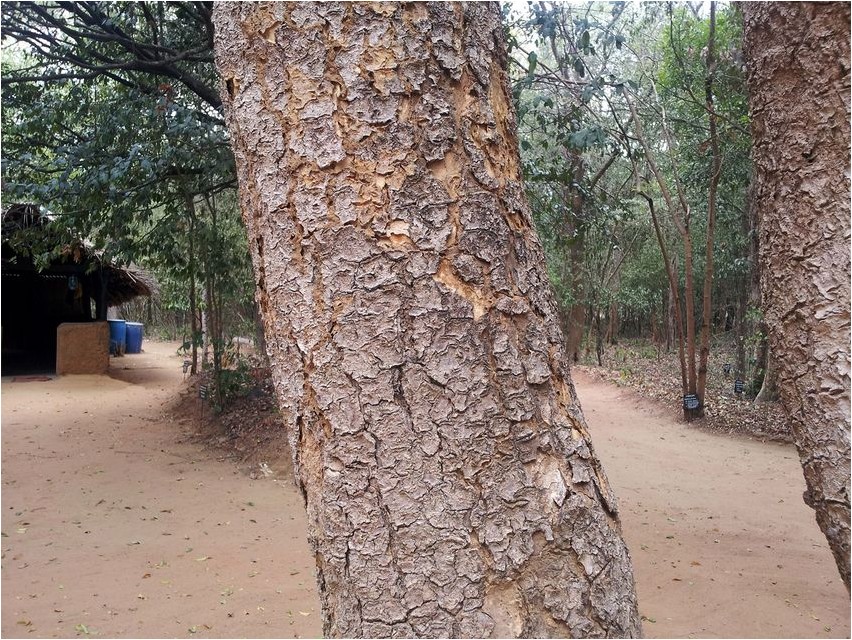
The satin tree is a fruit tree growing from three to five meters in height, characterized by impressively thick trunks—often reaching thirty centimeters or more. Under particularly favorable growing conditions, these trees can reach heights of up to ten meters. The surface of their very unusual wood boasts a stunning satin sheen, reminiscent of shimmering and gently flowing fabric. It is from this sheen that the trees receive their unusual name.
Since the satin tree blooms continuously, its fruit can be harvested throughout the year. Incidentally, these fruits are also a wonderful source of food for pets and birds. The flowers, which open only after dusk, emit an extremely unpleasant yet very strong odor. These flowers are pollinated by bats. Once ripened, the ovaries enter a state of dormancy, awaiting favorable weather conditions. Remarkably, they can remain in this state for several months to a year.
The fleshy fruits range in color from bright yellow to purple. These juicy fruits invariably attract a large number of birds. Caribbean pigeons are especially fond of them, willing to travel truly impressive distances to feast on them.
These fruits, which stand out against the foliage, rarely exceed four centimeters in length. They are quite sweet and boast a surprisingly pleasant flavor. Inside each fruit are several tiny seeds—if you cut them, you can see white latex oozing from them. Where it grows
The magnificent satin tree”s natural habitat is the Antilles, the Bahamas, and Florida (in the United States).
Uses

The satin tree”s fruits are most often eaten fresh due to their exquisite flavor.
These remarkable fruits are very rich in vitamin B1, making them a real boon for those suffering from beriberi. They are also beneficial for paralysis and a variety of other ailments. Overall, the healing properties of these unusual fruits have not yet been fully studied.
Satinwood was very popular in England back in the eighteenth and nineteenth centuries. It was widely used (and continues to be used today) to make very expensive and incredibly durable collectible furniture. The texture of this wood appears to contain numerous pearlescent particles, and varnishing the surface greatly enhances the shimmering effect.
Incidentally, working this wood on a lathe or with any kind of mechanical tools is quite difficult because it significantly dulls their cutting edges. However, it responds perfectly to turning.
Contraindications
No contraindications to eating satinwood fruits have been identified to date. However, there is still a possibility of allergic reactions.
Cultivation and Care
Satinwood is so heat-loving that even slight frosts can easily kill it. At the same time, it is quite tolerant of soil salinity and acidity—this tree will thrive in a pH range of five to eight.
. A fluffy bouquet of satin ribbons, made by hand.