Chempedak
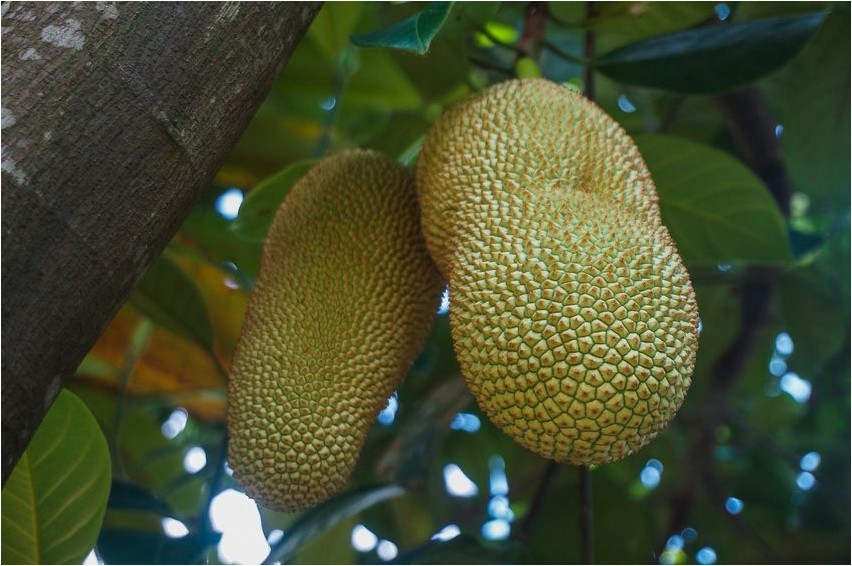
Champedak (lat. Artocarpus champeden) is a tree fruit crop from the Mulberry family, which can boast a close biological relationship with breadfruit, jackfruit and marang.
Description
Chempedak is an evergreen tree reaching a height of eighteen meters. By the way, such a height is characteristic only of cultivated trees, and wild specimens can grow up to forty-five meters in the air.
The oval fruits of chempedak are located on very thickened petioles. Their width is on average fifteen centimeters, and their length can vary from twenty-five to forty-five centimeters. Ripe fruits boast a very pleasant and at the same time quite strong aroma, as well as an attractive yellowish-brown color. The sticky skin of the fruit contains a small amount of sticky latex. As for the sweet and surprisingly juicy pulp, it has a very delicate consistency and is colored in rich dark yellow tones. And the internal parts of the cempedak are divided into many independent segments, and each segment contains a bone that can be easily separated from the pulp. All of the above applies only to cultivated forms — wild fruits are most often sour and do not smell of anything.
As a rule, fruit ripening occurs from June to August, while chempedak ripens for quite a long time — from 94 to 105 days. When purchasing this strange fruit, you should pay attention to its aroma and softness — the more fragrant and soft the fruits are, the better they are.
Where does it grow
Chempedak is a plant native to Malaysia, where it is respectfully called “champeda”. It is mainly grown there. In addition, plantings of cempedak can actually be seen in Thailand, Brunei and Indonesia, and this crop can be encountered at an altitude of up to 1300 meters above sea level.
Application
Cempedak pulp is very good both fresh and fried. It also makes delicious fruit salads, excellent side dishes for meat and delicious desserts. The seeds of this crop are also edible.

Ripe fruits open very easily with the help of your hands — just pull the different ends of the fruit, as if tearing it apart. By the way, chempedak is a very filling fruit, since its calorie content is 117 kcal for every 100 g of pulp (almost like potatoes). These fruits are very rich in B vitamins, ascorbic acid, carotene and a wide variety of beneficial microelements. Chempedak boasts an excellent general strengthening effect and the ability to have an extremely beneficial effect on both the cardiovascular and nervous systems. With the help of this fancy fruit, you can significantly improve digestion and strengthen the immune system, teeth, joints and bones.
Chempedak is also useful for people suffering from urinary tract diseases. It is widely used to improve sleep and mood, as well as to treat certain neurotic conditions and depression — all this thanks to substances that help normalize brain activity. By the way, if you give chempedak to hyperactive children, they will begin to behave much calmer.
And the high potassium content makes chempedak an indispensable remedy not only for neurotic disorders, but also for heart failure, dropsy, hypertension, as well as for renal edema and edema of cardiac etiology. Among other things, the pulp of the fruit is famous for its delicate laxative effect, which makes it an excellent helper for anyone who is worried about constipation.
This fruit also has a beneficial effect on the skin, significantly slowing down the processes of degeneration of its cells and helping to make it smoother and more elastic.
Contraindications
Excessive consumption of chempedak can lead to drowsiness and apathy, so it should be used with extreme caution by anyone who is driving. In addition, this fruit contains substances that can cause allergies.





