Micro pennycress
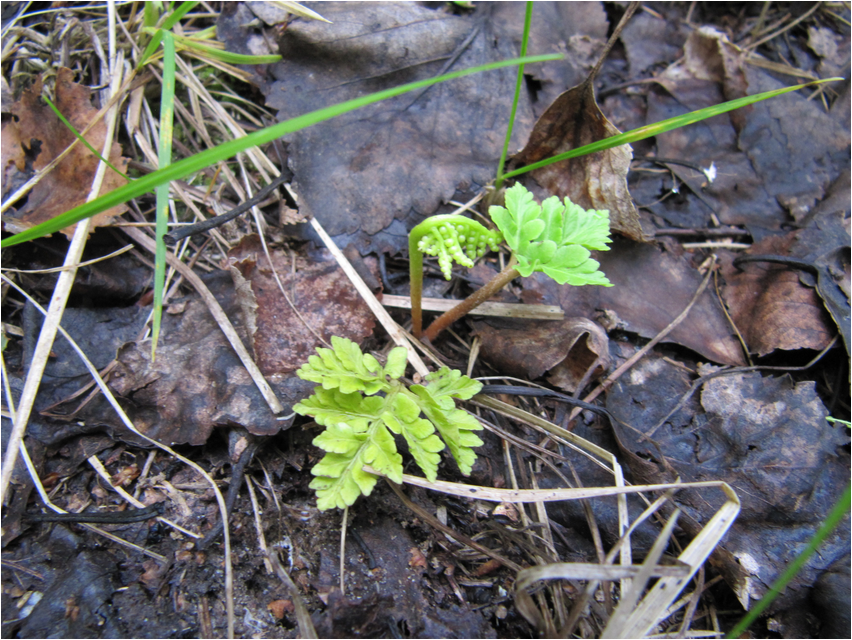
As for the family name of Thiaspi perfoliatum, the Latin name is Brassiaceae Burnett (Craciferae Juss.). Thiaspi perfoliatum (Thiaspi perfoliatum) is a member of the Brassicaceae or Cruciferae family. Its Latin name is Microthlaspi perfoliatum (L) F. K. Mey.
Description of Thiaspi perfoliatum
Thiaspi perfoliatum is an annual herbaceous plant, growing between five and thirty-five centimeters tall. This plant is glabrous and has a bluish-green color. The stem of the perforated pennycress is often branched, with the basal leaves being obovate and petiolate, while the cauline leaves are clasping and oblong-ovate, with large auricles. Notably, all the leaves of this plant are entire, with petals approximately two and a half to three millimeters long and oblong. The pods of the perforated pennycress are oblong-cordate, six to seven millimeters long. The seeds of this plant are borne in clusters of two to four, slightly more than one millimeter long and less than one millimeter wide, and are brown in color.
The flowering period of the perforated pennycress begins in April and ends in May. In the wild, this plant is found in Crimea, the Altai region of Western Siberia, Central Asia, the Caucasus, and the following regions of European Russia: the Black Sea, Lower Don, and Volga-Don regions.
Description of the medicinal properties of the Thrush (Pennywort)
Thrush (Pennywort) has very valuable medicinal properties. The seeds, leaves, and juice of the above-ground part of the plant are recommended for medicinal purposes.
The presence of such valuable medicinal properties can be attributed to the flavonoid glycosides kaempferol and quercetin found in the herb, while the seeds contain fatty oil containing oleic, erucic, eicosenoic, linoleic, stearic, palmitic, and eicosadienoic acids.
In folk medicine, remedies based on this plant are quite widespread. An infusion made from the leaves of the common pennycress is recommended as an astringent and antiscorbutic.
A decoction made from the seeds of this plant is indicated for flatulence, sciatica, and rheumatism. Juice made from the herb of the common pennycress is used in veterinary medicine as a wound-healing agent. It should be noted that aqueous and alcohol extracts possess highly effective antibacterial properties.

For bloating, the following highly effective remedy is recommended: to prepare this remedy, add one tablespoon of the leaves of this plant to one cup of boiling water. The resulting medicinal mixture based on the common pennycress is recommended to steep for about two hours, after which the mixture should be thoroughly strained. Take one to two tablespoons of this herbal remedy three times daily before meals. It’s worth noting that this remedy is very effective when prepared and used correctly.
Field pennycress (Thlaspi arvense)