Anthurium
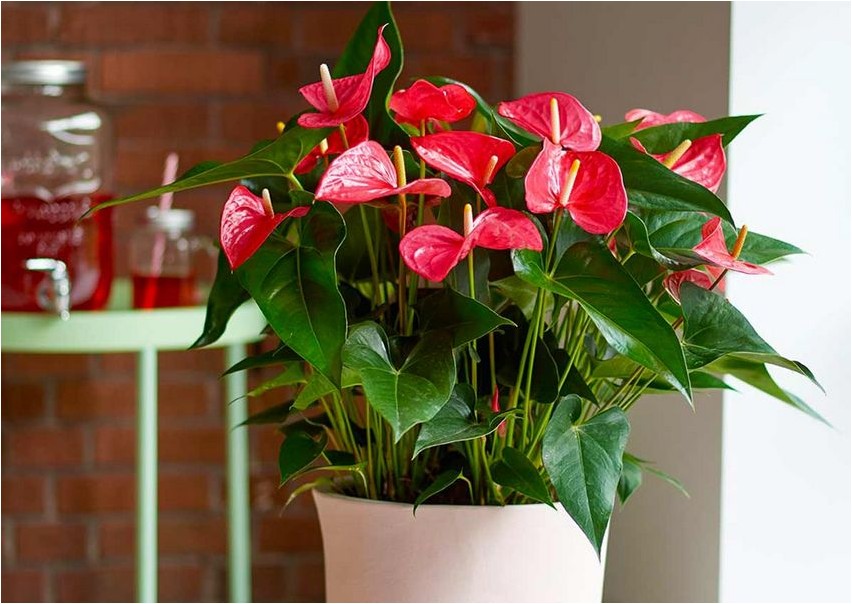
Anthurium (Latin: Anthurium) is a houseplant; a genus of evergreen plants in the Araceae family. It is native to southwestern Colombia and northwestern Ecuador.
Cultivated Characteristics
Anthurium is a semi-epiphytic plant with thick, often shortened stems 15-35 cm tall. The leaves are elongated, cordate, spatulate, or broadly lanceolate, green, entire or compound-dissected, upright or gathered in a rosette, and borne on petioles with a geniculum. The leaf surface is matte, glossy, or semi-glossy, with a fragile or leathery texture.
The flowers have a unique, even exotic shape; the inflorescence is club-shaped, conical, spiral, or spherical, and can be red, purple, pink, orange, green, or white. The plant’s name is derived from two Latin words: “anthos” meaning flower and “oura” meaning tail.
Growing Conditions
Anthurium is a heat-loving plant, thriving at temperatures between 18-20°C (64-70°F). Avoid placing it near a heating system. Anthuriums also do not tolerate drafts. The plant adapts fairly quickly to indoor conditions, but requires plenty of light and does not tolerate direct sunlight.

The soil mixture for growing anthuriums should consist of coarse leaf mold, humus, sand, and peat (1:2:0. 5:1). It is advisable to add dry mullein, charcoal, and crushed brick to the substrate. In general, the coarse fraction should make up approximately 10-15% of the total substrate volume. The addition of these materials helps improve the physical properties and air permeability. Propagation and Planting
Anthuriums are propagated by seeds, lateral shoots, stem cuttings, and apical cuttings. The plant’s seeds are obtained only by artificial pollination. Using a soft brush, pollen is transferred from one inflorescence to another over the course of several days. After approximately 9-12 months, the inflorescences produce berries containing 1-4 seeds. The seeds are removed from the berries, washed with water, and soaked in a 0. 1% potassium permanganate solution for a couple of hours.
Since the seeds lose their viability very quickly, they are sown immediately. Sowing is carried out on damp filter paper in a Petri dish or other shallow containers. The crops are covered with plastic film or glass until seedlings emerge. Picking of seedlings is carried out 2 weeks after emergence. Containers for seedlings should be filled with a mixture of coarse leaf soil, sand and leaf peat. After 2-3 months, I pick up the seedlings again.
Subsequently, the seedlings are picked twice more, each time increasing the feeding area by 2-3 cm. The plants are transplanted into separate pots when the diameter of the rosette reaches 5-8 cm. Anthuriums grown from seeds bloom 4-5 years after sowing.
Vegetative propagation is carried out by separating root shoots (otherwise stem shoots) from mother plants. Plant the divisions in boxes or low containers under plastic film or glass. After 2-3 weeks, the shoots take root, and when new leaves appear on them, the plants are transplanted into separate pots. It is advisable to carry out vegetative propagation in spring or early June.
Care
Anthurium needs regular and abundant watering. The soil in pots should always be kept moist, and excess water should not accumulate in trays. The leaves of the plant should be periodically sprayed with settled water and wiped.
Fertilizing is carried out only in spring and summer, once every two weeks, alternating organic and mineral fertilizers. The plant especially requires feeding at the end of flowering. Plants are rarely attacked by aphids, scale insects and spider mites; if pests are detected, the plants are treated with a soap or tobacco solution.
Common types
*Scherzer’s anthurium (lat. Anthurium scherzerianum Schott) – the species is represented by plants with cobs twisted into a spiral, light orange in color, less often red. Flowering occurs in spring.
*Majestic Anthurium (lat. Anthurium magnifi cum Lind) – the species is represented by plants with large velvety green leaves with olive or light green veins.
*Anthurium Andreanum (lat. Anthurium Andreanum) – the species is represented by large plants 70-90 cm high, the inflorescences can be white, pink, orange or red.
*Climbing Anthurium (lat. Anthurium scandens Engl) – the species is represented by semi-epiphytic plants with stems up to 1 m long and aerial roots. The leaves are medium in size, covered with dark dots on the underside, the spadix is yellow-green in color.
Anthurium is blooming like crazy, I’m revealing secrets.
Anthurium
Anthurium
indoor flower anthurium photo[/caption]
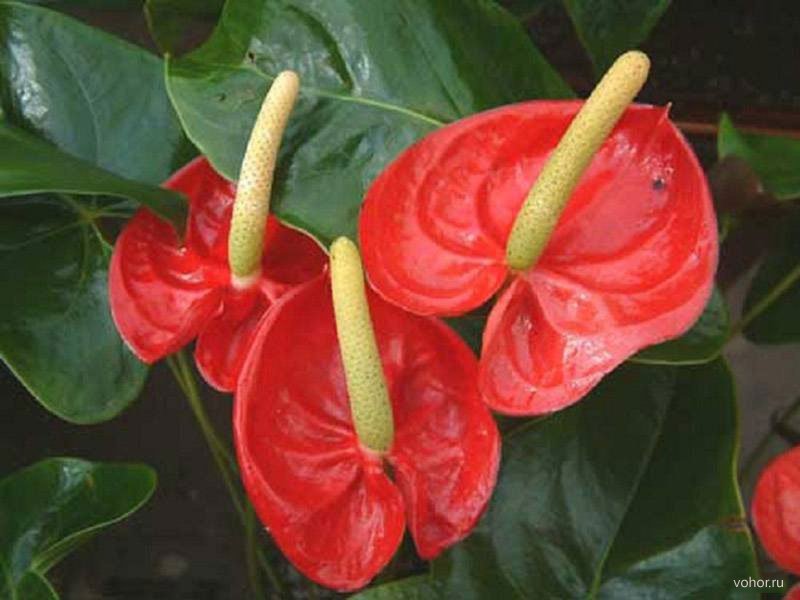 anthurium is an ornamental leaf plant, but certain species are valued for their flowering. The genus contains hundreds of different species. The most popular cultivated species are the flawless anthurium Andre and Scherzer. as well as decorative foliage a. striking in its grandeur, multi-cut and crystal.
Anthurium care and cultivation
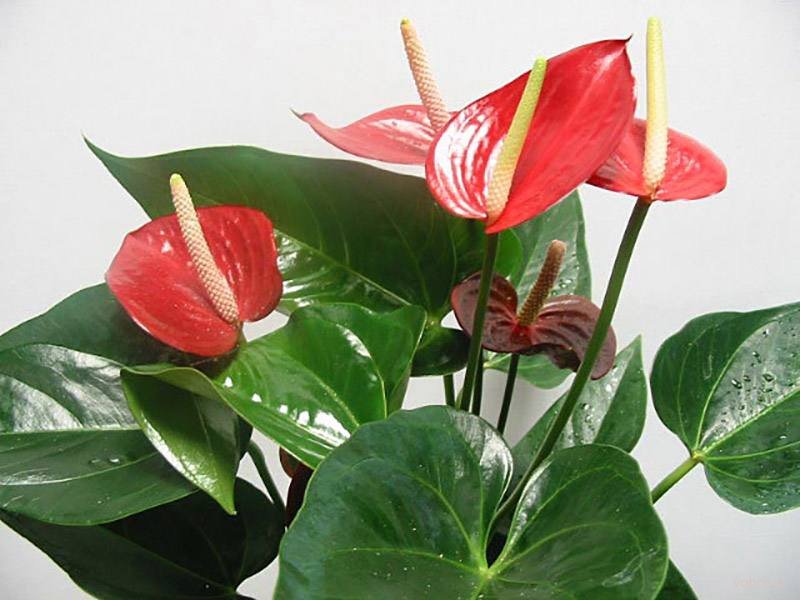
in the interests of cultivation, a nutritious, breathable substrate that retains moisture will be adopted. The most commonly used substrate is a mixture of leaf and turf soil, sand, peat and charcoal. In shopping centers they sell ready-made substrate intended for the benefit of anthuriums. Choose a free vessel (20-30 cm in diameter) with drainage holes. The plant chooses a bright place indoors, with shading from direct sunlight. The flower is kept at a temperature between 20-26 degrees. With all this, sudden changes in temperature are undesirable. Water in abundance until the substrate dries completely. Excess water that flows from the pot onto the tray is immediately drained. Excessive moisture of the substrate leads to rotting of the roots. Anthurium loves high humidity. In the interests of maintaining humidity, the flower pot is placed on a tray with damp expanded clay, the plant is systematically sprayed and washed once a week under a cold shower. From time to time the leaves are wiped to remove dust. Mineral fertilizers are applied twice a month throughout the year. Both root and extra-root feeding are effective. Meanwhile, an excess of fertilizers is undesirable. Transplantation is preferably carried out in the spring as needed. In most cases, they are replanted every two years. The reason for replanting is the growth of anthurium or depletion of the soil. It is advisable not to feed transplanted plants at first.
Note
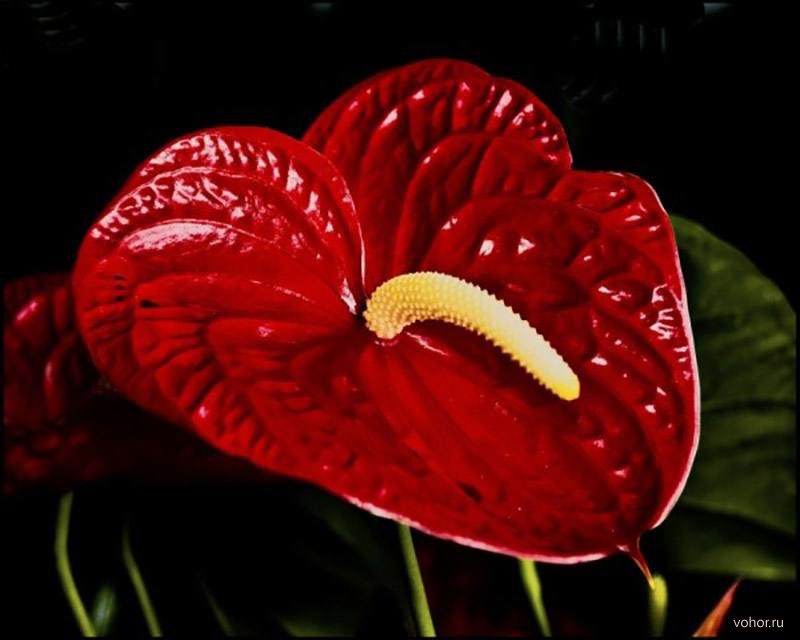
anthurium juice contains toxic substances. The roots contain the largest amount of poison. As a result, all work involving contact with the plant is much better done with gloves on. As a houseplant, anthurium is not at all dangerous if you are careful and do not allow children or animals near the flower.
Reproduction
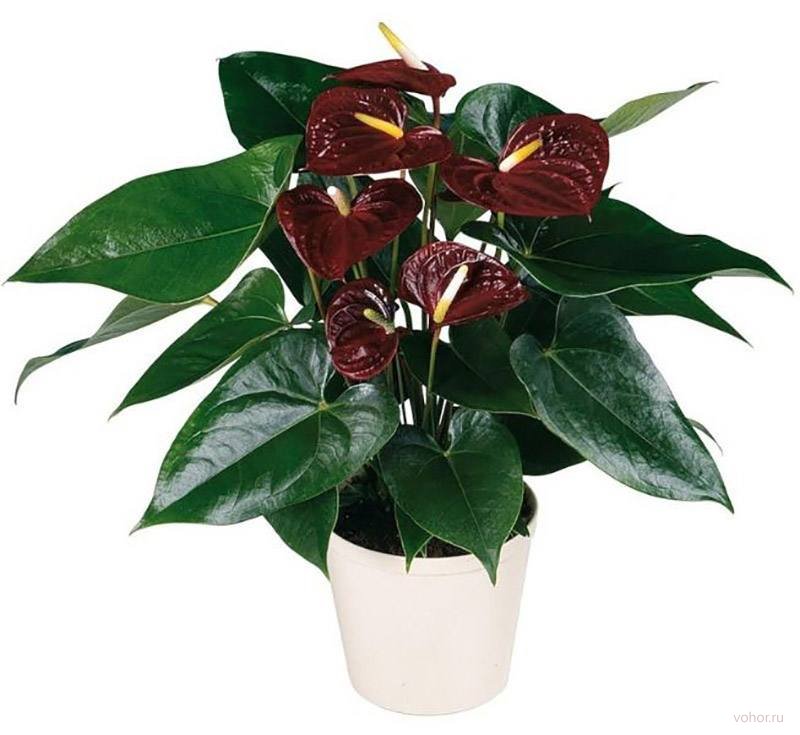
propagation occurs by dividing the bush, stem cuttings, and most rarely by seeds. Sowing of seeds is carried out immediately after collection. Seeds are sown on the surface of a nutrient substrate or on moistened moss. The containers with the crops are covered with film and transferred to a bright place. The crops are systematically sprinkled with water. If anthurium seeds are germinated on moss, then after the sprouts emerge, they are immediately transplanted into certain containers with a substrate. In the interests of accelerating growth, seedlings are fed with mineral fertilizers. When propagated by seeds, flowering will begin 2-3 years after sowing.
Stem or apical cuttings ten centimeters long are planted in containers with moss. The cuttings are placed under film at a temperature within 25 degrees. After the roots have emerged, the cuttings are immediately transplanted into containers with substrate and cared for as for mature plants. The division of the bush is carried out during the transplantation period.
Diseases and pests
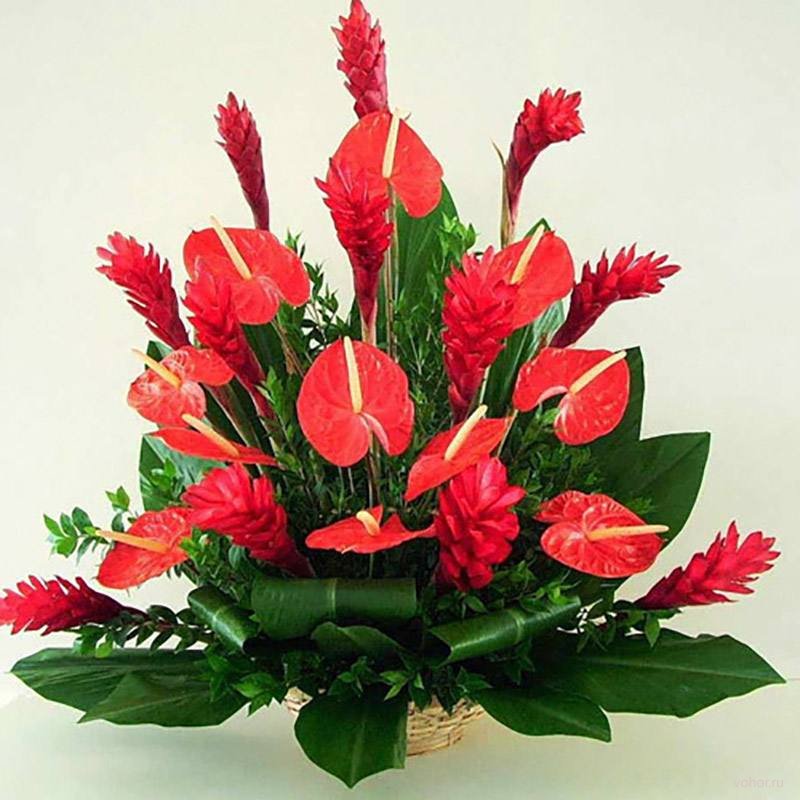
anthurium is resistant to pests and is not often affected by diseases. But sometimes the plant can be attacked by aphids, scale insects, and spider mites. Excess moisture causes stem and root rot. Sometimes has the opportunity
Anthurium anthurium