Types of sandwich panels
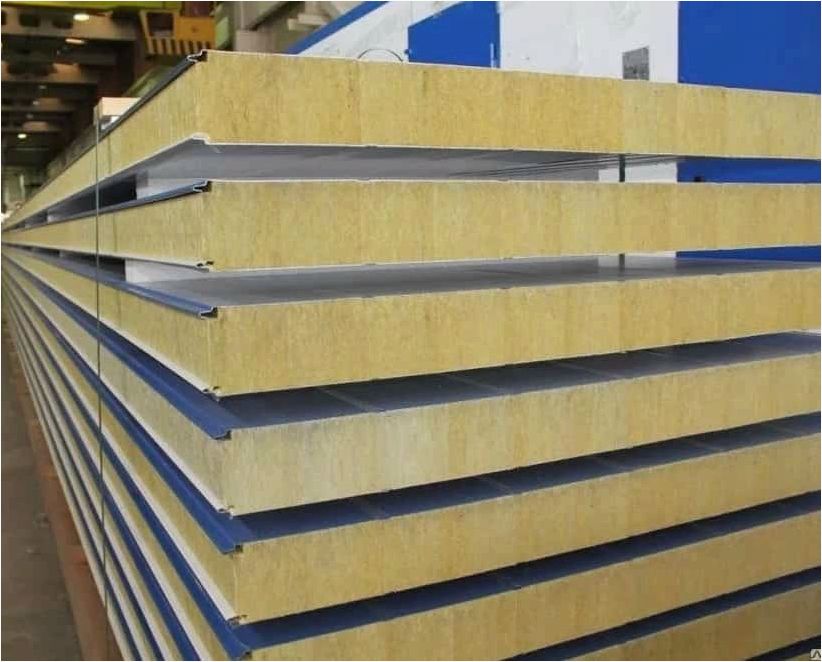
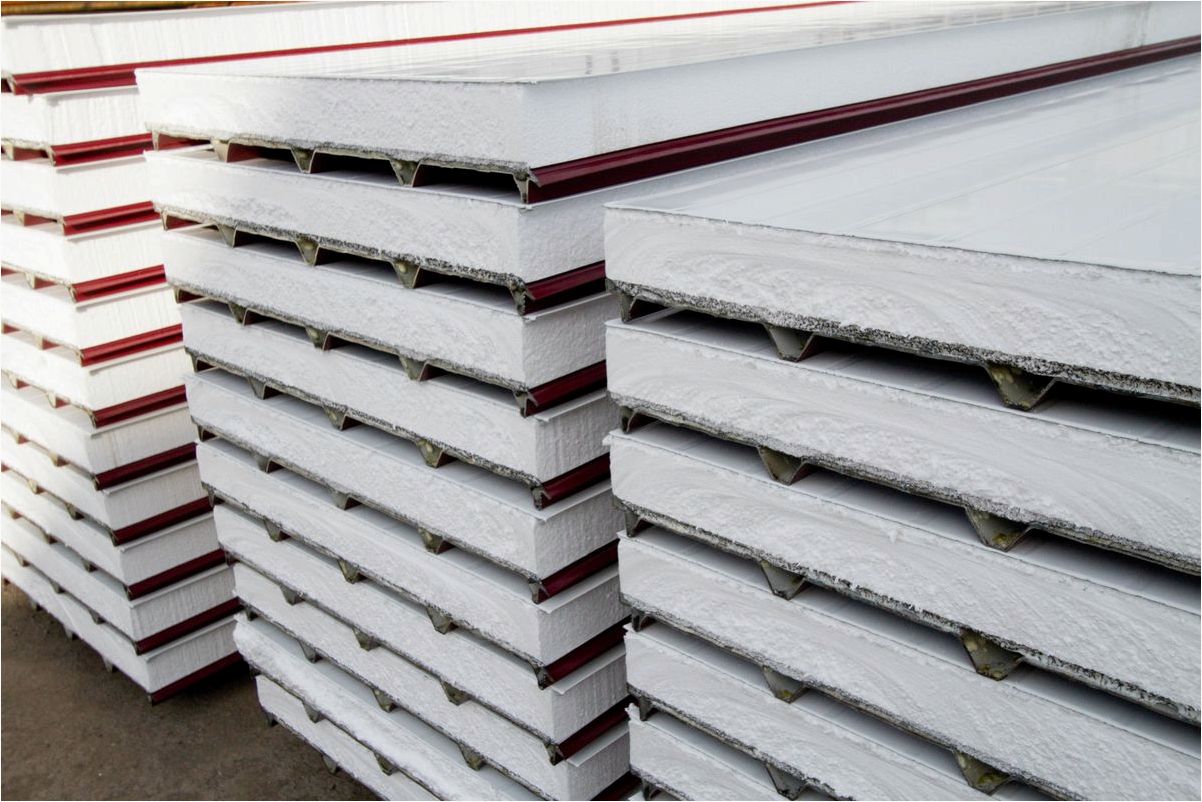
Sandwich panels are frameless building modules connected to each other using joining seams and forming architecturally expressive facade blocks. The main difference is the multi-layer construction, which includes an insulating base and two outer metal layers that provide structural rigidity, weather resistance and an aesthetic appearance of the panel. You can buy sandwich panels in Simferopol by contacting the Proflist Sandwich company.
Contents of the article:
the range of sandwich panels is constantly expanding and is based on the following elements:
- Functional purpose of the enclosing structure;
- Manufacturing and installation methods;
- Types of fastenings to create a single modular system;
- Materials used to make the core and cladding.
The popularity of this material is explained by its extended service life. Some types of sandwich panels do not lose their performance characteristics for 10 years. The probability of loss of thermal insulation capacity over the next five years is guaranteed to be less than 5%.
Types of sandwich panels by purpose
The main criterion for classifying panels is their functional purpose, which are classified as follows.
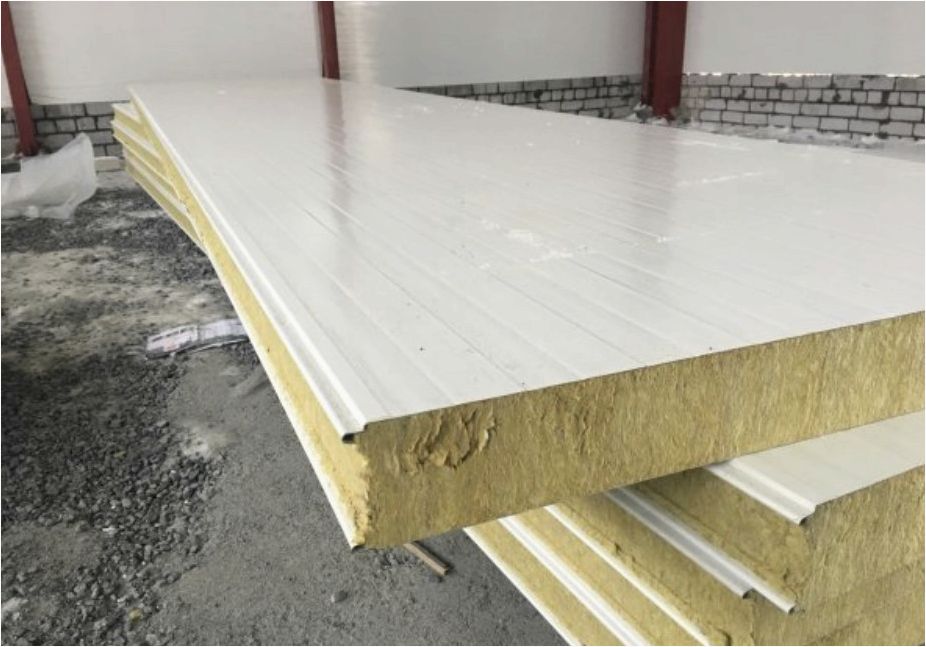
- Wall modifications intended for insulation and reconstruction of buildings for various purposes, for example, warehouses, industrial facilities, shopping centers, administrative centers and low-rise housing construction;
- Roofing sandwich panels, the main type of which is used in roofing structures, provide effective sound insulation and reliable protection from wind and precipitation.
In addition, three-layer sandwich panels can be used for constructing floors and interfloor ceilings, equipping refrigerators and vans, and finishing interior and exterior elements.
Types of sandwich panels by type of insulation
Depending on the insulation used, the following types of sandwich panels are distinguished:
- From mineral wool – a fibrous material made from silicate melts of metallurgical slag, rocks and their mixtures. Main advantages: non-flammability, resistance to aggressive substances and high temperatures, good heat and sound insulation properties. The main disadvantages of mineral wool are its low moisture resistance and large mass. This determines the bulkiness of the entire structure;
- Made from waste from the glass industry, it is based on fiberglass and is very similar to glass wool. It is resistant to deformation, increased strength and moisture permeability. When choosing glass wool as the inner base of the panel, it is necessary to take into account the tendency to stick and absorb moisture (the amount of absorbed water can reach by weight);
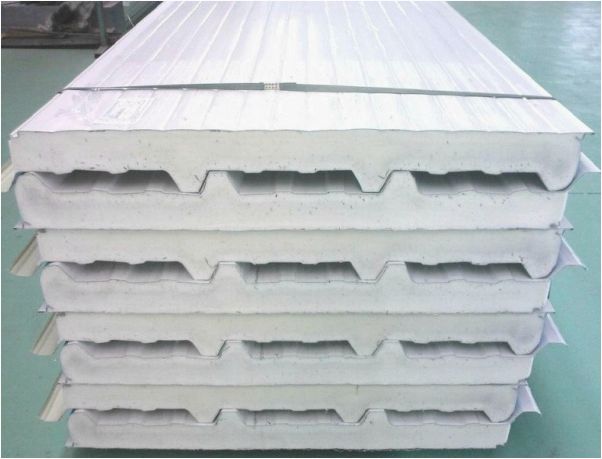
- Polyurethane foam is a modified thermosetting plastic with a cellular structure. The solid material in its composition makes up everything, forming a strong frame for the walls and stiffeners, and the rest of the volume is occupied by cavities filled with a special gas – a foaming agent with very low thermal conductivity. This ensures high energy efficiency of buildings and structures whose facades are finished with polyurethane foam panels;
- Using PIR filler (with polyisocyanurate foam) – a real leader in the insulation market, which successfully combines all the advantages of polyurethane foam, but at the same time surpasses it in certain parameters. It remains resistant to direct exposure to flame, temperature and mechanical deformation; It is considered a tough and durable material that can retain its properties for more than 10 years. For this reason, the price of PIR panels remains high;
- Expanded polystyrene is a popular “insulating” material, the main advantage of which is increased fire resistance due to the addition of components that prevent the combustion process. Other advantages include low water absorption, low weight and the ability to maintain parameters under conditions of prolonged exposure to temperature and humidity.
Among the available modifications of sandwich panels there are several composite structures based on insulation. These are advanced building modules, the internal volume of which is occupied by basalt wool and expanded polystyrene, laid in layers using polyurethane adhesives. This design provides fire resistance, mechanical strength and effective acoustic and thermal insulation of the product.

Types of sandwich panels by type of cladding material
Taking into account this criterion, all sandwich panels are divided into the following options:
- Sheathing made of galvanized or stainless steel, with a protective polymer coating of plastisol, polyester, prall or polyvinyl fluoride applied to the sheet. Profile configuration – optional: smooth, trapezoidal, microwave, knurled, etc.;
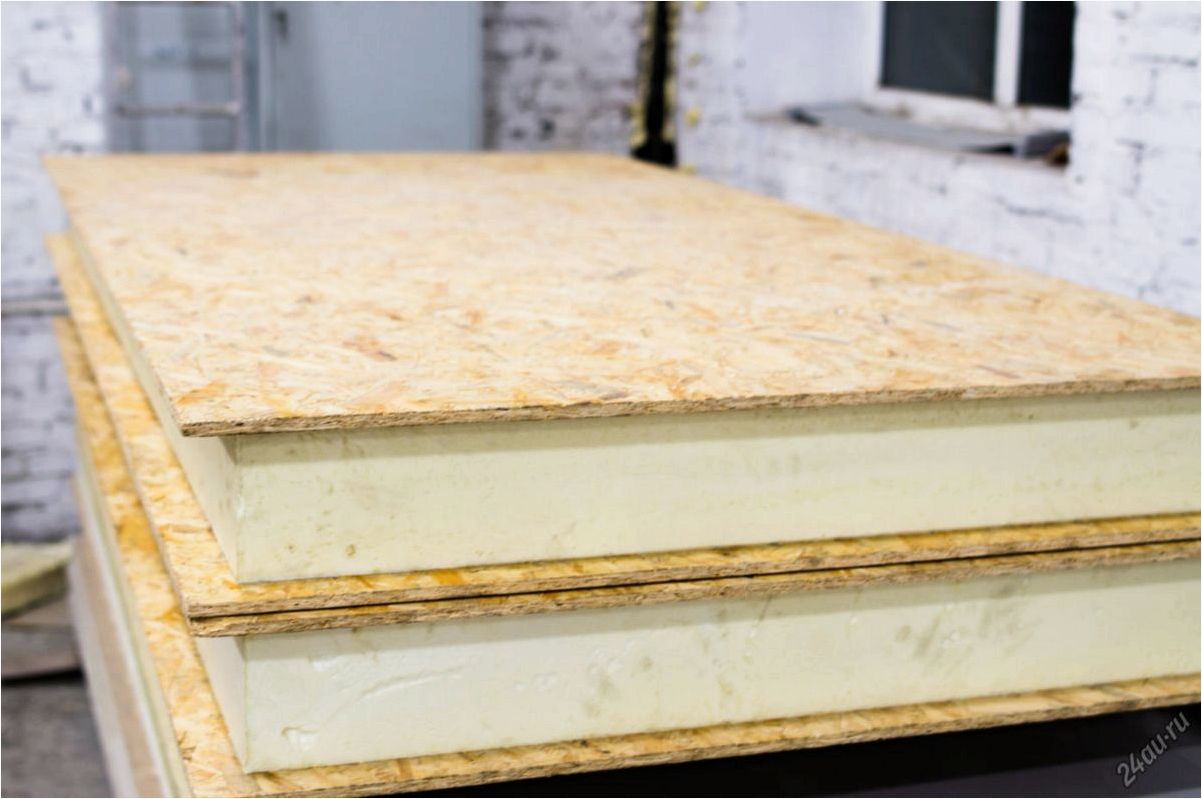
- Plywood, plasterboard, DSP or fiberboard on one of the outer sides of the module, on the other side – metal. Such panels are most often used to create internal partitions due to the possibility of laying hidden wiring;
- PVC joint for installation of office partitions, windows and door trim, including slopes. Extruded polystyrene, expanded polystyrene or polyurethane foam can be used as insulation;
- In paper cases it is supplemented with a layer of polyethylene or aluminum foil. To improve the performance properties of this module, bitumen impregnation is used. Panels with this type of cladding are recommended for use on roofs and in warehouses to prevent condensation accumulation. They can also be used to decorate individual elements of a building (walls, foundation, etc.). Their main advantage is their relatively low weight, which simplifies the transportation and installation of the panels.
Types of sandwich panels by type of protective coating
When choosing a closed structure, it is necessary to take into account what material is used as the top layer, its thickness and protective properties.
Among the possible options:
- Polyester 25 microns thick (designation PE). It is characterized by hardness, good coverage and low cost. Used to increase the service life of panels installed indoors. The coating can be matte or glossy. Heat resistance – about 120°C;
- Plasol (PVC 200 marking). Contains plasticizers and vinyl chloride. The layer thickness corresponds to the digital designation and is expressed in MCM. This is a universal, easily formed coating, applicable in all climatic zones. Often used together with panels for finishing facades and structures inside buildings. Remains resistant to rolling, corrosion and mechanical damage;
- PolyDictorionade (abbreviation PDVF) is a super-resistant coating to extreme temperatures: it can withstand an increase in temperature up to 110-120°C and a decrease in temperature fro m-40-60°C. In terms of its protective properties, it is inferior to analogues and remains resistant to aggressive substances;
- Pural (from the English Pural) is a decorative and protective coating for structures that use polyurethane and polyamide. Recommended for building modules intended for decorative use on the external structure of buildings. Prevents corrosive and active processes, is resistant to UV radiation and other environmental influences.
Types of sandwich panels by type of fastener
Two types of fasteners are used to attach the panels to the frame.
- Hidden when the locking connection is under the module mounting sheet;
- Shown when part of the fastener is visible from the outside of the panel.
For reinforced fastening, self-tapping screws and stampings are used – special fasteners.
The operational characteristics of buildings for various purposes largely depend on how reliable the panel connections or “locks” are. The latter must provide:
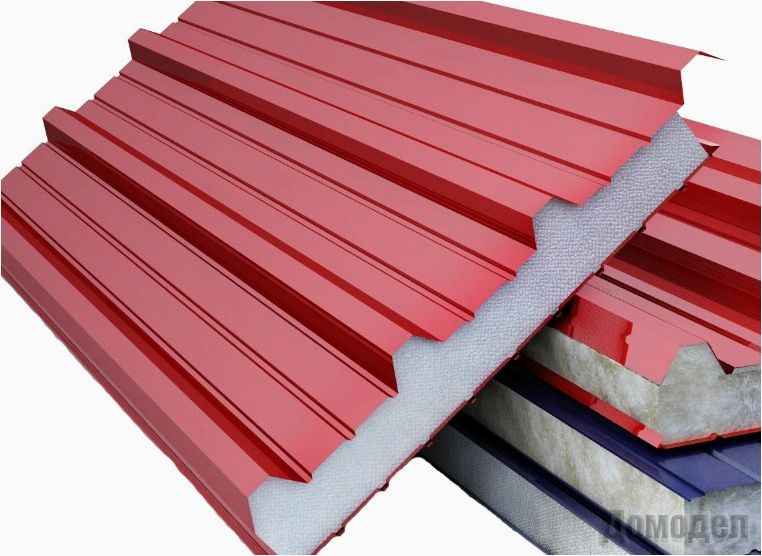
- Overall structural strength and reliability of connections;
- Absence of elements that promote increased heat transfer – “cold bridges”;
- Reliable protection against penetration of moisture and condensation into the heat-insulating core;
- Panel resistance to temperature changes.
The following types of locks are used in refrigeration equipment:
- Tenon and groove, which means a simple connection of grooves;
- Cam locks. If hook locks are built into the perimeter edges of the modules, the panels can be tightened into the block.
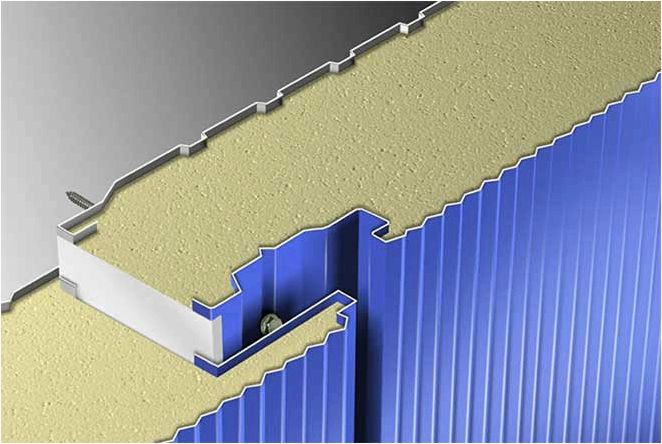
A special type of fastening has been developed for the roof structure. These are:
- Seam streets, which, thanks to their hook-shaped shape, attract panels into place;
- Roof interlocks ensure a flat roof surface. Thanks to their use, the appearance of folds and leaks is completely eliminated.
As additional “sealants” you can use mastic, polyurethane gaskets and foam. The edge seams are closed using mineral wool, polyurethane foam and Alsummer.


