Primrose back-conical
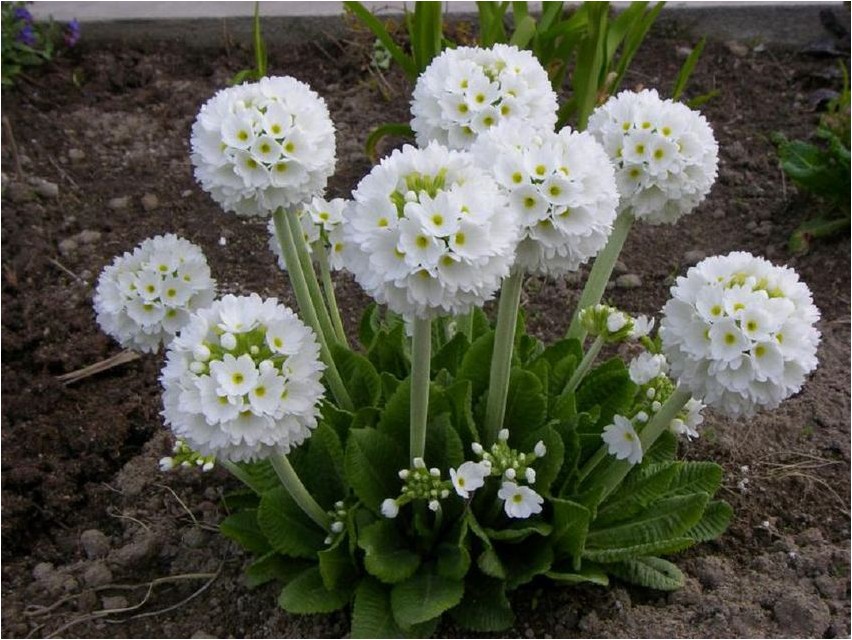
Primula obconica is one of the plants of the family called primroses; in Latin the name of this plant will be as follows: Primula obconica.
As for the name of this family itself, in Latin it will be like this: Primulaceae.
Description of primrose reverse conical
For favorable cultivation of this plant, it is recommended to choose a sunny light mode, but a partial shade mode will also be quite acceptable. Throughout the summer season, it is important to maintain moderate watering, and the degree of air humidity should be quite high.
The life form of the conical primrose is a herbaceous plant. It should be noted that the juice of this plant can cause allergic reactions. It is recommended to grow conical primrose either on glazed loggias or in a fairly cool winter garden. In addition, as for growing indoors, the plant should be fenced off from warm air from the window: a small curtain made of plastic film is suitable for this.
As for the maximum size in culture, the height of the reverse-conical primrose can reach about sixty centimeters.
Description of the features of care and cultivation of reverse-conical primrose
In order for this plant to develop safely, it will need to be replanted approximately every two to three years. For replanting, it is recommended to choose either wide bowls or pots of standard proportions. The acidity of such soil should be slightly acidic.

It should be noted that the reverse-conical primrose can very often suffer from dry air and heat. If watering is carried out with excessively hard water, yellowing of the leaves may occur: this nuisance is called chlorosis. In fact, leaves can also turn yellow if the soil is over-moistened. This plant is also susceptible to attacks by spider mites.
Throughout the dormant period, the primrose obconica requires an optimal temperature regime between fifteen and eighteen degrees Celsius. Watering and humidity should be maintained at a moderate level. When the plant is grown indoors, this dormant period is forced. The dormant period begins in October and lasts until February. This period is caused by low humidity and low light.
The primrose obconica can be propagated by sowing seeds or by dividing the plant. It is important to note that division should only be performed when planting this plant. It is recommended to select a bright location for this plant, but not in direct sunlight.
The primrose obconica should be fed with a solution of various fertilizers, which is due to the fact that its roots are particularly sensitive to soil salinity.
The flowers of this plant are also decorative. The leaves of the primrose obconica will be green in color and can be either oval or round in shape. These leaves will reach about ten centimeters in diameter and will be covered with short hairs.
The primrose obconica blooms in winter and spring, but it can often rebloom at any time of year. The flowers of this plant can be white, red, pink, blue, purple, and cream.