Prangos antidental
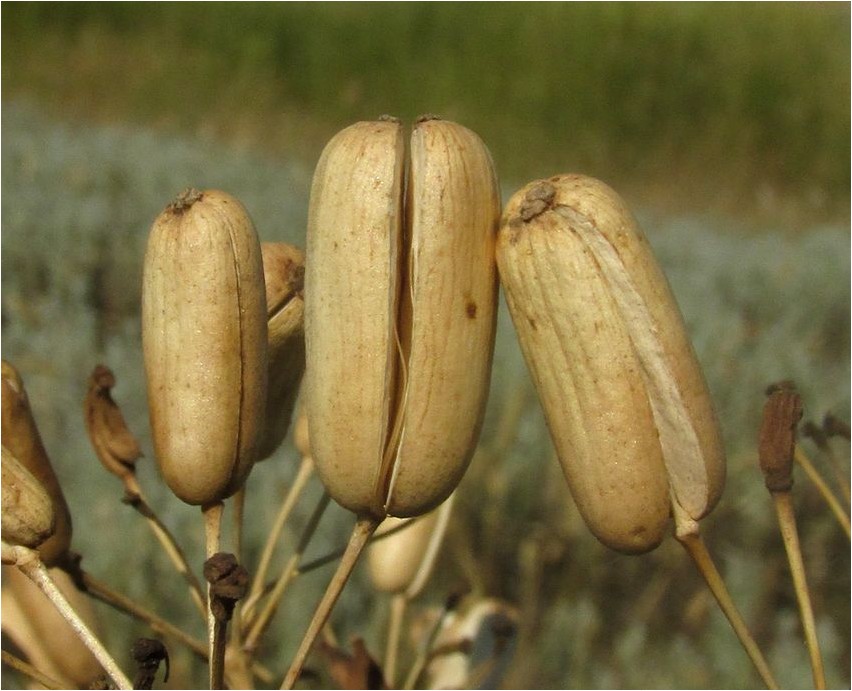
Prangos odontalgica Pall is one of the plants of the family called Umbellaceae; in Latin the name of this plant will be as follows: Prangos odontalgica Pall.
As for the name of the prangosa antidentum family itself, in Latin it will be: Apiaceae Lindl. (Umbelliferae Juss.).
Description of prangosa antidentum
Prangos antidentum is a perennial herbaceous plant whose height will vary between twenty and fifty centimeters. The thickness of the root of this plant is one to one and a half centimeters, while the root collar is covered with the fibrous remains of dead leaves and the remains of leaf petioles. The stem of Prangos antidentum is branched, straight and ribbed. The basal leaves of this plant are broadly triangular; they are on petioles that are almost equal to the plate. The length of such a plate of prangos antidentum will be about ten to twelve centimeters, and the width will be eight to thirteen centimeters. The basal leaves are three- or four-pinnately dissected, while the stem leaves of this plant are smaller in size. The umbrellas are endowed with four to seven bare rays, and the diameter is about two to four centimeters. The umbels of Prangos antidentum are endowed with from five to ten flowers, the petals are colored yellow and have an inwardly curved tip. The fruits of this plant are oblong-ovoid in shape.
Flowering of Prangosa antidentum occurs from May to July, while fruit ripening begins in June and continues until July. Under natural conditions, this plant is found in Central Asia, the European part of Russia and the Caucasus. For growth, this plant prefers alkaline meadows, clayey foothill plains and semi-deserts.
Description of the medicinal properties of prangos antidental
Prangos antidentifrice is endowed with very valuable healing properties, and it is recommended to use the roots and herbs of this plant for medicinal purposes. The term grass includes leaves, stems and flowers. The presence of such valuable healing properties should be explained by the content of the following coumarins in the roots of this plant: bergapten, isoimperatorin, prangenin, oxypeucedanin and imperatorin. The fruits of Prangos antidentum will contain quercetin glycosides, bergapten, pranchimgin, oxypeucedanin and essential oil.
An infusion prepared from the roots of prangos antidentifrice is recommended for use for toothache and dysentery. It is noteworthy that the roots of this plant are edible.

For dysentery, it is recommended to use the following very effective remedy based on this plant: to prepare such a healing remedy, you will need to take two teaspoons of crushed dry roots of Prangos antidentifrice in approximately one glass of boiling water. The resulting healing mixture should be infused for about two hours, after which this medicinal mixture based on this plant should be filtered very carefully. Take the resulting healing remedy based on prangos antidental three times a day before meals, two or three tablespoons for dysentery. It is important to note that in order to achieve the greatest degree of effectiveness when taking such a medicinal product, you should not only strictly follow all the rules for preparing such a drug based on prangos antidental, but also carefully observe all the rules for its administration.





