Fly Agaric: Description, Types, and Uses
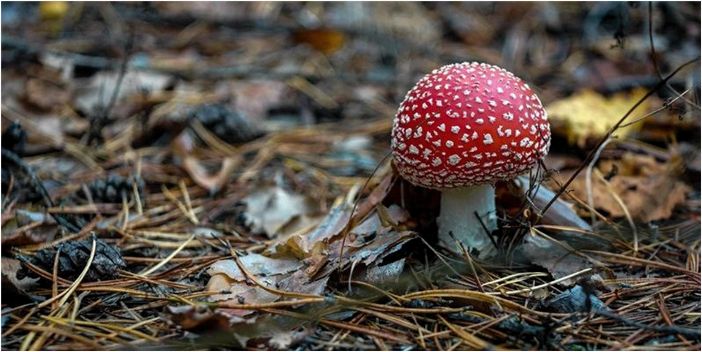
Fly agarics are difficult to confuse with other mushrooms. They are distinguished by their brightly colored cap of white dots. These mushrooms are considered harmful. However, they can be used to treat various ailments, and some are even edible. To unravel the secrets of these unique caps, you need to know what a fly agaric is, its description, types, and its benefits.
Contents of the article:
- General information about mushrooms
- Edible properties of the fly agaric
- Freya’s garlic is bright yellow
- Where to grow the fly agaric vitodini
- Amanita rubescens flyer (Amanita)
- Growing at Home and in the Country
- Wrong Two
- Eat and Taste
- Medicinal Properties and Uses in Folk Medicine
- Vodka Tincture
- Tips for Healers: Pros and Cons
General information about mushrooms
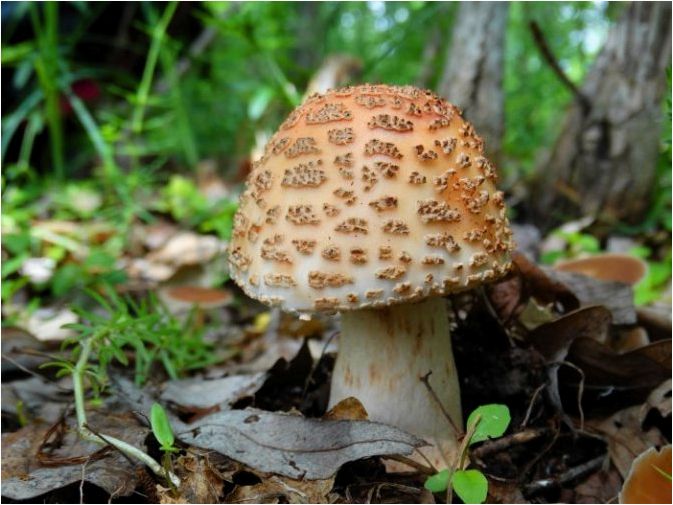
Fly Agarics belong to the genus of lamellar mushrooms in the Amanitaceae family. The name “fly agaric” refers to the widespread use of the red fly agaric in sanitary conditions as an insecticide against flies. Initially, this name referred only to the red fly agaric, but later extended to the entire mushroom family. The Latin genus name “Amanita” comes from Mount Amanon, where many edible mushrooms grew.
Edible properties of the fly agaric
A brief history.
Scientists believe the fly agaric’s origin is northeast Asia (probably Beringia, which is often found in areas of the Bering Sea and connects Eurasia and North America). The date of its origin is approximately 20-30 million years ago.
Albertus Magnus was the first to mention this form in his scientific work in 1256, calling it “Muka mushroom.” The modern name Amanita Muscaria was given on January 1, 1821, thanks to the father of the Swedish naturalist Elias Magnus Frith. In the 20th century, these data were revised and the date was changed to May 1, 1753.
Important! It is believed that flies are frightened by the presence of fly agaric, isobutyric acid and muskeg and die only from the smell of the pulp. This is not entirely true! In fact, these insects die and drink water (absorbing alkaloids) that accumulates in the mushroom cap. Thus, the flies fall asleep under the influence of these substances and simply drink into the water.

Bur
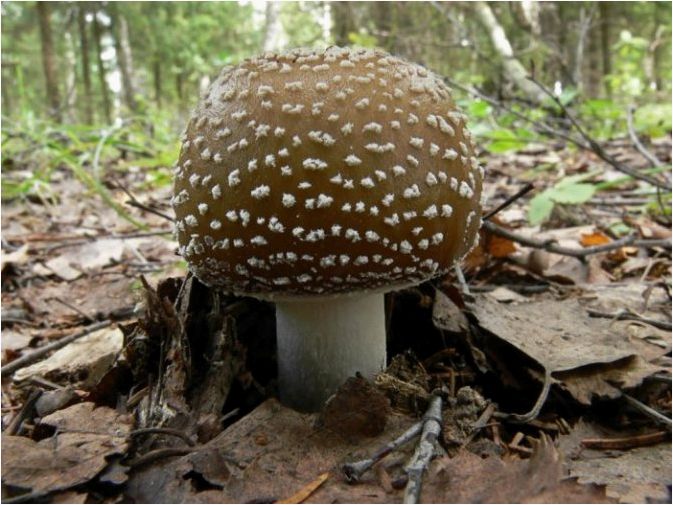
The caps are fleshy, sometimes knobby and easily separated from the legs. The cap is white, red or green and is covered with shreds and flakes from ordinary bedding waste. The edges are smooth or rubberized.
Hymenophore
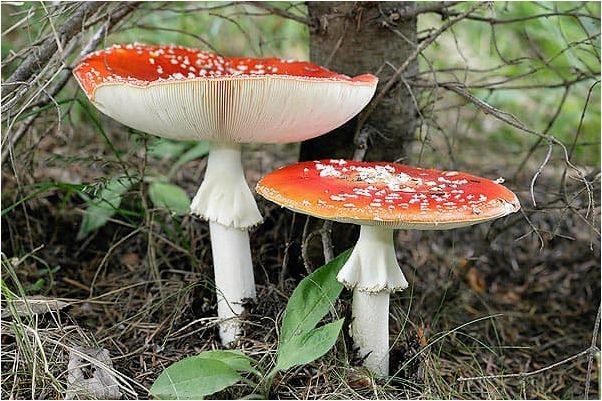
That’s why biologists call the lower part of the cap. The hymenophore is tubular, with white membranes in young ones and yellowish ones in old ones.
Cellulose
The pulp is white, and when cut, the color of individual species changes, so the smell is expressed differently.
Legs
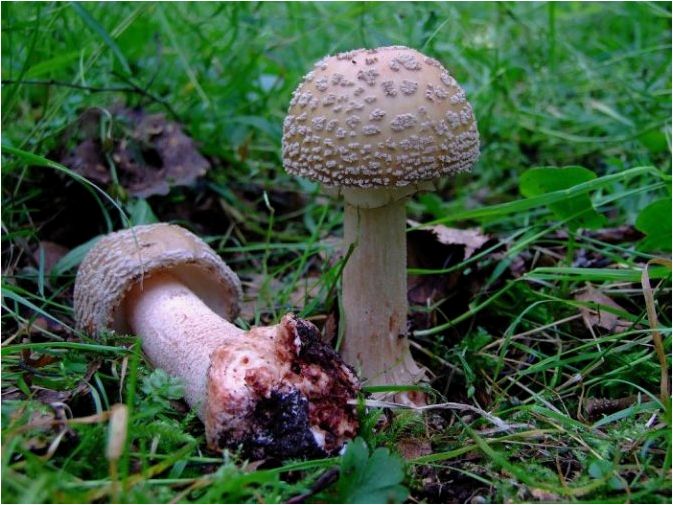
Linear cylindrical legs extend to the base.
Time and environment
Habitat – mixed coniferous, deciduous forests in temperate climates in the northern hemisphere, especially common in white chozenia and spruce forests with acidic soils. It forms a subtle symbiosis with almost all trees. It can be found next to redheads, boletuses, chanterelles and other species.
Grows singly or in groups from June to mid-June. In Russia it grows almost everywhere. There is no need to search for it for a long time. The mushroom can be found in any forest. This species is considered poisonous and is collected only for medicinal purposes. Now buy fly agaric mushrooms you can in the Three Fly Agaric online store.
What color is the red fly agaric?
The bright orange-red color of the umbrella of this mushroom is due to the presence of the substance muscarphine in the fruiting body. It has antitumor and antibiotic properties.
It is not stable in the red fly agaric safflower and is very bright and stable in the North American fly agaric Jackson’s safflower, which is used by the Aborigines to dye fabric.
Freya’s garlic is bright yellow.
This type of fungus is also toxic. However, unlike its predecessor, it is almost always fatal. The cap is characterized by a bright yellow color, also known as lemon or orange-yellow. Its surface is covered with many bright white scales.
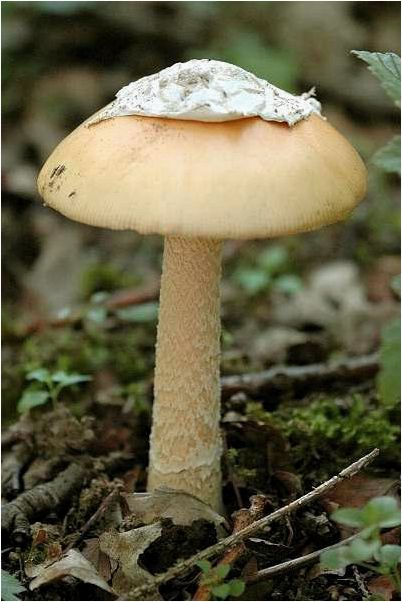
Under the lid there is a plate that changes color depending on the age of the mushroom. The young Venus mushroom is white, and as it matures the plates turn brown. The cap flesh has an aroma very similar to that of radish.
The bright yellow stalks of the Venus mushroom are fragile, velvety (but not always) and elongated. As the fungus matures, its ring may disappear completely. Towards the base, the legs acquire an elongated shape. This is precisely the main distinguishing feature of the poisonous Venice flycatcher, which cannot be confused with the edible Venice flycatcher.
The safflower fly agaric, described above, can be found from June to September.
Where to grow the fly agaric vitodini.
This species is distributed in several regions of southeastern and southern Russia. These mushrooms grow in the protected steppes of Stavropol, Saratov region, Ukraine, Kyrgyzstan and Armenia.
The Venetian Vittadini mushroom grows in Europe, from Italy to the British Isles, where the climate is relatively mild. These mushrooms are also found in Asia. Far East, Transcaucasia, Central Asia and Israel. Amanita Vittadini also lives in Africa, South and North America.
These mushrooms grow in meadows, forest glades and near forest belts. In Southern Europe, this species is considered very rare, which is perhaps why it is called poisonous. Fruiting of these Venetian mushrooms occurs between April and October. These mushrooms can take root in a variety of soils.
Similarities between the fly agaric vitodini and other mushrooms.
The Vittadini fly agaric is similar to a deadly and poisonous species – the white fly agaric.
Another fly agaric, Vittadini, can be confused with a white umbrella, but this is not dangerous.
Fly Agaric Wittadini food quality assessment. Fly Agaric Wittadini Classification.
Young Venetian Vittadini are considered edible. Their pulp has a pleasant aroma and taste. However, these are very rare mushrooms and should not be collected. In addition, there is a risk of confusing this conditionally edible mushroom with a very poisonous mushroom.
Feeding Types of the Flycatcher
Some mycologists believe that the Vittadini fly agaric Venetia venetia mushroom has characteristics of both the genus Tengutake and the genus Lepiotus. In this regard, these fungi are included in the genus Lepidera.
Amanita rubescens flyer (Amanita)
Caesar’s Mushroom (Amanita caesarea)
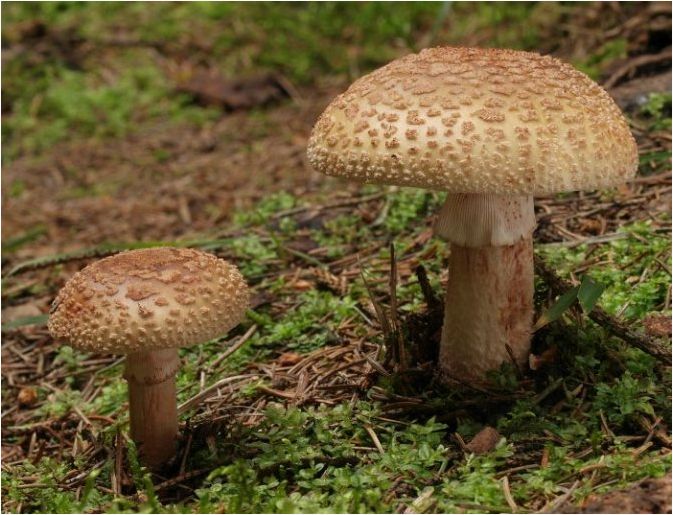
Also known as pink Amanita Venetian, Amanita Venetian carpal or Amanita Venetian pearl.
The umbel is 6-20 cm in diameter. Young mushrooms are hemispherical or oval, later becoming convex and flattened, without nodes. The cap is grayish-pink or reddish-brown, with a shiny, slightly sticky surface. The flesh is white, thick-fleshed, with a mild flavor and no noticeable odor. When cut, it quickly turns light pink and gradually becomes wine-pink. The stipes are 3-10 cm tall, 1. 5-3 cm thick, cylindrical, and medium-fruited in young mushrooms and hollow in mature ones. They are white or pinkish in color and have a knobby surface. There is a massive thickening at the base.
It grows in small groups or singly near deciduous and coniferous trees in any soil in the warm climates of the Northern Hemisphere. The season lasts from spring to late fall, with abundant fruiting from July to October.
Conditionally edible. Not eaten raw, but boiled and then fried.
Poisonous Fly Agaric (Amanita Ovoidea)
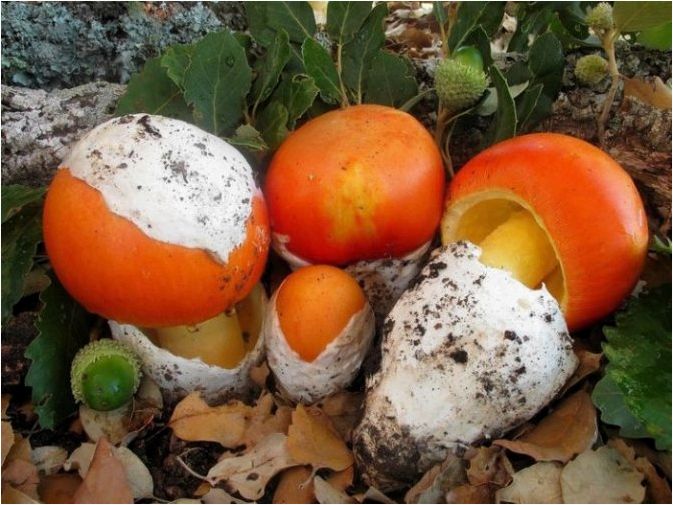
Caps are 8-20 cm in diameter, oval or hemispherical, convex or flattened in mature mushrooms, with grooved edges. The cap is golden-orange or bright red with a dry surface. The flesh is thick-skinned, pale yellow, and the stems are white, without a distinct odor or taste. The stems are 8-12 cm long, 2-3 cm thick, with a tuberous base, yellow-orange, and a smooth surface. Rings are present.
A common deciduous tree, along with beech, oak, and chestnut, is less common in coniferous forests and grows on sandy soils. It thrives in warmer northern latitudes, sometimes in the subtropics. The fruiting season lasts from summer to autumn.
An edible delicacy that can be baked, fried, dried, or eaten raw.
Is the Fly Agaric Edible?
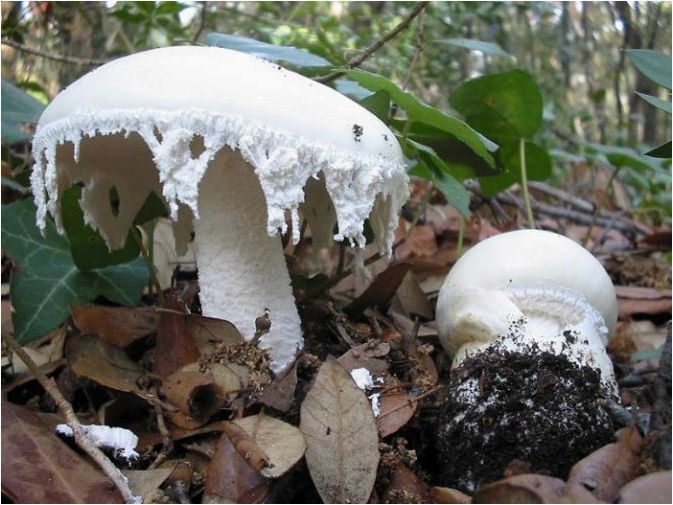
The cap is 6-20 cm in diameter, fleshy, ovoid, semicircular, later convex, with flattened edges. Young mushrooms have a white or off-white skin, a shiny, dry surface, and white scales. The flesh is white, dense, and does not discolor when cut, with a mild aroma and flavor. The stipes are strong and dense, 10-15 cm high, 3-5 cm thick, and spreading toward the base. The surface is white with a scaly, powdery coating.
It grows in deciduous and coniferous forests of Europe, the Mediterranean, the British Isles, Western Siberia, and Japan. Fruiting begins in August and ends in October. Is the fly agaric edible?
Growing at Home and in the Country
Many people often wonder: can safflower mushrooms be eaten? Some mushrooms are conditionally edible, including several poisonous safflower mushrooms. Of course, you don’t have to eat them, but there are other delicious mushrooms. Therefore, never risk your health and life.
The fly agaric, also known as the yellow-brown fly agaric, is conditionally edible and may be known as the “floater.” Its cap is thin, with little or no flesh, and, besides, it resembles a poisonous mushroom, so few people risk handling it. Theoretically, it can be eaten by repeatedly boiling, draining, and rinsing it. However, it’s not entirely clear why. Even after the toxins have been removed, they are completely tasteless and are eaten only when very hungry.
The mushroom has a slimy shell, is completely odorless, and has a thin, gelatinous stem and a black nodule in the center of the cap. The cone-shaped Venus mushroom is very fleshy, with a white or grayish cap and small pyramidal ridges on the surface. The stem thickens slightly toward the bottom and is found in spruce, pine, and deciduous forests, where beech and linden are the preferred trees.
Toxins are few, but muscimol and ibotenic acid remain. They can also be boiled several times and eaten.
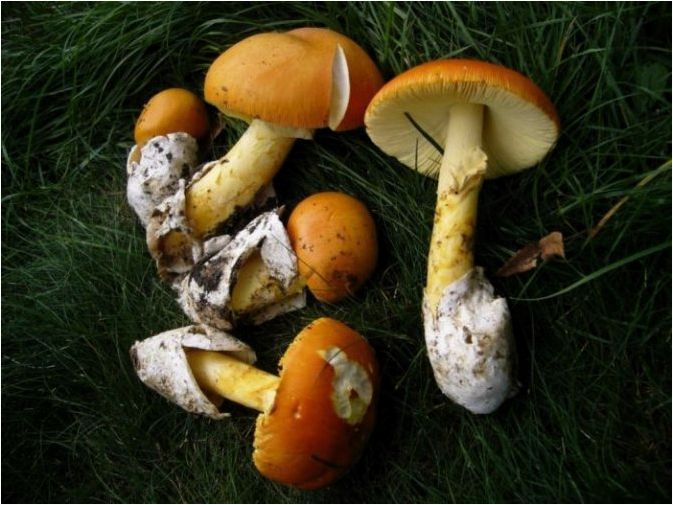
The Caesar’s mushroom is also a Venus mushroom, but unlike all others, it is edible, has an excellent flavor, and is considered a delicacy in some countries. The cap is reddish-orange, without spots or growths, and perfectly smooth. The stems of this Venus mushroom are golden, and the gills are also golden. The lower part of the stem has a sac-like cover. There are more common fly agarics, which are edible if properly processed, and pink fly agarics, as well as some species of diving beetles. However, as we mentioned above, this is not recommended; our country’s forests are home to a huge number of harmless and delicious mushrooms. Please leave fly agarics alone.
Cultivation at Home and in the Country
If there are no forests in your area, and you need agaric for medicine, you can theoretically grow it. To do this, the mushrooms must be collected from the forest and planted in prepared soil. Growth begins after a few years.
The short process for growing fly agarics is as follows:
Wrong Two
Dissolve the spores (mycelium) and moisten the soil with water. For successful growth, it is necessary to constantly maintain the level of humidity necessary to meet the basic needs of the mushrooms;
It may take several years for agaric to reproduce. Failure is also possible due to extreme temperatures, frost, overwatering or, conversely, drought. However, this species demonstrates a high degree of adaptability to almost all habitats.
- Wrong two
- Amanita mushrooms have a reddish appearance and are related to the Caesar mushroom (Amanita Caesarea), common in Southern Europe. However, Caesar has golden yellow legs and plates. Another relative, the fly agaric agaric, is listed in the Red Book.
- This distinctive feature is easily identified from individual photographs.
Eat and Taste
Eat and taste
Although the red fly agaric agaric is known to be poisonous, aspects of this mushroom should not be bypassed and eradicated further. The famous Russian mycologist Mikhail Vishnevsky believes that there are 15 ways to consume this fruit: the first is to eat it, the second is to eat it, the third is to eat it. Nothing bad happens when you eat Flagarik red – it has a sweet and delicate taste. It is not recommended to pickle this inedible mushroom.
Boiling, frying and other types of heat treatment using toxic substances contained in mushrooms: issainic acid and muscimol. Pre-peeling the skin from the cap and periodically draining the water completely deprives these fruits of their psychotropic properties.
Medicinal Properties and Uses in Folk Medicine
Interesting fact! The history of mankind does not know a single case of fatal poisoning by a red fly. For example, it has been calculated that at least 20 large fly agaric mushrooms must be eaten to cause poisoning.
Medicinal properties and use in folk medicine
The mushroom cap, or the red film on its top, has the greatest therapeutic value. Fly agaric agaric contains potent toxic alkaloids: muscarine, muscaridine, muskomol and sour ulcer. The mushroom contains a lot of fiber, as well as enzymes that promote the breakdown of fat and glycogen.
This type of fruit is very effective against cancerous dermatitis (cancer, leukemia) and radiation ulcers. In the pharmacological industry and homeopathy, medicines are produced from mushroom extracts for painful angina with stabbing and burning strokes in the heart, left arm, severe dynamic pit, arrhythmia, limbs, hernias and hernial formations.
Vodka Tincture
Important information! Treatment must be prescribed and accompanied by a doctor. Self-preparing and using drugs based on mushrooms is fraught with dangerous consequences and can cause great harm to health!
Vodka tincture Vodka tincture
Fly agaric tincture is an excellent folk remedy for many ailments. It can treat ulcers, joint pain and even cancer.
Extract juice from fresh fruits;
Vodka Tincture
Mix with alcohol or vodka in a 1:1 ratio;
- Pour the product into a dark glass container, close tightly and leave for 10 days.
- This tool is for external use only. The container must be shaken thoroughly before each use.
- For internal use, the product is prepared according to a different recipe.
- The chopped deep fat should be stored in the refrigerator for 1-2 days. Then they should be cut into small pieces and placed in glass jars;
Pour in vodka or alcohol (70%), the liquid should cover the contents of the jar by 2-4 cm;
Insist for 2-3 weeks.
- This remedy helps with friction in rheumatism, neuritis, osteochondrosis, problems with the spine and back. It is used orally in drops: 15-20 drops per dose as a sleeping pill, cough and pneumonia remedy.
- Homeopathic treatment can be prescribed for red flytrap:
- Squeeze the juice from the mushrooms (2 drops) and pour in vodka (10 ml);
Close the container with a lid and shake it thoroughly;
Measure just 2 drops from this bottle and place in the same container with 10 ml of vodka. This procedure must be repeated 30 times. This means that the initial dose should be diluted 1:30.
- The drug should be taken twice a day, 5 drops per tablespoon and washed down with liquid. The alcohol tincture should be used for three weeks, then take a week’s break.
- Fly agaric red and dry
- Drying Amanita muscaria helps convert the poisonous pain into a more dangerous and psychoactive compound called muscovol. It is best to dry the fruiting body in its natural environment, strung on twine or other convenient device (wire, thin rope).
Make sure that it is you in front of you, and not another relative of this species;
Red and Dried Fly Agaric
Prefer small, young specimens, and leave old and slow ones in the forest;
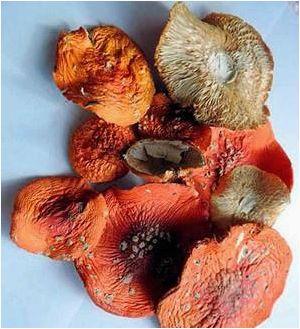
- Dry the fruit until it becomes brittle;
- Once dry, the product should be stored in a dark, dry place.
- ATTENTION! 10 g of well-prepared fly agaric corresponds to 110 g of fresh one.
- The effectiveness of taking dried flask depends on the dosage taken and the individual characteristics of the person. The average dose is 15 g or 5 small caps, best taken gradually. In small doses, a person can feel increased strength, good health and clarity of mind. Medium – visual hallucinations appear, but the person is still able to respond adequately and answer questions. At higher doses, a person may experience inappropriate vomiting, gastrointestinal disorders, diarrhea, and increased production of saliva and sweat.
- Prepared decoction
A decoction of fly agaric strengthens the immune system – the active substances of the mushroom produce antibodies that begin to fight the toxins of the mushroom, as well as other unwanted elements and parasites. This remedy helps expel worms from the intestines and lamblia from the liver, is used for diarrhea, constipation and flatulence and has a eucharistic effect.
A decoction of fly agaric is prepared as follows.
Prepared Decoction
They should be simmered over low heat for about 10-15 minutes;
Cool and strain the broth;
- Take 5-10 drops three times a day after meals.
- Oncology.
- Cancer patients who have lost faith in healing often resort to treating their illness with the help of folk remedies. This is extremely dangerous and is not recommended by doctors. However, products from Fly Agaric are taken externally and internally in special regimens, considering them a lesser evil compared to chemotherapy. In addition, such folk remedies are considered good cancer prevention.
- The preparation algorithm consists of the following stages:
Oncology
Leave for 14 days in a dark place;
After this time, the infusion is filtered.
- Treatment is carried out according to this scheme. Reception begins with 1-2 drops per day and increases by 1-2 drops daily. The total volume is 30-40 drops per dose. This treatment can last a very long time, up to 6 months. Then the dose is reduced in the opposite direction, a break is taken, and the process is repeated again. When carrying out such treatment, it is necessary to monitor the diet. Eat dairy products, vegetables and fruits, and drink plenty of water.
- Red fly agaric ointment for radiculitis and arthritis
- To prepare this folk remedy, take a fresh mushroom cap and grind it in the same amount of sour cream or other fat (you can use badger). The mixture is thoroughly ground and applied to the sore spot overnight. In the morning, the area is washed with warm water. Store the ointment in a non-metallic container.
Horseradish juice for compresses for inflammation
Red Fly Agaric Ointment for Radiculitis and Arthritis
Tips for healers: pros and cons
Horseradish Juice for Compresses for Inflammation
After such “treatment” you will not only not recover, but you are also likely to develop even greater health problems.
Tips for Healers: Pros and Cons
Even if it seems that the use of injections or ointments from fly agaric does not cause harm, this is not at all true.
Alcohol tincture.
The toxins in this mushroom are not destroyed by alcohol, but it makes excellent concentrates. And this is a real poison that does not bring anything to a person except great harm.
For treatment, you can only use drugs prescribed by a doctor in accordance with a strict prescription. Therefore, do not use the drugs yourself and do not go into the forest to collect safflower mushrooms.
https://palamos. ru/recepty/vidy-muhomorov-foto-i-description. html;
https://organic-fertil. ru/griby/kak-vyglyadit-nastoyashchij-muhomor. html;
https://25school. ru/o-gribah/vidy-muhomorov-foto-i-description. html;
- https://muhomor. club/vidy/krasnyj;
- https://gribnik. info/muhomor-krasnyj/;
- https://nauka. club/okruzhayushchiy-mir/mukhomor. html.
- Fly agaric: description of the mushroom, its types and uses
- Fly agaric: description of the mushroom, its types and uses
- Fly agaric: description of the mushroom, its types and uses






