Kariya
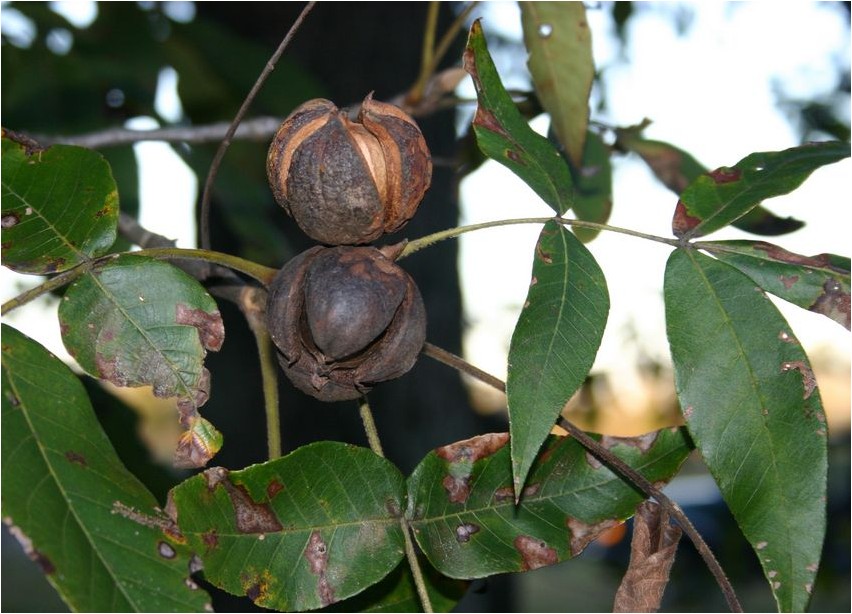
Caria (lat. Carya) is a genus of trees of the Walnut family. Another name is Hickory. The genus has about 20 species. Natural range — North America.
Two wild species grow in China; these include Chinese Caria and Tonkin Caria. Typical locations are deciduous forests, river valleys, and flooded areas with fertile soils. The most common species in cultivation is Carya pecan. Average life expectancy is 400-500 years.
Characteristics of culture
Caria, or Hickory, is a large deciduous tree up to 65 m high. Exception: the species Carya floridana — represented by shrubby forms. The crown of the plants is ovoid or tent-shaped. The branches are powerful, thick, with a dense core. The bark on the trunk is smooth, gray, and cracks or peels off in long plates with age. The buds are short-petiolate or sessile, covered with numerous overlapping scales. The leaves are green, large, compound, odd-pinnate, alternate, consisting of 3-13 leaflets. The leaves are lanceolate, toothed, pointed at the tip. In autumn, the foliage turns bright yellow or golden yellow.
Flowers are dioecious. Female flowers are sessile, collected in few-flowered spikelets, male flowers — in drooping catkins. The fruit is a false drupe and may have an oblong, obovate or spherical shape. The shell of the fruit is fleshy, woody, and when ripe it cracks into four wings. The nut is slightly wrinkled or smooth, with clearly defined ribs. The kernel is dark brown, 2-4 lobed, edible. Caria begins to bear fruit 10-12 years after planting (subject to optimal conditions and careful care).
Among the representatives of the genus, it is worth noting the species Carya fringed, or Great shaggy Hickory (lat. Carya laciniosa). The species is represented by trees up to 40 m high with a trunk covered with light gray flaking or cracking bark. The buds are large, brown, pubescent. The branches are thick, bare, brown, equipped with reddish lentils. The leaves are large, complex, consisting of 7-9 oblong leaflets. The fruits are spherical, brown, up to 6 cm in diameter. The nut kernel is sweet, enclosed in a strong woody shell. The species in question is propagated by seeds. Sowing is carried out in autumn or spring. When sowing in spring, seeds are subjected to 90-day stratification.
The most common cultivated species (as mentioned above) is Carya pecan, or Hickory pecan (lat. Carya pecan). The species is represented by powerful trees up to 50 m high with a trunk covered with gray-brown bark. The crown is tent-shaped. The leaves are alternate, compound, green, consisting of 11-17 leaflets. The fruits are oblong, collected in clusters of 2-10 pieces. The nut is smooth, with a thin brown shell with black stripes. The nut kernel is sweet and oily. The species is photophilous; at the initial stage, rapid growth should not be expected from it. The crop cannot boast of frost-resistant properties; it can withstand short-term frosts down t o-20C. Caria pecan is relatively resistant to diseases and pests. The species in question is propagated by seeds. Currently, about 100 cultivated varieties and several hybrid forms have been bred.

Another interesting species is Carya alba, or White Hickory. The species is represented by trees up to 30 m high with dark gray, fissured bark. Young shoots are tomentose-pubescent, pale. The leaves on the outside are dark green with a yellowish tint, glabrous, on the inside they are pubescent and brown. The fruits are pear-shaped or spherical, collected 1-4 pieces in a cluster. The nuts are ellipsoidal or spherical, light brown, often flattened, and have a fairly thick and strong shell. The kernel is small and sweet. The species is relatively frost-resistant, withstands frosts down t o-30C.
Subtleties of cultivation and care
Caria is a heat-loving plant; its cultivation is possible only in open ground conditions. Caria is not suitable as a houseplant. It is recommended to grow caria only in regions with mild winters. Currently, cold-resistant varieties have been developed that can withstand short-term temperature drops t o-36C. But in practice, not everything is as good as it seems; most of them, even at a temperature o f-30C, hopelessly die. It is advisable to grow caria as seedlings. The seed method is not prohibited, but it is very labor-intensive and time-consuming. Sowing is carried out in autumn or spring with a preliminary 90-day stratification.
Caring for caria (or hickory) consists of standard procedures for all Nuts. Young plants need more careful care, namely frequent and abundant watering, systematic fertilizing with mineral fertilizers, loosening the tree trunk and weeding. Mulching the tree trunk area is encouraged. You can use organic material as mulch — peat, leaves, sawdust. Sanitary pruning is mandatory for carias; the removal of thickening branches will have a beneficial effect on the general condition of the trees. Preventative treatment against pests and diseases is important for plants.
“Kariya” episode 12 / “Kariya” 12th episode
Kariya
Caria (lat. Carya) is a genus of trees of the Walnut family. Another name is Hickory. The genus has about 20 species. Natural range — North America.
Two wild species grow in China; these include Chinese Caria and Tonkin Caria. Typical locations are deciduous forests, river valleys, and flooded areas with fertile soils. The most common species in cultivation is Carya pecan. Average life expectancy is 400-500 years.
Characteristics of culture
Caria, or Hickory, is a large deciduous tree up to 65 m high. Exception: the species Carya floridana — represented by shrubby forms. The crown of the plants is ovoid or tent-shaped. The branches are powerful, thick, with a dense core. The bark on the trunk is smooth, gray, and cracks or peels off in long plates with age. The buds are short-petiolate or sessile, covered with numerous overlapping scales. The leaves are green, large, compound, odd-pinnate, alternate, consisting of 3-13 leaflets. The leaves are lanceolate, toothed, pointed at the tip. In autumn, the foliage turns bright yellow or golden yellow.
Flowers are dioecious. Female flowers are sessile, collected in few-flowered spikelets, male flowers — in drooping catkins. The fruit is a false drupe and may have an oblong, obovate or spherical shape. The shell of the fruit is fleshy, woody, and when ripe it cracks into four wings. The nut is slightly wrinkled or smooth, with clearly defined ribs. The kernel is dark brown, 2-4 lobed, edible. Caria begins to bear fruit 10-12 years after planting (subject to optimal conditions and careful care).
Among the representatives of the genus, it is worth noting the species Carya fringed, or Great shaggy Hickory (lat. Carya laciniosa). The species is represented by trees up to 40 m high with a trunk covered with light gray flaking or cracking bark. The buds are large, brown, pubescent. The branches are thick, bare, brown, equipped with reddish lentils. The leaves are large, complex, consisting of 7-9 oblong leaflets. The fruits are spherical, brown, up to 6 cm in diameter. The nut kernel is sweet, enclosed in a strong woody shell. The species in question is propagated by seeds. Sowing is carried out in autumn or spring. When sowing in spring, seeds are subjected to 90-day stratification.
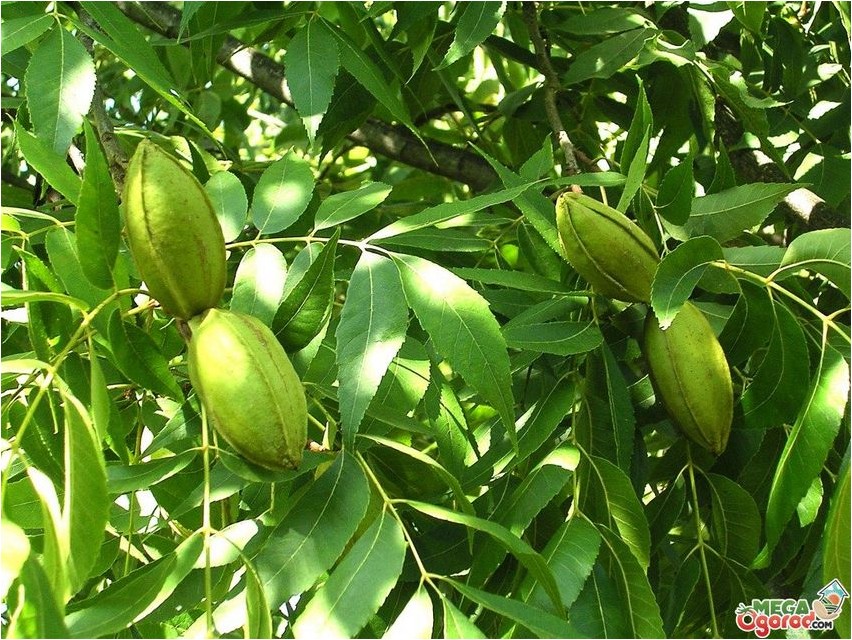
The most common cultivated species (as mentioned above) is Carya pecan, or Hickory pecan (lat. Carya pecan). The species is represented by powerful trees up to 50 m high with a trunk covered with gray-brown bark. The crown is tent-shaped. The leaves are alternate, compound, green, consisting of 11-17 leaflets. The fruits are oblong, collected in clusters of 2-10 pieces. The nut is smooth, with a thin brown shell with black stripes. The nut kernel is sweet and oily. The species is photophilous; at the initial stage, rapid growth should not be expected from it. The crop cannot boast of frost-resistant properties; it can withstand short-term frosts down t o-20C. Caria pecan is relatively resistant to diseases and pests. The species in question is propagated by seeds. Currently, about 100 cultivated varieties and several hybrid forms have been bred.
Another interesting species is Carya alba, or White Hickory. The species is represented by trees up to 30 m high with dark gray, fissured bark. Young shoots are tomentose-pubescent, pale. The leaves on the outside are dark green with a yellowish tint, glabrous, on the inside they are pubescent and brown. The fruits are pear-shaped or spherical, collected 1-4 pieces in a cluster. The nuts are ellipsoidal or spherical, light brown, often flattened, and have a fairly thick and strong shell. The kernel is small and sweet. The species is relatively frost-resistant, withstands frosts down t o-30C.
Subtleties of cultivation and care
Caria is a heat-loving plant; its cultivation is possible only in open ground conditions. Caria is not suitable as a houseplant. It is recommended to grow caria only in regions with mild winters. Currently, cold-resistant varieties have been developed that can withstand short-term temperature drops t o-36C. But in practice, not everything is as good as it seems; most of them, even at a temperature o f-30C, hopelessly die. It is advisable to grow caria as seedlings. The seed method is not prohibited, but it is very labor-intensive and time-consuming. Sowing is carried out in autumn or spring with a preliminary 90-day stratification.
Caring for caria (or hickory) consists of standard procedures for all Nuts. Young plants need more careful care, namely frequent and abundant watering, systematic fertilizing with mineral fertilizers, loosening the tree trunk and weeding. Mulching the tree trunk area is encouraged. You can use organic material as mulch — peat, leaves, sawdust. Sanitary pruning is mandatory for carias; the removal of thickening branches will have a beneficial effect on the general condition of the trees. Preventative treatment against pests and diseases is important for plants.