Willow
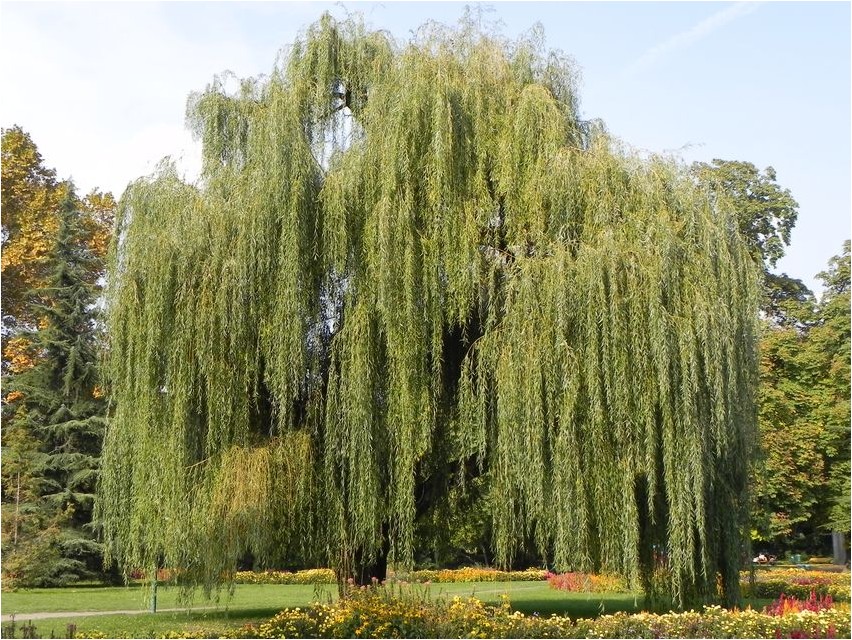
Plants for ponds, Willow is one of the plants of the family called Willow, in Latin the name of this plant is as follows: Salix.
This plant is perfect for both ponds and coastal areas. It is noteworthy that this plant has become very widespread throughout Europe, and in Russia the plant is found everywhere, with the exception of the Far North.
Description of this plant
It should be noted that some species of this plant can differ quite significantly from each other. In total, there are more than three hundred species in this genus, and many of these species are found in culture. Most often, these plants are endowed with a transparent crown, and their shoots are very narrow and flexible. Willow leaves are quite narrow, pointed and slightly elongated. As for willow flowers, they are quite small in size. The height of willows can reach even fifteen meters, however, sometimes you can find much taller species: about thirty to forty centimeters. There are also dwarf varieties of this plant.
As for the white willow, the height of this plant varies between fifteen and twenty-five centimeters, and the width — between five and fifteen meters. This willow has a fairly powerful trunk, and the bark is colored gray. The willow crown starts from narrow columnar and ends broadly rounded. The leaves of this plant are lanceolate, when they bloom, they are silver-gray, and then change their color to grayish-green. This willow bears yellow flowers with a rather pleasant aroma, these flowers bloom around the end of April or beginning of May. The plant prefers sun or partial shade for cultivation; it is worth noting that willow is quite resistant to both wind and winter. It is noteworthy that the lifespan of this plant can be even a hundred years. As for the weeping willow, in the spring the bark of this plant is painted in bright yellow tones, and in the summer it becomes red-brown in color. This willow has amazingly beautiful leaves: they are pointed in shape, very narrow and colored in light green tones. Propagation of this plant occurs quite easily, both with the help of summer and lignified cuttings.
Features of cultivation
Most varieties of this plant are particularly fond of light, but some varieties can also tolerate long-term shade. This plant can grow on a variety of soils, including not particularly fertile ones. It is worth noting that willows do not require special care. When the weather is particularly dry, it will be necessary to provide watering for the moisture-loving species of this plant. In addition, such willows will also need to be sprayed regularly. In the spring, it is recommended to loosen the soil, as well as mulch with peat: these measures should be carried out only for young plants. It is important to remember that willows tolerate pruning well, so their crowns can be shaped. There are also some plant species for which such formation is necessary. In addition, for the favorable development of this plant, it is also important to promptly trim dead branches, and in addition, excessively long branches that are located at the bottom of the plant.
Reproduction of this plant can occur not only through seeds, but also vegetatively. Vegetative propagation includes propagation through layering and cuttings. It is worth noting that these plants are endowed with excellent germination. Such shoots can take root when they touch the ground. It is recommended to transplant willows before the plant reaches four years of age. For transplantation, it is recommended to choose the spring season, when the buds have not yet bloomed. If you grow this plant in heavy soils, you will need to ensure reliable drainage.


