Dactylorhiza, or Dactylorhiza
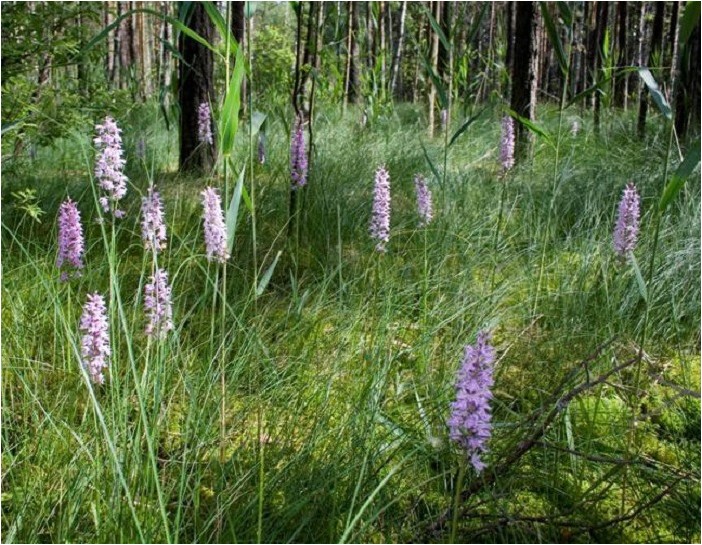
Dactylorhiza, or Dactylorhiza (Latin: Dactylorhiza), is a genus of herbaceous perennial plants classified by botanists in the orchid family (Latin: Orchidaceae). Unlike most orchid species, which are epiphytes and do not require soil, plants of this genus live on the ground, like most other plants. The underground part of the plant, represented by roots and curious tubers, is associated with fungal mycorrhiza, with which the plant establishes a mutually beneficial exchange of nutrients.
What’s in a name
The Latin name of the genus “Dactylorhiza” is derived from two Greek words, “daktylos” and “rhiza,” which in Russian mean “finger” and “root.” The genus owes its name to its underground part, since, unlike most orchids, which are epiphytic and do not require soil, plants of this genus grow on the ground.
It was the shape of the plant’s underground tubers that led botanists to name the genus “Dactylorhiza,” as the tubers and roots resemble a human hand.
Plants of the genus “Dactylorhiza” were previously classified in the genus Orchis, which also grows on the ground and forms underground tubers. Because the tubers of Orchis are rounded, resembling an egg, and the tubers of the plants classified as a separate genus, “Dactylorhiza,” are palmately divided, botanists decided to divide them into different classification “shelves.”
The Russian name of the genus “Dactylorhiza” is a simple translation from Latin. There is another, less commonly used Russian name, “Dactylorhiza.”
The genus comprises approximately forty plant species.

Description
The basis for the perenniality of above-ground plants of the genus Dactylorhiza are underground tubers, of which there are usually two, similar to the two tubers of plants of the genus Orchis. The tuber, having accumulated nutrients during the previous year’s growing season, serves as a “food supply” for the newly emerging plant, which, during the new growing season, forms a new, hard young tuber for the following year. This is a kind of cycle of life between the underground and above-ground parts of the plant.
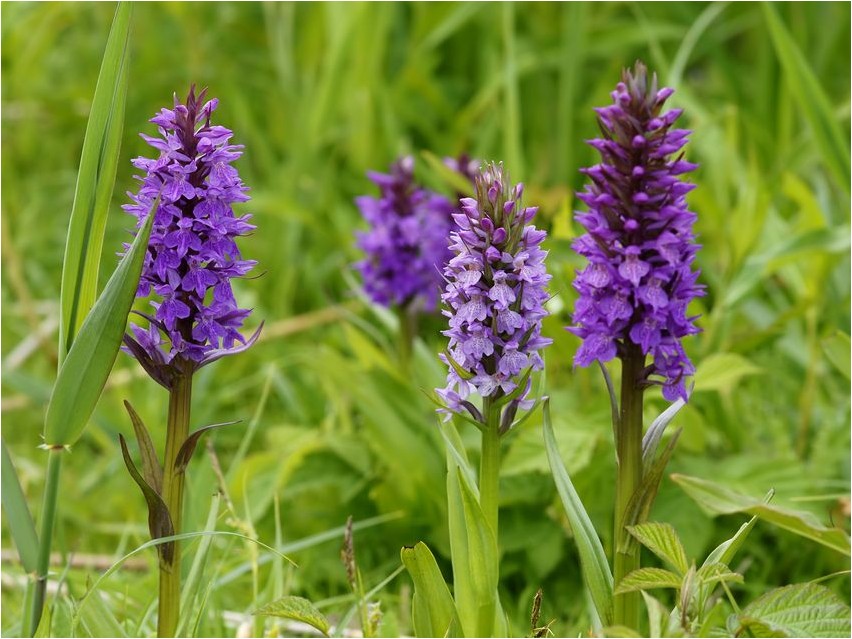
From last year’s tuber, a strong, erect stem emerges from the ground in the spring, with sheathed, lanceolate or oblong leaves clasping it. As they approach the top of the stem, the leaves become smaller and narrower.
The stem is crowned by a multi-flowered racemose inflorescence formed by flowers typical of orchids, which have a complex structure, described by a number of specific terms: “lip”, “column”, “pollinia”. The colors of the flowers include white, pink, lilac, and reddish colors. In addition, the petals can be marked with a pattern of dots, dashes, lines, a color that is bright and contrasting with the main background.
The behavior of the lip is interesting: at the bud stage it is on top, but by the time of flowering it is at the bottom due to the flower turning 180 degrees. After all, it is in this position that it can fulfill its main task in the pollination process – to be a landing site for insect pollinators.
The fruit of the plant is a multi-seeded capsule, the numerous small seeds of which are carried by the wind over long distances. But the problem with seeds is that for them to germinate, they need to meet certain fungi with mycorrhiza, which does not always happen.
Usage
The high frost resistance of plants of this genus allows fans of orchids to grow this amazing creation of nature on their plots, in open ground. They are also grown as indoor plants.
Tubers of some species were used for medicinal purposes.
Fingerroot or dactylorhiza Description Cultivation and care





