Melotria rough
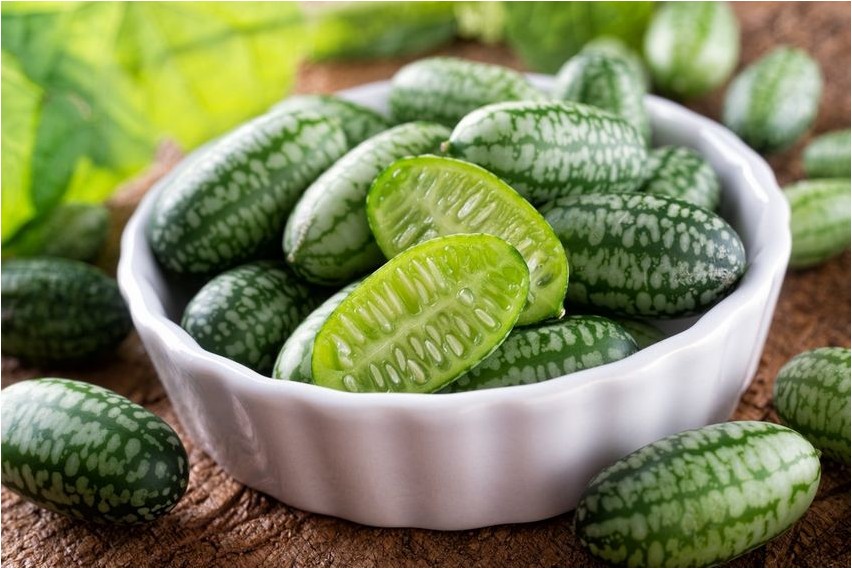
Melothria scabra is a perennial vine of the Melothria genus of the Cucurbitaceae family. The plant is native to the tropical forests of equatorial Africa.
It is cultivated primarily to produce small edible fruits that taste like cucumbers. In Russia, melotria is relatively new.
Characteristics of culture
Melotria rough is an annual herbaceous plant that forms spreading vines with a large number of side shoots with rough tendrils up to 3 m long. The leaves are pubescent over the entire surface, pointed, triangular in shape. The flowers are small, bright yellow, funnel-shaped, dioecious. Female flowers are solitary, male flowers are collected in axillary bunch-shaped inflorescences.
The fruits are small, 1. 5-2. 5 cm long, usually light green in color. In addition to fruits, the plants form nodules weighing up to 300-400 g; they resemble sweet potato tubers in shape and taste. Melotria roughy bears fruit in July-November (depending on climatic conditions). The fruits ripen very quickly, so they are collected every other day. Under favorable growing conditions and timely care, you can get up to 5-6 kg of fruits and up to 1-1. 5 kg of tubers.
Growing conditions

Melothria rough prefers open sunny areas, although semi-shaded areas, for example, under voluminous tree crowns, are also not prohibited. Soils are preferred fertile, light, moderately moist. Acidic, saline, swampy and waterlogged soils are not suitable. The culture of lowlands with stagnation of melt water and cold air does not accept it.
Sowing
Melotria rough seeds are quite small, so they are sown in the ground without embedding. You can grow the crop in seedlings; in this case, the seeds are sown in special boxes filled with a nutrient mixture, gently sprinkled with warm water and covered with plastic wrap. Shoots appear in 2-3 weeks. Young plants need good lighting; the optimal air temperature in the room is 29-30C.
When three true leaves appear on the seedlings, the seedlings are planted in separate containers of 2-3 pieces. After 7-10 days, melotria is fed with complex mineral fertilizers. Seedlings are transplanted into open ground at the end of May.
The first fruits can be obtained a couple of weeks after planting, although this largely depends on climatic conditions. Melothria is a productive plant; a fruit is formed in almost every node. Young fruits have a more interesting and rich taste and aroma than those in which seeds have already formed.
Care
Since melotria grows very quickly, it needs support; a chain-link mesh will cope with this task perfectly. In the initial stage, plants require regular weeding and loosening. In the future, melotria will suppress weeds on its own. Watering is carried out as needed; the soil in the stem zone should not be allowed to dry out. The first fertilizing in open ground is carried out a week after planting, then it is necessary to carry out a couple more fertilizings. The crop is not prone to pests and diseases; occasionally it can be susceptible to powdery mildew.
MELOTRIA ROUGH AFRICAN CUCUMBER/HARVEST.
https://www. youtube. com/watch? v=Qulw8Y1BGeg





