Field navel
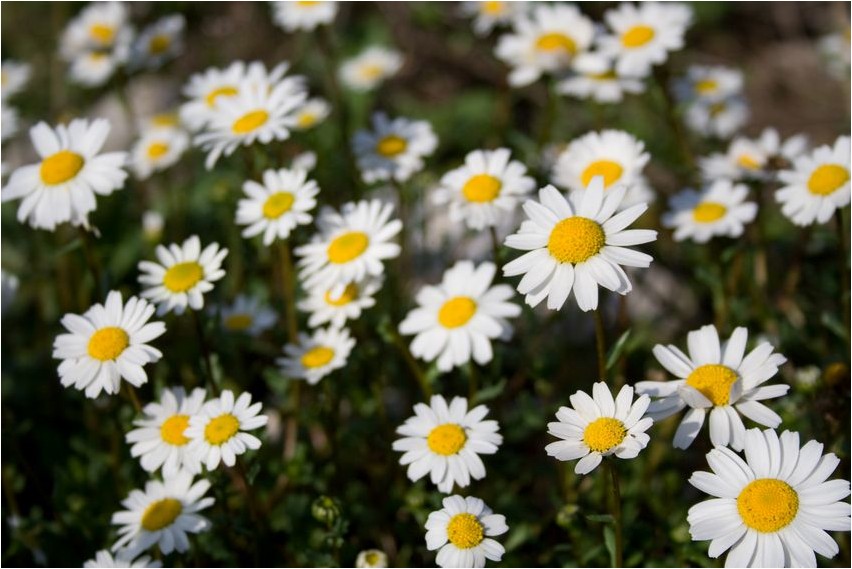
The field navel is one of the plants of the family called Asteraceae or Asteraceae; in Latin the name of this plant will be as follows: Anthemis arvensis L.
As for the name of the field navel family itself, in Latin it will be like this: Asteraceae Dumort. (Compositae Giseke).
Description of the field navel
Field navel is an annual or biennial herbaceous plant, the height of which will vary between fifteen and forty-five centimeters. Such a plant will be endowed with an erect stem, which is covered with silky hairs, curly or appressed. The leaves of the field navel will be pinnately dissected with lanceolate, thrice-cut or double-cut sharp lobes. The inflorescence of this plant consists of medium-sized baskets, which are composed of marginal false-ligulate white and medium bisexual tubular flowers. Such flowers of the field navel will have bract scales, which are endowed with a prickly pointed tip. The fruit of the field navel is an achene.
The flowering of the field navel occurs during the period from June to July. Under natural conditions, this plant is found in the Caucasus, Moldova, Belarus, Crimea, Ukraine and all regions of the European part of Russia, with the exception of the Lower Volga, Dvina-Pechora and Volga-Kama regions. For growth, this plant prefers garbage places, steppes, places along fields and roads, as well as forest clearings. It is noteworthy that the field navel is a very valuable insecticide.
Description of the medicinal properties of the field navel
The field navel is endowed with very valuable healing properties, and for medicinal purposes it is recommended to use the roots, grass and grass juice of this plant. The concept of grass includes inflorescences, stems and leaves.
The presence of such valuable healing properties should be explained by the content of polyacetylene compounds in the roots of this plant, while the fruits will contain an aromatic compound called benzaldehyde and cyanogenic compounds.

An infusion made from this plant’s herb is indicated for use as an anthelmintic. Juice from the herb is used to treat various malignant tumors, the root powder has potency-enhancing properties, and root poultices are used for toothache. Infusions and decoctions from the roots of the field chamomile are used internally for epilepsy and are also used as an analgesic.
The following remedy based on this plant is considered very effective for epilepsy: to prepare this remedy, take one teaspoon of crushed dried field chamomile roots per cup of boiling water. The resulting medicinal mixture should first steep for about two to three hours, after which it is thoroughly filtered. This remedy based on the field chamomile is taken two to three times daily, one-third to one-quarter of a cup, not only for epilepsy but also as an analgesic. When used correctly, this remedy is very effective, and the positive effects are noticeable quite quickly.
For malignant pain, it is recommended to use the juice of the field chamomile herb. This herbal remedy is taken two to three times a day, regardless of meals, one tablespoon at a time: the positive effects will be noticeable quite quickly.





