Biennial Oslinnik
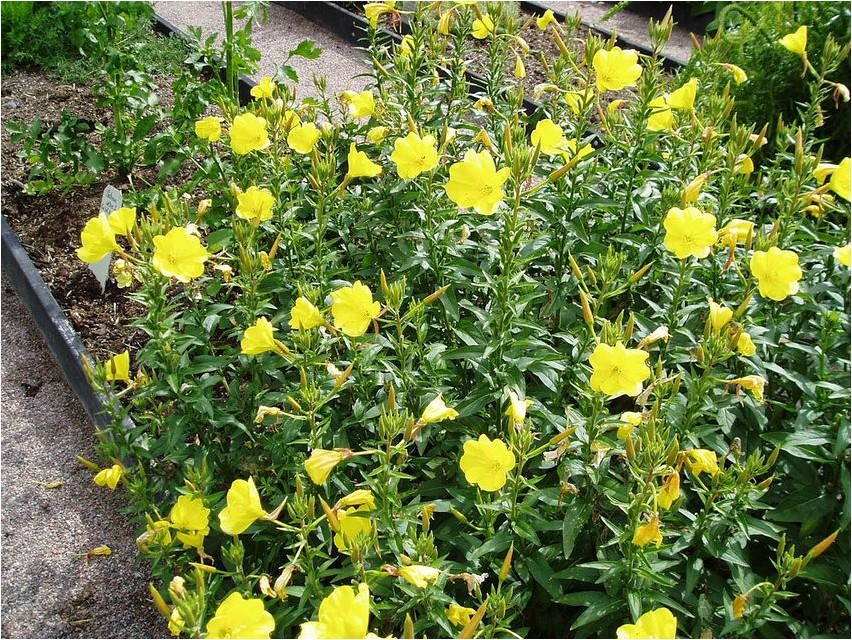
Biennial aspen is one of the plants of the family called fireweed; in Latin the name of this plant will be as follows: Onagra biennis (L.) Scop.
As for the name of the biennial aspen family itself, in Latin it will be: Onagraceae Juss.
Description of the biennial aspen
The biannual oslinnik is known by the following popular names: Zhovtets, wormwood babek, perelept, oslinnik, kovalnik, field gillyflower, night candle, jar, night violet, sinila, kunino. Oslinnik biennial is a biennial herbaceous plant, the height of which will fluctuate between sixty and ninety centimeters. Such a plant will be endowed with a rather dense rosette of basal leaves, which in turn can be either basal obovate or oblanceolate. The flower stem of biennial aspen will be straight and strong, as well as densely leafy. The lower leaves of this plant are petiolate, while the upper ones will be sessile, obtuse and notched-toothed. The flowers of this plant are colored yellow, they are quite large in size and fragrant: such flowers are collected with a long apical raceme. The fruit of the biennial aspen is a short-cylindrical capsule, which will be thicker at the bottom; such a capsule is four-leaf and tetrahedral, and its length is two to four centimeters.
This plant blooms in summer and early autumn. Under natural conditions, this plant is found in the Caucasus, Ukraine, the European part of Russia, Kazakhstan, Sakhalin, the Kuril Islands and Primorye in the Far East. For growth, biennial aspen grass prefers river banks, forest edges, pastures, wastelands, fields and embankments.
Description of the medicinal properties of biennial aspen
Biennial aspen is endowed with very valuable healing properties, and it is recommended to use the herb of this plant for medicinal purposes. The term grass includes flowers, stems and leaves. It is recommended to harvest such raw materials throughout the entire flowering period of this plant.
The presence of such valuable medicinal properties can be attributed to the content of ceryl alcohol, ascorbic acid, tannins, sitosterol, invertase, resins, mucilage, phlobaphenes, as well as the flavonoid kaempferol, quercetin, and their derivatives in the leaves of this plant. The flowers of the biennial evening primrose contain yellow pigment and sitosterol, while the roots contain mucilage, sitosterol, and invert sugars.

In folk medicine, an alcohol tincture of this plant’s herb is used in drops for childhood diarrhea. In addition, the herb of the biennial evening primrose is used as a very effective astringent for dyspepsia, chronic exhaustion, and various gastrointestinal ailments. A decoction prepared from the herb of the biennial evening primrose is recommended as a diuretic and a stimulant for the liver, spleen, and stomach. In folk medicine, an infusion of the leaves and bark of this plant is used as an anticonvulsant for bronchial asthma, coughs, and whooping cough, and as a sedative for various neuralgic heart diseases. A decoction of the roots of the biennial evening primrose is recommended for pulmonary tuberculosis, while a decoction of the inflorescences is used for nephritis and for washing various wounds. A decoction of the leaves and roots of the biennial evening primrose is used for skin rashes, lichen, eczema, and urolithiasis.
Biennial Evening Primrose