Belena
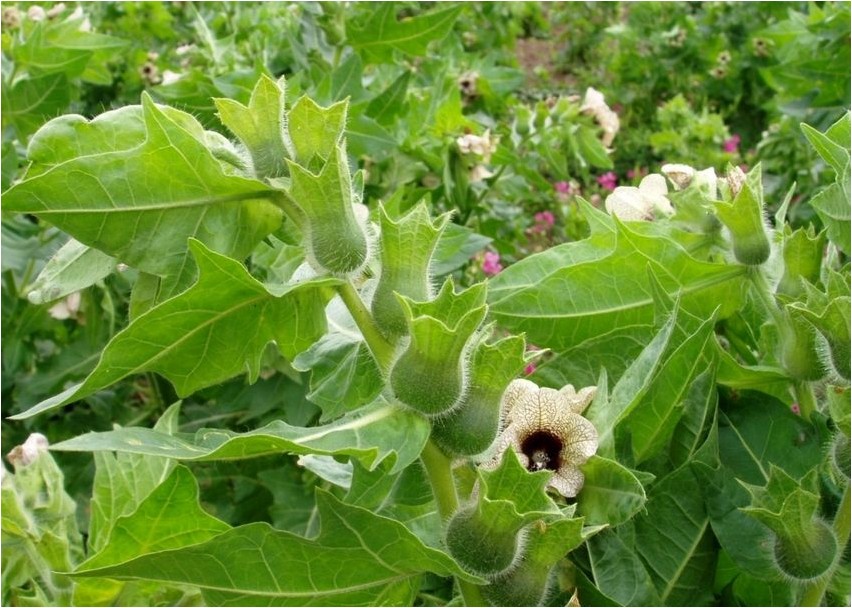
Henbane (lat. Hyoscyamus) is a genus of herbaceous poisonous plants belonging to the Solanaceae family (lat. Solanaceae). All parts of the genus plants contain toxic alkaloids, which in certain quantities pose a threat to human life.
With proper dosing, the plant turns into a medicinal one, which is actively used by folk healers and official pharmacology. If the plant is found in your area, you should definitely introduce your children to it, explaining that seeds similar to poppy seeds should not be eaten, since the plant contains the highest content of poison in them.
What’s in your name
Although the Latin name of the genus “Hyoscyamus”, based on the Greek language, has a very specific translation – “pork beans”, there are several interpretations of such a name, since this plant has nothing to do with beans.
As for pigs, some argue that Henbane, which has a toxic effect on the human body, is absolutely safe for consumption by pigs, which is where the name comes from. But others claim that henbane, when eaten by pigs, weakens the animal, causing its body to convulse. It would hardly occur to people who raise pigs to check which of them is closer to the truth.
The popular names of plants of the genus are usually associated with the ability of the chemical composition of herbs to influence the human body. Among them are: Zubnik, Rabies, Mad Grass, Blekota.
Description
From the tap root, a thick, tall (up to one and a half meters) stem is born on the surface of the earth, the surface of which is covered with numerous hairs.

In the first year, a rosette of long-petioled leaves is born, and in the second year a leafy stem with leaves appears, the shape of which can be very different: most often these are separate or pinnate-lobed leaves of an elongated shape, but there are also whole ones. The color of the surface of the leaf blade is usually dark green and pubescent.
Large flowers emit an unpleasant odor that even animals avoid. The funnel-shaped flower corolla is composed of five dirty yellow lobes, the surface of which is pierced with purple veins. The corolla is protected by a bell-shaped calyx, which increases in size and hardens with fruiting.
Dark brown small seeds, resembling poppy seeds in appearance, are collected in a fruit capsule or jug, covered with a spherical opening lid. This cute creature concentrates the largest amount of toxic substances in its seeds, posing a threat to human health and life. The plant is especially easy to mislead children who are not aware of its toxic qualities and are trying to eat “poppy” seeds.
The Almighty settled Belena closer to a person’s place of residence, as if tempting him with a herb that could stupefy the head. Henbane makes its way into vegetable gardens, into front gardens, and spreads its large bushes on vacant lots or roadsides.
Varieties
Today, the genus includes twenty species of plants that are found throughout the territory of the double continent – Eurasia. Among them are the following:
* Black henbane (lat. Hyoscyamus niger)
* White henbane (lat. Hyoscyamus albus)
* Czech henbane (lat. Hyoscyamus bohemicus)
* Tiny henbane (lat. Hyoscyamus pusillus)
* Henbane (lat. Hyoscyamus reticulatus)
* Turkmen henbane (lat. Hyoscyamus turcomanicus)
* Egyptian henbane (lat. Hyoscyamus muticus)
* Golden henbane (lat. Hyoscyamus aureus)
* Kopetdag henbane (lat. Hyoscyamus kopetdaghi).
Usage
The toxic alkaloids contained in the plant in reasonable doses are used to relieve toothache, as antispasmodics for problems with the respiratory system (asthma) and the functioning of the human cardiovascular system.





