Alsobia
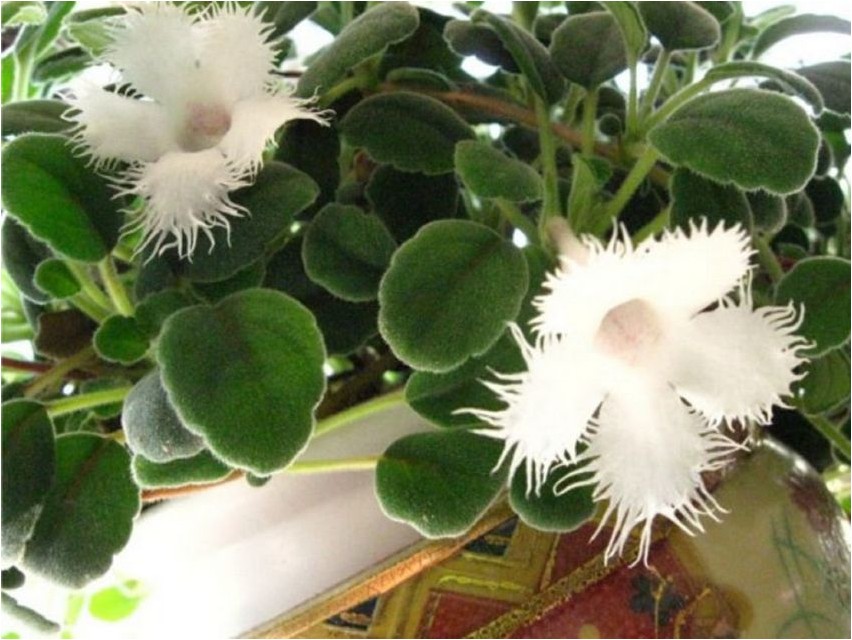
Alsobia (lat. Alsobia) is a beautifully flowering ground cover plant belonging to the Gesneriev family. In the wild, the plant grows in the tropics.
In nature, the plant forms dense grassy mats, above which snow-white flowers flaunt.
Characteristics of culture
Alsobia is a graceful herbaceous perennial. There are 2 types of alsobia shoots – some are short; others are long and weak, ending in leaf rosettes, reaching up to 17 cm in diameter. The leaves are always green (light or dark), oval in shape, dark veins, velvety surface.
The flowers are tubular, white, fringed along the edges. Flowering is long, from April to August. The plant is especially impressive when rosettes of leaves form on the tendrils. At home, asolbia is grown as a hanging crop. Alsobia is also grown as a ground cover in winter gardens and is often used to create alpine slides. In indoor floriculture, two species are known: Alsobia punctata and Alsobia dianthiflora.
Conditions of detention
Alsobia is a light-loving plant that loves an open location. It is advisable to place plants on western windows. On the south side, alsobia require protection from bright sun. In winter, plants need additional artificial lighting.
Alsobia is a heat-loving crop, the optimal temperature is 18-25C. At temperatures below 16C, alsobia is severely stunted in growth, leaves wither, and flowering stops. The culture has a negative attitude towards sudden temperature changes. Alsobias should not be placed on ventilated window sills.

The plant does not make any special demands on air humidity, although at low humidity young shoots slow down and flowering often stops. Many gardeners advise placing pots with plants on a tray filled with moistened expanded clay.
Care
Alsobias need regular hydration. For irrigation it is necessary to use warm and soft water. Under no circumstances should the soil be allowed to dry out or become waterlogged. Plants are fed only in spring and summer a couple of times a month. For fertilizing, liquid complex mineral fertilizers intended for indoor plants are used.
Plants also require systematic pruning. Alsobia stems that are too long are cut or pinched. It is also important to monitor the condition of the antennae-stolons, because they can become intertwined with each other.
Reproduction and transplantation
Alsobia is propagated by seeds, cuttings, layering and leaf rosettes. Among flower growers, the second and fourth methods are the most common. The rosette of leaves is separated from the mother plant and transplanted into a separate container filled with damp moss and vermiculite. Planting cuttings for rooting is carried out in the same way, in the same mixture. Young plants take root in 15-20 days, but to a greater extent this depends on the conditions of detention. Rosettes and cuttings, as a rule, always take root. Rooted plants are transplanted into separate containers and cultivated as independent specimens.
Alsobia is transplanted every three years. The soil substrate for the crop must be loose, permeable, and nutritious. You can also use ready-made soil mixtures for violets with the addition of sand, perlite or vermiculite. Often gardeners add sphagnum moss and charcoal to the soil, this is necessary to disinfect and improve the soil structure.