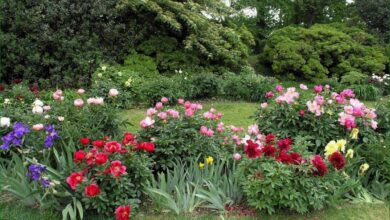
Cherry
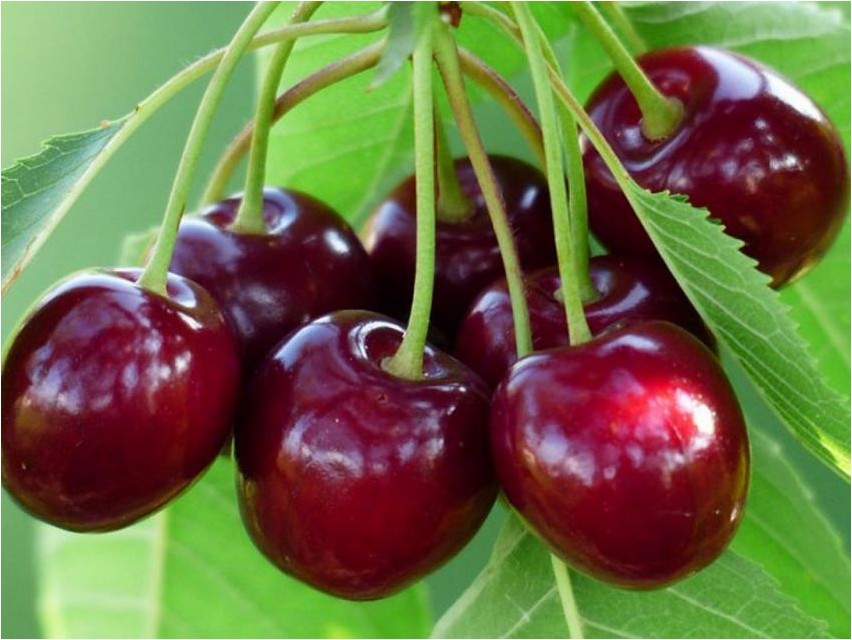
Cherry (lat. Prunus avium) is a woody plant of the Rosaceae family. The plant is popularly called bird cherry. Cherries grow wild in the southern regions of Russia, North Africa, Ukraine, the Caucasus and many European countries. It is considered one of the oldest forms of cherry.
Characteristics of culture
Cherry is a tree up to 10 m high; there are specimens reaching 30 m. The crown, depending on the growing conditions, can be ovoid or cone-shaped. A distinctive feature of cherries is the presence of two types of shoots — brachilasts and auxiblasts. The bark of young trees is brown, reddish or silvery, with numerous stripes and lentils, often flaking in transverse thin films.
The root system is horizontal, often vertical. The taproot is formed during two years of life, then branches. Sweet cherry buds are vegetative, generative and mixed; they are located on growth and fruit shoots, respectively. The leaves are serrate, slightly wrinkled, elliptical, oblong-ovate or obovate in shape. The petioles are 10-16 cm long, equipped with two glands at the base of the leaf blade.
The flowers are white, almost sessile, collected in few-flowered umbels, usually formed on the shoots before the leaves bloom. There are five sepals. The fruit is a true drupe, oval, spherical or heart-shaped, has a fleshy and juicy pericarp, depending on the variety it can be from light yellow to dark red or burgundy in color. The bone is elongated or spherical, smooth. The seed consists of a yellowish-brown coat, embryo and endosperm.
Growing conditions

Cherry is a light-loving crop; it prefers maximally illuminated, windproof areas without stagnation of cold air and melt water. Soils are desirable rich, drained, aerated, moisture-absorbing, moisture-permeable, with a pH of 6. 7-7. 5. The optimal level of groundwater is 1. 5 m. Cherry does not accept heavy clayey, peaty, saline, waterlogged soils and deep sandstones. The most suitable areas for growing crops are gentle southwestern and southern slopes, as well as elevated areas located on the south side of buildings and other structures. It is more correct to grow the crop in several copies; it is good if there are cherries in the garden that bloom at the same time as the cherries.
Reproduction and planting
Cherries are propagated by seeds, stump shoots and root suckers. The seed method is unpredictable. Trees grown from seed do not retain the characteristics of the mother plant. They will grow without problems, but what fruits will subsequently appear will be known only after 3-4 years. Reproduction of cherries by grafting is not prohibited. As a rootstock, it is recommended to use cherry varieties such as Pink Sklyanka, Vladimirskaya, Rastunya and Shubinka, as well as Rubin, Izmailovskaya, Moskovia, etc. Cuttings for grafting are prepared in the fall and stored in the refrigerator until spring.
Cherry seedlings are planted in early spring, but before the buds swell. The planting hole is prepared in the fall; its depth should be 50-60 cm and width — 80 cm. 1-2 buckets of humus mixed with the top layer of fertile soil are poured into the bottom of the hole. In the spring, superphosphate (0. 3-0. 4 kg), sodium sulfate (100-120 g) and wood ash are added to the pit. You should not increase the dose of fertilizers, as this can lead to the formation of a large number of strong growths, which, as a rule, do not have time to ripen before the onset of stable frosts.
Deep planting of cherry seedlings is extremely undesirable. The root collar should be located 4-5 cm above the soil surface. A shallow moon is formed around the seedling, watered abundantly and mulched with peat or humus. The branches of two-year-old seedlings are shortened, bringing them closer to the center. If planting is late, pruning should not be carried out. The optimal distance between trees is 3 m.
Care
In general, caring for cherries is no different from caring for other fruit and berry crops. It is important to keep the soil in the tree trunk area loose and free of weeds. Soil compaction should not be allowed. Once every three years in the fall, cherries are fed with organic and mineral fertilizers (humus — 0. 5 buckets, superphosphate — 50 g, potassium sulfate — 30 g, ammonium nitrate — 20 g).
Watering should be fairly regular and abundant, during drought at least once a week. Watering is especially necessary during the ripening period of the berries, otherwise it can lead to cracking. Cherry shoots grow very intensively, so it is necessary to carry out annual formative pruning. It is carried out only in early spring. In autumn and winter such procedures are prohibited.
At the initial stage, before the start of fruiting, annual shoots are shortened by 1/5. Subsequently, all branches that go inside the crown are removed. Cherry trees also require sanitary pruning, which consists of trimming broken, diseased and dry branches, followed by treating the cuts with garden putty. In the fall, the trunks and bases of the skeletal branches of the cherry tree are whitened, and for the winter they are tied with spruce branches or any other covering material.
Fighting uninvited guests — birds
Many gardeners are familiar with the problem of birds destroying their berry crop. No wonder the plant is called bird cherry. A real and effective way is to cover the cherries with nets; they are light and convenient, and their price is relatively low. You can also use available materials, for example, install mirrors, rattles on trees, hang foil or any other reflective material. True, this method does not work for long; the birds quickly figure it out and continue to peck the berries.