Olives
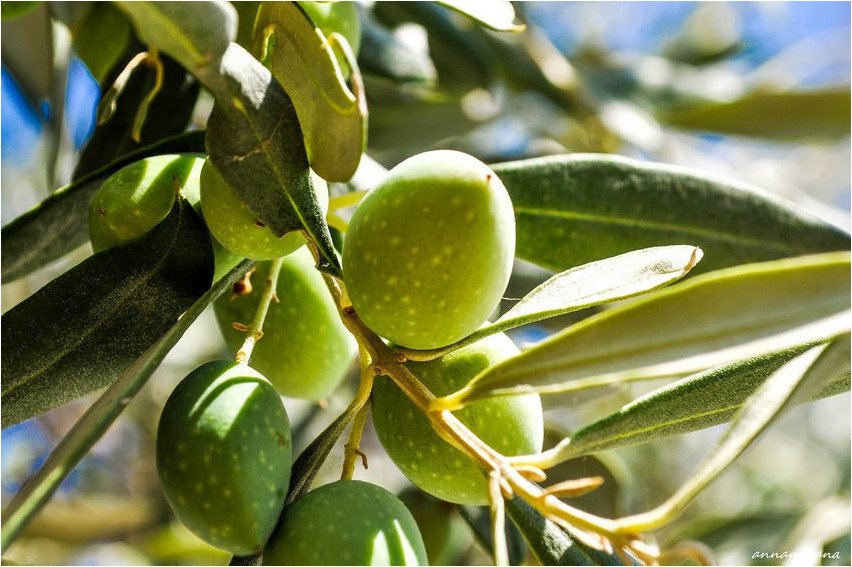
Olives (lat. Olea) are the fruits of an evergreen olive tree belonging to the Olive family.
History
It is currently not possible to reliably determine exactly when the olive tree appeared. One thing is for sure — it appeared long before the advent of writing. Since ancient times, the olive branch has been a symbol of prosperity, wisdom and peace. The ancient Egyptians also valued the olive tree — they dedicated it to the goddess Isis and considered the olive branch an immutable symbol of justice. Records of this culture can even be found in the ancient Egyptian papyri that have reached us.
Olive was first introduced into culture presumably in the Middle East, and only after some time did it successfully spread throughout the Mediterranean, from where this valuable crop was subsequently brought to the Caucasus and Crimea.
Description
Olive is a tree whose height can reach ten meters. However, the average height of trees is about five to six meters. The branching roots of the olive tree are also quite long — it can reach five meters. And they are located exclusively in the upper soil layer.
The leathery and smooth olive leaves are grayish-greenish on top, and their undersides are characterized by an attractive silver-gray tint. Moreover, the lower parts of the leaves are slightly pubescent. Tree leaves change approximately once every three years. Since the olive is a dioecious plant, when planting it, it is necessary to plant two plants in each hole: a male and a female.
Olive flowers collected in luxurious tassels are very small, white and incredibly fragrant. And the fruits are green, oblong drupes, which, as they ripen, turn pinkish-brownish tones, and then blue-violet (even almost black). Quite large seeds can be found under the juicy pericarp of each fruit.

The fruits ripen approximately from November to January. Freshly picked olives have a bitter taste and a rather hard structure. They become edible only after thorough soaking and subsequent salting. By the way, in ancient times, olives were marinated in wine sauce with vinegar or kept in honey.
The calorie content of olives is approximately 160 kcal for every 100 g of product. These cute fruits are also good because they are great for preparing a wide variety of dishes. They can be added to soups, salads or side dishes — wonderful olives will have their place everywhere, and their neutral taste will help diversify any dish!
Benefit
A lot has been said and written about the healing properties of olives — people discovered them back in ancient times. Ancient Greek doctors used them to cure intestinal and stomach diseases, and also very successfully used olives to get rid of skin and eye ailments. Olive oil has long helped with burns and ulcers; in addition, it was rubbed into the gums to strengthen them.
The wise Avicenna considered healing olives a panacea for almost all diseases. And in the Middle Ages, these miniature fruits were also held in high esteem.
Since olives can slow down the aging process, nutritionists also recommend eating them. True, it is not advisable to consume more than one jar a day — everything is good in moderation. Olives will also serve men well, because they have a beneficial effect on potency. Olives also perfectly help cope with diseases of the bladder and kidneys, anemia, hypertension, nervous disorders, joint diseases and metabolic disorders. Their use is also indicated for vascular diseases, including hemorrhoids and varicose veins. As for olive oil, one can talk endlessly about its benefits — it can heal more than a dozen ailments.





