Araz
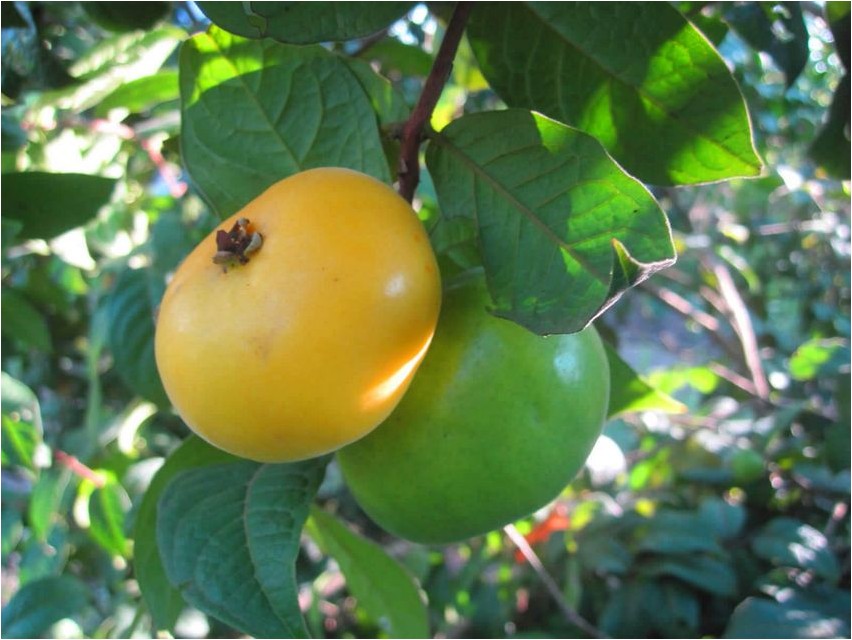
Arosa (lat. Eugenia stipitata) is a fruit crop, which is a bright representative of the large Myrtaceae family.
Description
Araza is a spectacular tree, the height of which ranges from two to fifteen meters, but in most cases it does not exceed three meters. The width of the oval simple leaves of araza reaches three and a half to nine and a half centimeters, and in length they usually grow to six to eighteen centimeters.
This culture blooms with spectacular white flowers that gather in thick clusters right in the axils of the leaves. And the fruits of araza look like spherical berries, the diameter of which, depending on the variety, can range from four to twelve centimeters. As for the average weight of the fruit, it is 750 g. On top, these fruits are covered with a yellow skin, and the skin can be either velvety, like an apricot, or shiny — this feature also depends on the variety. The pulp of the araza is juicy, yellow, with several elongated seeds of quite large size. And she also smells very nice.
Where does it grow
In the wild, the beautiful araza can be found in the Amazon Valley in sunny Brazil, as well as in the vast expanses of Eastern Peru and Eastern Ecuador. There it was introduced into culture. And now arosa is no less actively cultivated in the Caribbean islands and in some Central American countries.
Application
Since the fruits of araz are quite sour, fresh fruits are intended only for an amateur. At the same time, amazing juices, sorbets, jams, ice cream, canned fruit and all kinds of soft drinks are prepared from araz. But when cooked, the enchanting aroma of araza is instantly destroyed.
Araza is very rich in vitamins B1, A and C (it contains twice as much of the latter as oranges). Such “wealth” makes it an indispensable tonic. These fruits also contain a lot of protein, the presence of which determines their exceptional nutritional value. True, most of it is contained in the seeds of this fruit. It also contains valuable microelements, and the fiber content in araz is about 6. 5%.

Araz berries are extremely sensitive to pressure and generally do not tolerate transportation. And they deteriorate at truly lightning speed. That is why they are practically not exported to Europe, and it is also not possible to see araza in Russia.
The araza boasts valuable ornamental qualities, thanks to its small stature and stunning, delicate crown. This characteristic also makes it suitable for recreational cultivation—this attractive tree is often planted in shelterbelts, incorporated into numerous hedges, and used to create luxurious plant arrangements.
Contraindications
In cases of individual intolerance to the araza, allergic reactions may sometimes occur; however, these fruits generally have no serious contraindications.
Cultivation and Care
The araza can only grow in hot tropical climates, meaning only in countries where the average annual temperature never drops below twenty-six degrees Celsius. The slightest frost instantly kills this capricious beauty, but it has a truly unique ability to withstand even severe drought, sometimes lasting up to two months. In well-fertilized, enriched soils, araza can both bloom and bear fruit throughout the year. It reproduces only by seed, and three to six months pass between planting and germination. Remarkably, araza seeds are germinated not in soil, but in rotting wood. With proper care, the yield of this crop can easily reach three to five tons per hectare.
ARAZ & LIA — ARTZUNQNERS ACHQERIS