Security GSM alarm system
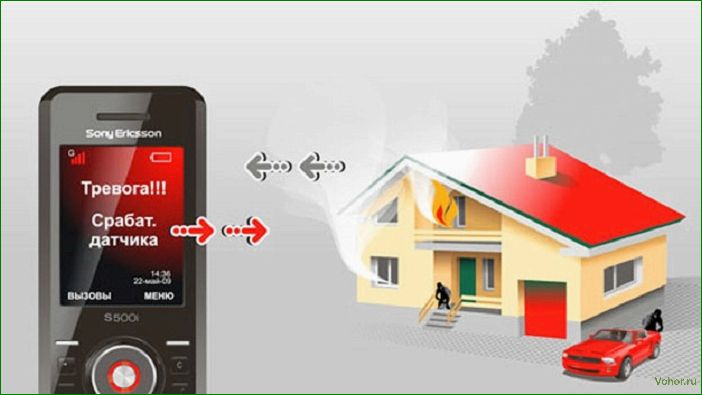
GSM devices are highly reliable and are widely used in security systems. They are easily installed in devices with remote control. Home security systems are not one device, but a set of sensors and cameras that work as a “single organism”. Wireless GSM alarms occupy a strong position in the segment of security and safety products.
Contents of the article:
Operating principle
Signals of the presented type transmit information using a GSM digital cellular channel Security alarm gsm is a set of devices such as motion sensors, video cameras and detectors, interconnected by cable or wireless signals.
Communication between the user and the remote control is carried out locally using a remote control (entry/exit from the room) at a distance via a GSM channel.
Operating principle: a receiving unit with a control panel receives and analyzes information from sensors – water, movement, gas leaks, sound leaks. When an alarm occurs, a notification is sent to the receiving device (control unit).
After this, the alarm is turned on, which is a warning line. Notification is carried out using sound, light indication, sending SMS, sending images to the owner and using the security remote control. Controls for listening and displaying notifications are turned on automatically to listen to the protected object after the user accepts the notification, if the notification was configured by calling, after the subscriber answers the call, if the notification was configured by calling, after accepting the notification. Associated with the device automatically.
Types of GSM security alarms
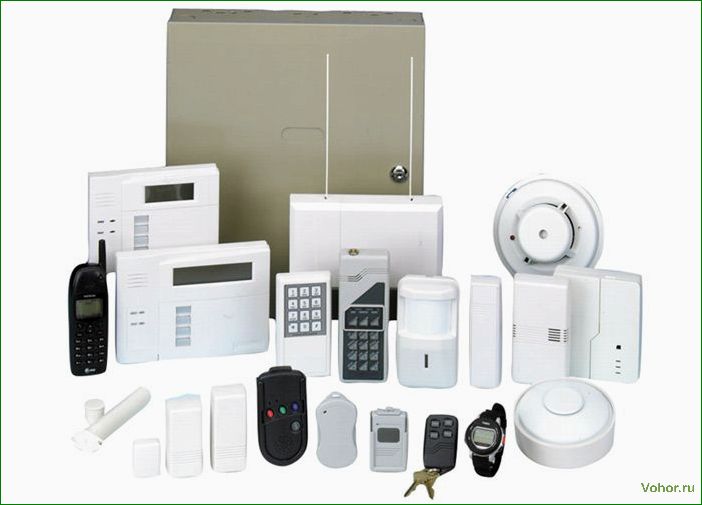
Types of signaling depending on the type of use, connecting elements to each other:
- Cable when using wired sensors;
- Radio. The element is in contact with a wireless signal (radio channel) or WiFi (see Wi-Fi CCTV camera).
In all cases, owner-operator communication is carried out via a GSM connection. Separate kits provide cable connection and are equipped with a security panel for additional reliability.

The following types are distinguished.
Remote control. Often installed by security service providers who also supply the devices.
Notifications about the sensor status are sent to the mobile host simultaneously with the security console.
Autonomous. Signals—texts, voice messages, and images—are sent to the mobile phone only from the owner.
Security alarm device with GSM
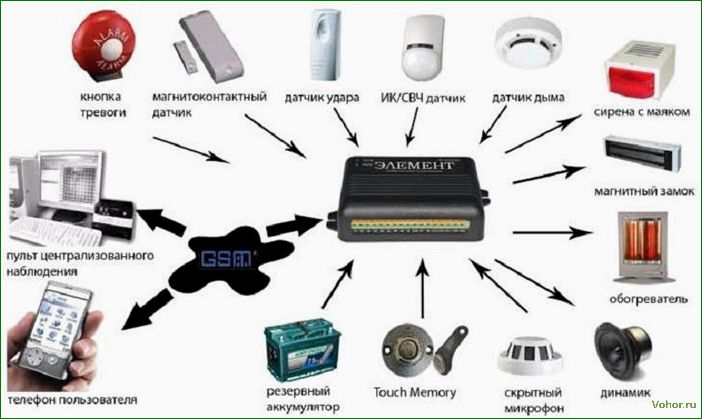
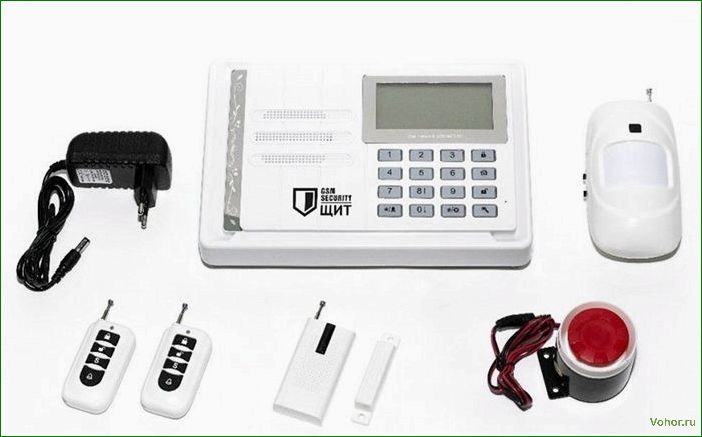
The alarm system includes a controller or control unit with a code keypad and LCD display.
Essentially, it is another mobile phone or GSM device with expandability.
It is designed as a separate phone with a control element equipped with outputs for connecting sensors, a keypad, and a GSM module, into which a SIM card is inserted.
The following elements are connected: sensors (presence detector, flame detector), local alarms (siren, floodlight), panic button, and activation/deactivation key. The control unit housing is made of plastic or metal and is sometimes equipped with additional security—a lock.
Kit components:
- Main control unit (PCU, controller);
- Power supply, battery;
- Control elements for monitoring;
- Sensors;
- USB cables for computer configuration;
- Warning devices (sirens);
- Keyboard with display (standalone or integrated into the control unit).
Vending or wireless video surveillance (GSM or Wi-Fi cameras) connected to the control unit.
When using these cameras, it is possible to view live events in the protected area.
Key fobs (usually two included) resemble car key fobs and are equipped with several buttons and displays. They are designed for quickly arming and disarming the security system. The key fob is useful when approaching a home or when a suspicious person or situation is detected. Its buttons are protected from accidental activation by special latches.
GSM Functions in Security Alarms
A GSM alarm monitors the following situations:
- Intrusion;
- Door break-in;
- Water or gas leak;
- Fire, smoke (see Fire and Smoke Detectors);
- Glass damage. This type of equipment performs practical tasks that replace the presence of maintenance personnel.
Alarm actions and options:
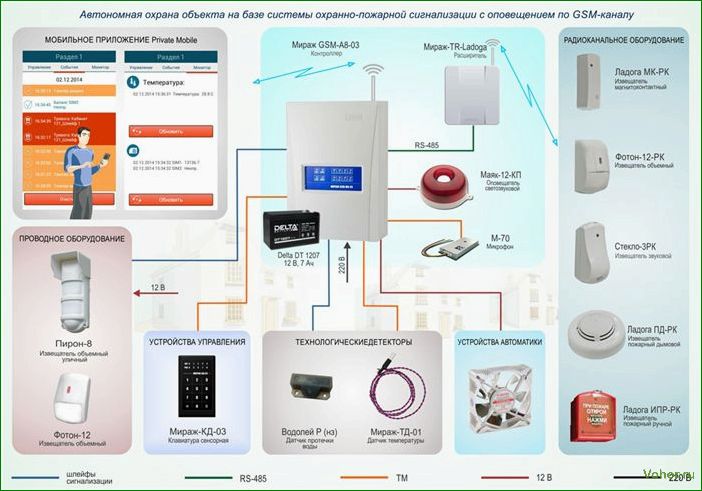
Easy control via a mobile phone over the internet (arming/disarming). Operational control using a FOB key;
- Alerts for intrusion, door opening, window malfunction, water leakage, and fire. The list is limited only by the type of sensor used;
- Regular generation and transmission of reports on the status of devices (temperature indicators, availability of electricity) according to specified schedules;
- Control of power supply, Wi-Fi and GSM sockets for gates, electromechanical locks, air conditioners, heating, lighting, smart home technology, etc. Just call the control panel and enter the codes;
- Broadcasting signals via the Internet;
- Panic button;
- Wide selection of alarm signals: siren, light signal;
- Messages (SMS, MMS, video, images) via mobile and landline communications via the Internet;
- Alerts are sent simultaneously to the security panel to several phone numbers. Use 1, 2 or 3 SIM cards with different operators;
- Password programming, adding new phone numbers;
- Listening, viewing the situation at a protected facility at any time (with a microphone and video camera);
- Calling via GSM signaling equipment;
- Programmable action algorithms;
- Assigning different zones to each sensor;
- Signal protection;
- Automatic transition to backup power, transmission of notifications about power failure;
- Self-diagnosis;
- Automatic protection in case of accidental shutdown.
- Application
Application
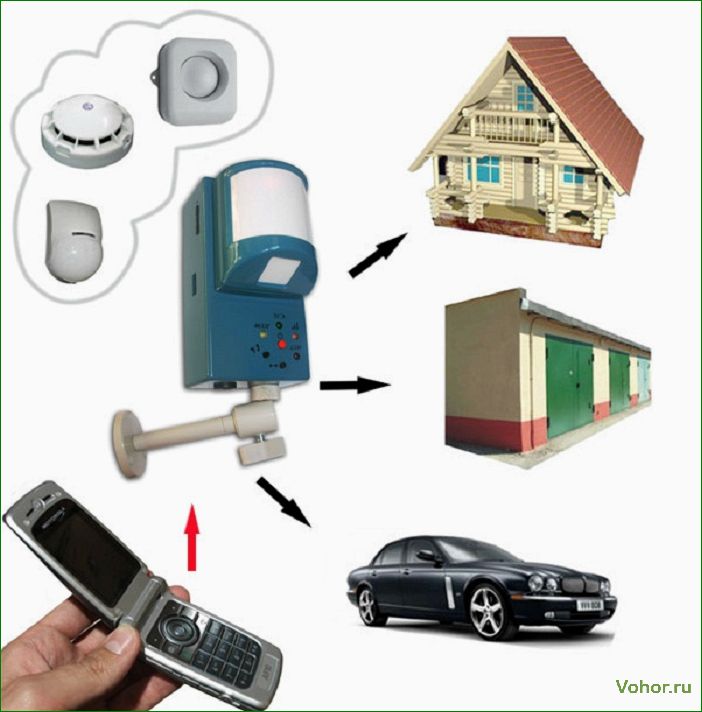
This is an alarm option for objects that are unprotected for a long time, for example, dachas, country cottages. The alarm allows you to monitor its condition online.
Apartments, houses, garages, cottages, offices – just a partial list of objects. In addition, it is worth noting the popularity of GSM alarms in shops and commercial premises.
Pros and cons
Pros and cons
After the sensor is triggered, the owner receives a notification. After requesting the equipment, they watch an online video of the security camera audio or take a photo of the camera using a cell phone. In the same way, they communicate with the residents of the house via two communications.
Through a mobile phone or web interface, they can control electrical appliances using an electric drive. Thus, they turn on/off heating, air conditioning and regulate temperature. In the event of a leak, appliances with water sensors and electric taps can automatically shut off the water.
Wired kits have the disadvantage of cables, which reduce the level of security. They are difficult to conceal, increasing the risk of ruptures and intentional damage. It’s easier to install devices without cables. Place sensors, activate and configure the control unit.
Disadvantages of radiosondes: electromechanical interference (not very rare), weakening if the device is installed behind thick walls, underground (basements, cellars).
The control unit allows you to connect dozens of cable mounts of all possible types and a virtually unlimited number of radio devices (more than 99). All models of such alarms are equipped with autonomous power supply: even if the GSM signal goes out, the alarm will still be turned on. There is a spare siren cable for this purpose.
Lack of equipment: operator dependence on the GSM signal and coverage area, equipment failure, interception, reading and scripting of signals.
How to use
How to use
It is recommended to attach them to the siren with self-tapping screws rather than double-sided tape; Using two SIM cards increases reliability. They must have funds on their balance to send messages. It is optimal to place motion sensors at a height of 2. 5 m so that they are difficult to knock down, disable, cover with fabric or paint over.
When installing wireless devices, you must ensure that the distance from the receiver is unacceptable and that there are no shielding objects (metal structures, reinforced concrete floors).
Sensors should be checked regularly. The control unit is located in a hidden but accessible place for the owner; you need to make sure there is a stable GSM signal. It is not advisable to install a radio channel sensor, which is a control panel located next to electrical appliances (refrigerator, TV, microwave oven).
Control is carried out using a mobile phone through the web interface on a smartphone or by simply typing programmed codes on the keyboard that correspond to the specific effects of the electrical appliance, making the dialing of control unit codes local.
Security GSM alarm system


