Nymphalium pumila
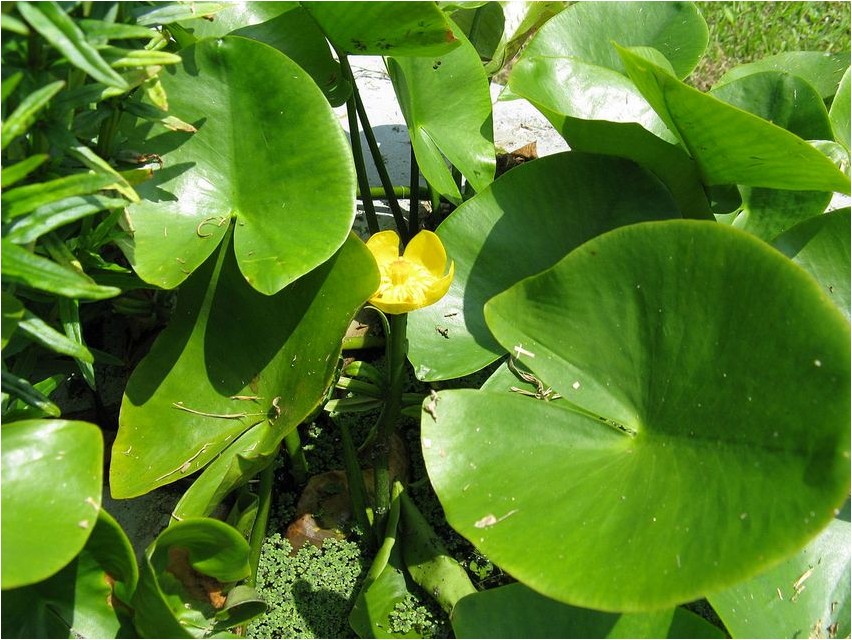
Nymphalium pumila is a member of the Nymphalium family. Its Latin name is Nuphar pumila (Timm.) DC.
The Latin name for the Nymphalium pumila family is Nymphacaceae Salisb.
Description of Nymphalium pumila
Nymphalium pumila is a perennial herbaceous plant with a thick rhizome and floating leaves. In the wild, this plant is found throughout the Far East, Central Asia, Eastern Siberia, and all regions of Western Siberia with the exception of the Altai region. It also grows in the following regions of European Russia: Upper Volga, Volga-Kama, Karelo-Murmansk, Baltic, Trans-Volga, Dvina-Pechora, and Ladoga-Ilmen. This plant will form thickets in both stagnant and slowly flowing fresh water.
Description of the medicinal properties of the small water lily
The small water lily has very valuable medicinal properties. The leaves, seeds, rhizomes, buds, and flowers of this plant are recommended for medicinal purposes. The presence of such valuable medicinal properties of this plant can be attributed to the content of d-nupharopumiline and alkaloids in the rhizomes.
It is noteworthy that the medicinal properties of this plant are similar to those of the yellow water lily. A tincture prepared from the rhizomes of this plant is recommended for cancer, antacid gastritis, and also as a sympathetic remedy. In addition, this remedy will have hypotensive and antispasmodic effects. An infusion of the rhizomes of the small water lily is recommended for gout, rheumatism, stomach cramps, coughs, and various skin conditions, as well as a pain reliever for toothaches, earaches, and headaches. A decoction of the rhizomes of this plant should be used for seborrhea.
In folk medicine, an infusion made from the leaves of this plant is quite common. This infusion is recommended for back pain, coughs, kidney diseases, and is also applied externally as a very effective wound-healing remedy for erysipelas. A decoction made from the leaves of the small water lily is effective for jaundice. An infusion of the flower buds of this plant is used for kidney stones.

The flowers of the egg lily are endowed with a digitalis-like effect. In folk medicine, a decoction of the flowers of this plant is used for kidney diseases as a wound-healing, diuretic and antipyretic agent.
An infusion of Egg lily flowers is considered a very valuable sedative and is also used for jaundice. An infusion of the seeds of this plant, when roasted, is a coffee surrogate and can be used as food for waterfowl, and in addition, such an infusion is used as a hypnotic, sedative and antipyretic.
The rhizomes of this plant can be eaten as flour or after boiling in salt water. In addition to this rhizome, Egg pods are used for tanning leather, as animal feed and a cockroach repellent, and also as a dye.
It is noteworthy that in their raw form, the rhizomes of this plant are poisonous. There have been cases of poisoning of children, including death, due to uncontrolled eating of the roots of the egg lily. For this reason, extreme caution should be exercised when using any products based on this plant.
Yellow egg capsule – benefit or harm for humans? / Zakhar Travnik
Small egg capsule





