What is a metal detector and its types
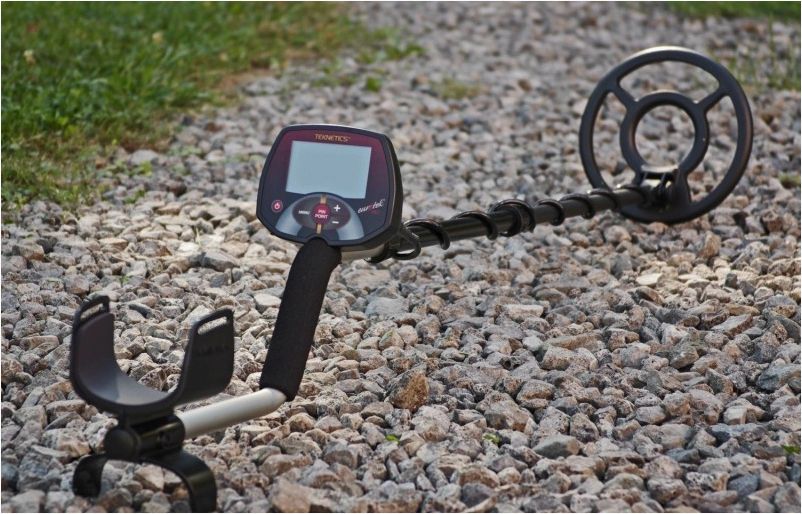
The metal detector has a simple design, and its main purpose is to search for metal. It has a fairly wide range of action – it can work in water, underground and even through walls. Previously, it was used only by the military, but now they have begun to use it for domestic purposes. By contacting metal detector online store you can choose the necessary model for your needs.
Contents of the article:
- Types of metal detectors
- The basic principle of operation of a metal detector
- Metal detector frequency range
- Basic equipment of the metal detector
- Metal detector modifications
- Advantages and disadvantages of metal detectors
- How to set up a metal detector
- What do metal detecting enthusiasts find?
- Review of models and prices
- Conclusions
Types of metal detectors
Today, metal detectors are quite common equipment among consumers. Depending on the purpose for which they are used, they are divided into several types.
By purpose
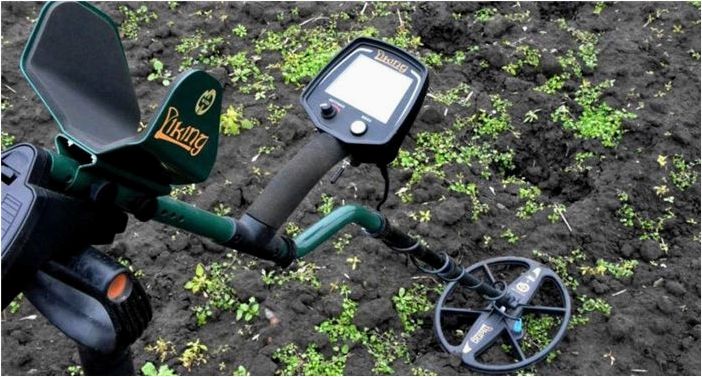
Firstly, devices can be of several types. It can be:
- Soil;
- Underwater;
- Spot.
Pinpo – internal devices have a different category. They are designed to detect small objects. Secondly, they can be either inspection or underwater.
The first attempt to use metal detectors occurred in 1881 by Alexander Bell. This happened after US President James was wounded and doctors were unable to locate the bullet. However, this attempt failed, but the device was soon forgotten.
By signal processing method
Another distinctive feature of all metal detectors is their division according to the signal processing method. These include:
- Analog. Identifies objects quickly and accurately. At the same time, it is a simplified design without sound and light accompaniment;
- Digital. The most advanced equipment. The fast performance of older models makes no difference. At the same time, they are very useful – when identifying the corresponding object, a characteristic signal appears.
Fortunately, technology does not stand still and moves forward quickly. Nowadays, modern digital metal detectors can also provide fast and accurate signals.

The basic principle of operation of a metal detector
The operating principle of metal detectors is that after turning on the power, electromagnetic waves begin to be emitted. If suitable objects are detected, they act on the device, which reflects the signal and goes to the user. The operating principle may also depend on the type of device.
| Opinion. | How it works |
| Spaceship. | Instead of electromagnetic waves, special eddy currents are created. The device then registers and emits a signal when an object is detected. |
| PINPO can be used for interpretation or underwater | creates severe eddy currents. They also respond to excavations. |
Ground metal detectors are slightly different from each other, but they are also the most common. There are several corresponding schemes and principles by which they work.
Transmitter receiver
When the first metal detectors appeared, they worked on two operating principles – TR or ULF. Their essence was as follows: waves of a certain frequency in one antenna were emitted from the equipment, and then another antenna received the signal reflected from the surface. The following characteristics stand out:
- Very low frequency;
- Signals are emitted at one point and received at another. Therefore, the device must be shaken constantly;
- The receiving and transmitting antennas can form concentric circles with a common center.
Metal detectors operating on this basis can quickly distinguish metals under the coils. As a result, a series of tests were carried out, which proved that they could even capture Soviet nipples at a depth of 20-30 cm.
Such models are still widely used today. One of the most powerful of them is obscene from a Polish manufacturer.
Pulse induction
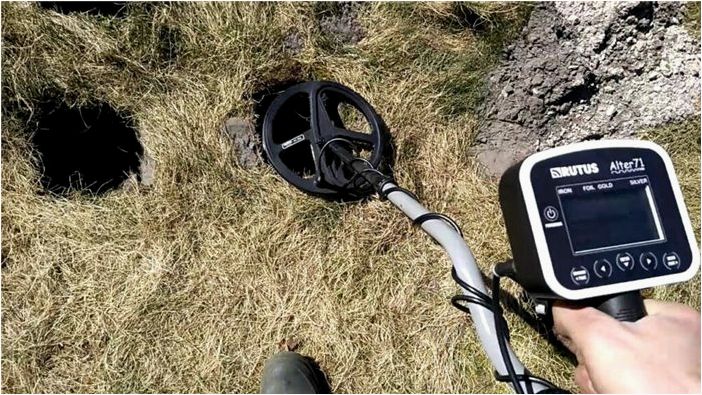
Metal detectors operating on the principle of pulse induction (PI) are the most modern type of devices. They can emit one pulse and analyze the response received from it. The analysis occurs very accurately and quickly – it can vary from hundreds to tens of thousands of times in one second. Among its distinctive features are the following characteristics:
- One antenna can be both receiving and transmitting;
- The device does not need to be shaken, but such wiring can create opportunities for searching over wider bands;
- They are not very good at distinguishing metals, but they can detect them under fairly strong layers of soil.
Thanks to such devices, objects of various sizes are searched at a depth of up to half the depth.
See also! In Russian, this technology is called a simpler pulse technology.
Radio frequency
Metal detector with operating radio frequency (RF) principle. It is very easy to use. This is due to the fact that they do not need to be waved while he searches a fairly wide swath. Some of its outstanding aspects include
- The presence of two antennas at once;
- The signal transmission is directed strictly parallel to the ground, while the receiving side is located at a distance of at least one meter perpendicular to the ground;
- Various tests were carried out which proved that the system can recognize metal pipes at three depths.
These types of metal detectors cannot detect small metal fragments. They also cannot differentiate between different types of metal – to her they are all the same.
Metal detector frequency range
The most important criterion taken into account when choosing a device is the search frequency. This parameter indicates the depth at which objects of a certain size can be found. It can be divided into almost three types
| Low. | 2-5 kHz |
| Average. | 5-11 kHz |
| Tall. | 11-22 kHz. |
Depending on the task being performed, there are certain types of devices that offer the ability to adjust the frequency. It may also depend on the coils installed in the device.
See also! The human ear can perceive signals whose frequency ranges from approximately 20 Hz to 20 kHz.
Basic equipment of the metal detector
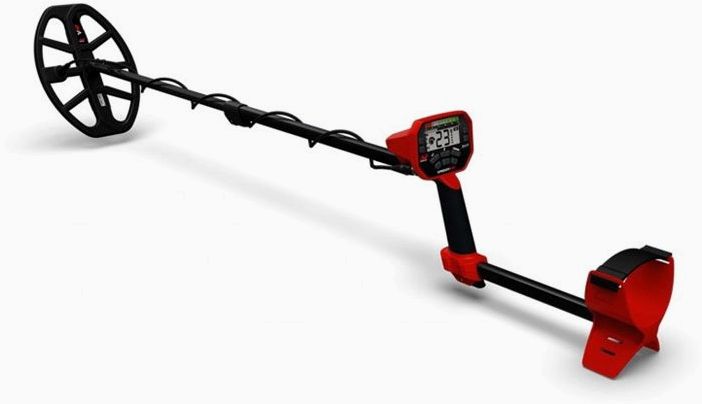
No matter what type of work is being done and what power is present, there are standard devices. It consists of several key elements, such as:
- Control unit;
- Barbell;
- Reels equipped with cables and fastenings.
In addition, the kit may include armrests, power elements, batteries, cases and bags. The higher the status of the device, the more expensive it is, and the more different add-ons are offered.
Metal detector modifications
Ordinary standard metal detectors for some reason are not amenable to change and cannot add new capabilities. The same cannot be said about digital devices that are regularly flashed – they add useful features. With these changes:
- Download new programs;
- Significantly improve functionality;
- Add new programs and modes necessary for search and other purposes;
- Set up control modes.
Some users can change absolutely everything, even on the most outdated devices. In addition, many of them are engaged in such amateur activities – they buy old devices, make changes to them themselves, and then test them.
Advantages and disadvantages of metal detectors
There is no such universal device that is equally suitable for everyone. Each of them has both negative and positive qualities. It is worth considering a description of some of the most common models.
| Types of metal detectors | Pros | Negative aspects. |
| Pi metal detectors. | Can identify objects in salt and even sea water | High energy costs |
| TR Metalist. | Very sensitive. Can recognize and classify types of metals | The greater the depth of investigation, the lower the sensitivity |
| VLF/TR metal detector | For example, some types of metal are softly classified. For example, separate non-colored and black. They have high resolution capabilities. | They are characterized by a rather complex scheme. This makes the devices difficult to configure. |
| Metalist of the Russian Federation. | Suitable for use at depth. They do not react at all to small metal fragments. | Low sensitivity to small objects. |
| Metal reticulators BFO. | Simple design, ease of use, high quality work. | Low sensitivity. Instability when working in mineralized or wet soils. |
One of the most common disadvantages is the high cost of equipment, which can be a problem in some cases. However, experts say that high-quality models with useful features are not cheap.
How to set up a metal detector
The first thing you need to do when setting up a metal detector is to determine the degree of soil detachment. The balance between these indicators is very important here. If they are too high, then you can quickly lose the signal; if, on the contrary, they are too low, then this can negatively affect the search. It is important to pay attention to a few key points
- Do not set the sensitivity to maximum. This does not always give the desired result. This is only necessary if a minimum indicator is being examined;
- Do not block the signal with plugs, wires or other unimportant objects. This just turns the signal into a small useful signal;
- For example, do not set the device to one type of metal. For example, ignore all other types for gold;
- If the range is set on a small object, it will be easier to detect deeply hidden metals.
It is recommended to first test the device in factory settings, and then carefully study the operating instructions. Only after this you can start making settings. They can be performed either manually or automatically.
If the metal detector is not configured correctly, it may react distortedly – giving a signal to operate even when approaching the surface of the earth.
What do metal detecting enthusiasts find?
The main purpose for which a metal detector is needed is to search for antique objects. These are weapons and various attributes used in the war, ancient coins, and household items. Using such equipment you can determine:
- Various settlements, fairs and markets;
- Metal production.
Thus, this device is necessary for two purposes: either to obtain useful information or to obtain material benefits. Many discoveries have been made.
Review of models and prices
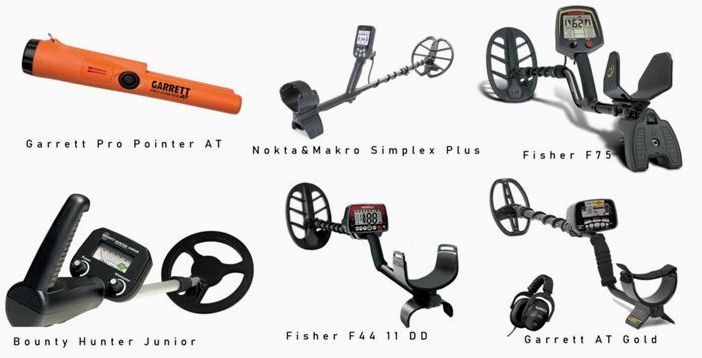
Today, several models of metal detectors are known. It is worth considering some of the most commonly used ones.
| Schedule | Title | Description | Price |
| For beginners | Propointer Garrett | Compact size and bright design. Suitable for both underwater and terrestrial searches. Frequency – 11. 5 kHz. | 7, 000-9, 000 rub. |
| Bounty hunter junior. | A simple operating principle that even children can handle. Frequency – 6. 5 kHz | 7, 000-8, 000 | |
| Search for coins. | Nokta & amp; Makro Simplex Plus | It is compact in size, charges very quickly and is ready to go. Has both manual and automatic balancing. Frequency – 12 kHz. | 27, 000-30, 000 |
| Fisher F44 11 in DD. | The best equipment for searching on the beach. Automatic ground balancing. Sensitivity settings available. Frequency – 7. 69 kHz. | 32, 000-38, 000 | |
| To search for gold. | Fischer F75. | A lightweight and powerful device at the same time; can detect objects at a depth of up to 1 meter. Frequency – 13 kHz | 58, 000-60, 000 |
| Gold Garrett. | Created specifically for searching for gold items. On the ground it has both manual and automatic balance. Frequency – 18 kHz | 55, 000-60, 000 |
You should pay attention to the purpose of the device. It also affects the purpose of its use. The title may include one of the following criteria
- Professional equipment. It is characterized by high sensitivity and versatility. Thanks to these advantages, researchers can detect through a thick layer of soil even those objects whose size is no larger than the size of the matching head;
- Semi-professional model. These are high-tech devices. They are distinguished by search accuracy and depth of research. They have a wide range of functions and settings;
- Amateur devices. They are the most budget-friendly. As a rule, the search depth does not exceed 50 cm. Most models can distinguish ferrous from non-ferrous metals.
Of course, first of all, you should pay attention to ensuring that metal detector models meet consumer requirements. A favorable price-quality ratio is also important.
Conclusions
Metal detectors are unique devices that can find various objects under deep layers of soil. In the future they will be used for sales, exhibitions and other various purposes. There are a huge number of models with different requirements and parameters that differ from each other. When choosing, you should pay attention to the purpose for which it is needed, in what soil and at what depth.


