Asian burdock
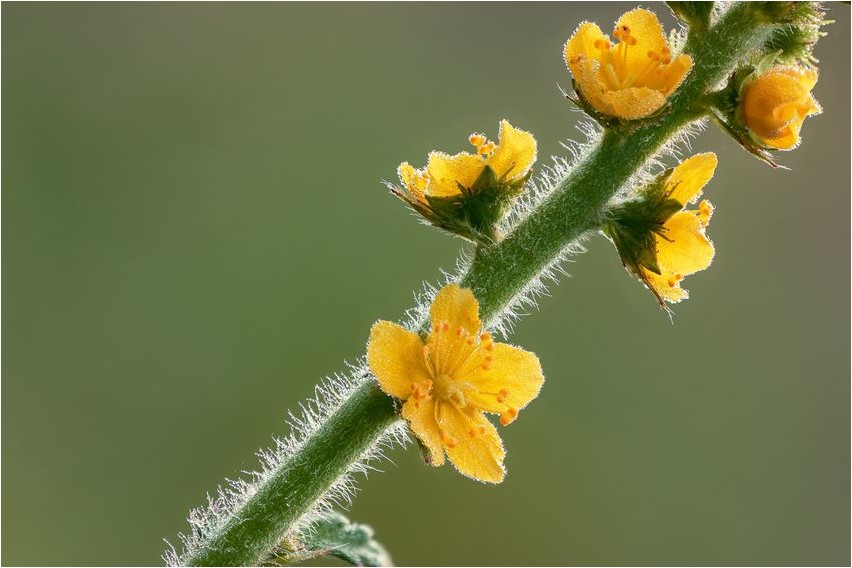
The Asian agrimony is one of the plants of the family called Rosaceae; in Latin the name of this plant will be as follows: Argimonia asiatica Juz.
As for the name of the Asian burdock family itself, in Latin it will be: Rosoceae Juss.
Description of Asian agrimony
Asian burdock is a perennial herbaceous plant, the height of which will fluctuate between thirty and one hundred and forty centimeters. The rhizome of this plant is quite powerful, the height of its stem is approximately thirty to one hundred and forty centimeters, such a stem will be erect and strong, it is usually branched at the top. The length of the leaves of the Asian burdock is approximately six to thirty centimeters, and the width will be three and a half to twelve centimeters. Such leaves will be velvety-hairy below, and they are painted in green tones. The inflorescence of this plant is long, with a length of approximately nine to twenty-five centimeters, and the flowers will be on rather short pedicels, the length of which is two to three millimeters, and the diameter is ten to twelve millimeters. The petals of the Asian agrimony are dark yellow, and the fruits will be drooping, their length and width are six to nine millimeters.
This plant blooms from June to July. For the growth of thistles, Asian prefers places among shrubs and the edges of deciduous forests of the Caucasus, Western Siberia and the European part of Russia. As for the general distribution, this plant can be found in Iran, Asia Minor and the Balkans. Under natural conditions, the plant is distributed in the following regions of the European part of Russia: Lower Volga, Volga-Kama, Volga-Don, Lower Don and Zavolzhsky regions. In addition, Asian burdock will grow on the edges of forests, in bushes, on the banks of rivers and streams, on mountain slopes and on plains, along roads, in gardens, in walnut forests and on the edges of deciduous forests.
Description of the medicinal properties of Asian agrimony
The Asian burdock is endowed with very valuable healing properties, and it is recommended to use the herb of this plant for medicinal purposes. The concept of grass includes the stems, flowers and leaves of this plant.
The presence of such valuable healing properties is recommended to be explained by the content of catechins, flavonoids, ursolic acid and tannins in the herb of this plant, while the roots contain catechins, leucodelphinidin, tannins, ursolic acid, aromatic carboxylic acids and their derivatives. The inflorescences of this plant contain rutin, tannins, hyperoside, flavonoids, and ursolic acid. Asian burdock seeds contain higher fatty acids, steroids, higher aliphatic hydrocarbons, oleic, palmitic, stearic, linolenic and linoleic acids.

Asian agrimony is endowed with very valuable hemostatic, anti-inflammatory, diuretic and antibacterial effects. A decoction and infusion prepared from the roots of this plant are indicated for use in gingivitis and periodontal disease.
As for traditional medicine, Asian agrimony is used as an infusion and decoction of the roots for hemorrhoids and stomach diseases, while a decoction of the herb is used for stomatitis and laryngitis. A decoction based on the leaves of this plant is used for ascites, diarrhea and fever, and a decoction of Asian agrimony flowers should be used for various skin diseases and hemorrhoids.