Cypress
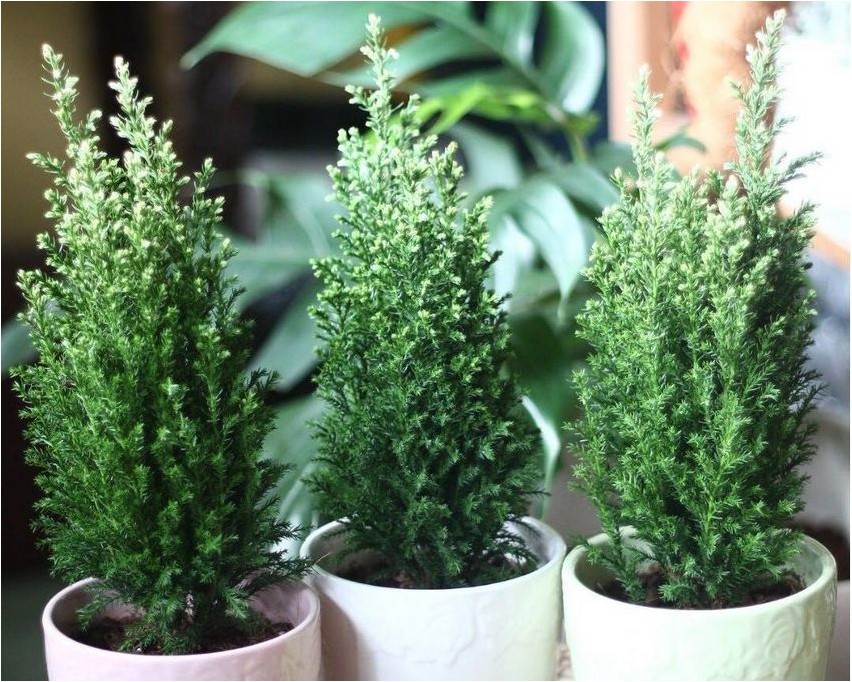
Cypress (lat. Chamaecyparis) is an ornamental plant; genus of evergreen coniferous plants of the Cypress family. East Asia and North America are considered the homeland of cypress. In terms of appearance, the plant is similar to cypress.
Characteristics of culture
Cypress is an evergreen coniferous tree, less commonly a shrub, 25-60 m high. The trunk is straight, the bark is scaly, with cracks, dark gray or brownish-brown in color. The crown is openwork, cone-shaped, columnar or pyramidal in shape, shoots extend unevenly from the trunk.
The branches are drooping and located in the same plane. The needles are small, needle-shaped, soft in young plants, scale-like in adults, and can be of various colors: from green to blue. The cones are small, hard, spherical, and ripen in the first year.
Common types
*Pea cypress (lat. Chamaecyparis pisifera) — the species is represented by plants about 25-30 m high. The bark is red-brown, the crown is openwork, cone-shaped. The branches are outstretched and horizontal. The needles are bluish-blue. The cones are yellowish-brown, small, reaching 4-6 mm in diameter. The homeland of cypress pea is Japan.

*Lawson”s cypress (lat. Chamaecyparis lawsoniana) is a species represented by plants up to 60 m high. The trunk reaches 1. 8 m in diameter, the bark is reddish-brown. The branches are short, the ends of the branches are drooping. The crown is cone-shaped with a drooping top. The needles are bluish-green. The cones are numerous, small, light brown in color with a bluish tint, and are about 6-8 mm in diameter. Under natural conditions, Lawson”s cypress grows in North America.
*Nutka cypress, or yellow (lat. Chamaecyparis nootkatensis) — the species is represented by plants up to 40 m high. The trunk reaches 1. 5 m in diameter, the bark is grayish-brown. The crown is narrowly cone-shaped, the ends of the branches are drooping. The needles are blue-green. The cones are medium in size, collected in bunches of 4-6 pieces, 6-10 mm in diameter. The Nootkan cypress is native to the Pacific coast of North America.
*Mourning cypress (lat. Chamaecyparis funebris) — the species is represented by plants up to 20 m high. The crown is weeping, cone-shaped. Branches drooping. The needles are bluish-green. The homeland of mourning cypress is Central China.
Growing conditions
Cypress is a frost-resistant plant; mature trees can withstand frosts down t o-25C. The culture is photophilous; some species grow well in shaded areas. The soils for growing cypress trees are preferably fertile, well-drained and moderately moist. Plants have a negative attitude towards liming. Some types of cypress trees need shelter for the winter, especially for young plants.
Reproduction and planting
Even a novice amateur gardener can propagate cypress trees. Cuttings are considered to be the most effective and reliable way to propagate a crop. Cuttings are cut from young shoots using pruning shears, planted in pots filled with a mixture of fertile soil, peat and sand, and covered with plastic film. The cuttings take root quite quickly.
Very often, cypress trees are propagated by seeds, layering and grafting. The first method is most suitable for wild growing forms. Seed germination is increased by long-term stratification. It is not recommended to plant rooted cuttings or emerging shoots in open ground without first hardening them. Young plants tolerate replanting easily.
Cypress trees grown in open ground are resistant to diseases and pests. They are rarely affected by root rot, attacks by scale insects and spider mites. To avoid damage to plants, it is necessary to regularly inspect and remove diseased branches and fallen needles.
Care
Cypress is a moisture-loving crop; watering must be carried out regularly, at the rate of 10 liters per plant. During drought, the volume of water is increased. To ensure non-stagnant soil moisture, tree trunk circles are mulched with peat or fallen pine needles. Sprinkling is the best way to water cypress trees.
Fertilizing with complex mineral fertilizers is carried out in early spring; young plants especially need fertilizer. One of the most important procedures for caring for crops is winter insulation. Plants are covered with spruce branches or any other covering material. Shelters are not removed until mid-April.
In early spring, before the buds swell, cypress trees are subjected to sanitary and formative pruning; in addition, cracked or exposed bark and frost holes are coated with garden varnish.
Application
Cypress is a highly ornamental plant that can add Mediterranean notes to a garden design. Looks great in combination with deciduous shrubs and trees. Cypress trees are used in single and group plantings. Trees with a wide and spreading crown are one of the components of small solo groups. Cypress trees with a pyramidal or columnar crown are good for alley plantings and trimmed hedges. Dwarf forms of the crop look great in borders and rockeries, as well as in rocky gardens.





