Dracaena reflexum
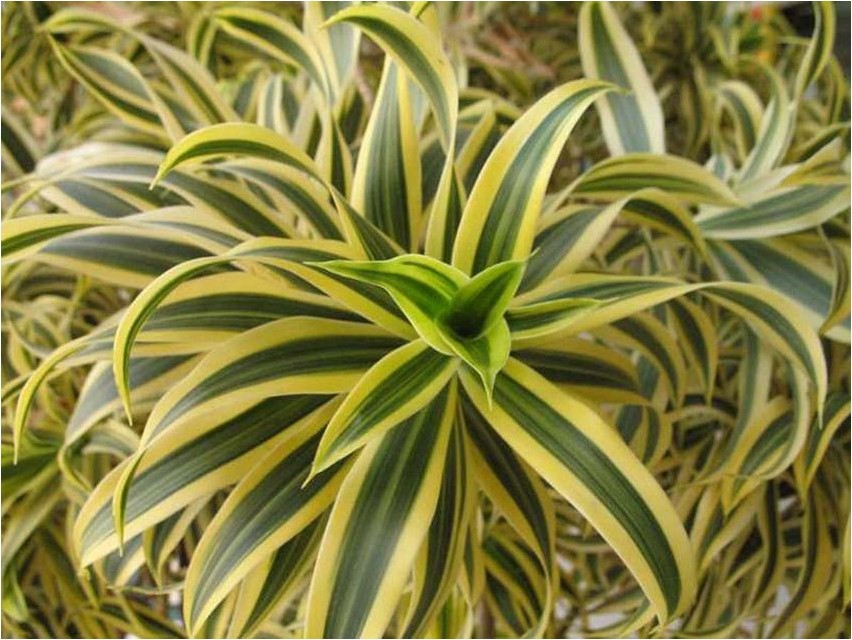
Dracaena reflexum is one of the plants of the family called Dracaenaceae; in Latin the name of this plant is as follows: Dracaenaceae.
As for the name of the plant itself, in Latin it will be like this: Dracaena reflexa.
Features of growing and caring for dracaena reflexum
Dracaena reflexum prefers a sunny light regime, however, partial shade and shade are also quite acceptable. Throughout the summer period, the plant should be provided with fairly abundant watering, and the air humidity should be kept at a very high level. The life form of Dracaena reflexum is an evergreen tree.
The plant is recommended to be grown in warm winter gardens, as well as in greenhouses, where high illumination is provided, as well as increased parameters of both temperature and moisture. It is worth noting that Dracaena recumata is the most capricious plant among all dracaenas; for this reason, the plant is very difficult to grow indoors. In culture, Dracaena reflexum can reach the following maximum sizes: from one to five meters in height.
It should be noted that the root system of this plant is quite powerful, and its development occurs very quickly. For this reason, you should choose pots that are not very wide, but at the same time tall. When replanting, it is necessary to make the substrate heavier, and the earthen ball must be preserved. When replanting dracaena reflexum, it is important to increase the proportion of turf soil or reduce the proportion of sand. Young plants will need replanting every two to three years, while adult plants need replanting much less frequently, and especially large specimens should practically not be replanted. However, for very large reflexed dracaenas, it will be necessary to update the top layer of the substrate by about ten to fifteen centimeters every year.
To successfully grow this plant, you should take one part sand, two parts turf soil and three parts leaf soil. The acidity of such soil should be slightly acidic.

Regarding growing problems, the edges of this plant’s leaves may turn brown, and the leaves themselves may turn yellow and fall off. These unpleasant consequences can occur when the humidity drops below 60 percent, or when the soil is too dry or too wet for a long period. Brown spots may appear on the leaves, caused by both watering and spraying with very hard water. Spraying the plant is recommended to remove dust from the Dracaena reflexa. If the air temperature drops below 15 degrees Celsius, the edges of the Dracaena reflexa leaves may curl slightly. It is important to note that the plant’s trunk is extremely unstable, so it will need to be supported. When grown in a greenhouse or conservatory, the Dracaena reflexa can reach a height of over 10 meters. It is worth noting that the plant can sometimes be damaged by spider mites, mealybugs, and even scale insects. Throughout the dormant period, the plant will need to maintain a temperature of 18-22 degrees Celsius. Watering and humidity should be moderate. If the reflexed dracaena is kept indoors, the dormant period will be forced and will last from October to February. This dormant period occurs due to reduced light levels and low humidity.
Dracaena reflexa can be propagated using stem cuttings, air layering, and apical cuttings.
Dracaena reflexa