Nightshade bittersweet
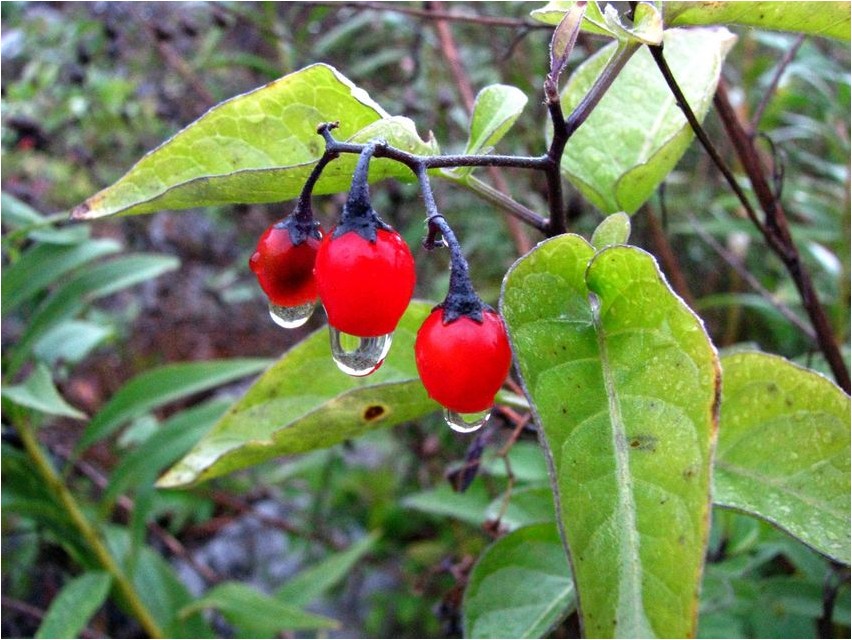
Bittersweet nightshade is one of the plants of the family called Solanaceae; in Latin the name of this plant will be as follows: Solanum dulcamara L.
As for the name of the bittersweet nightshade family itself, in Latin it will be: Solanaceae Juss.
Description of bittersweet nightshade
Bittersweet nightshade is known by numerous popular names: bearberry, crowberry, bud tree, wormwood, dogberry, night steppe, night shadow, licorice, dogberry, magpie catkins and night blindness. Bittersweet nightshade is a subshrub endowed with a woody, creeping and tuberous rhizome, and at its very base there will be woody stems, the height of which varies between thirty and one hundred and eighty centimeters. The leaves of this plant are oblong-ovate and have a heart-shaped base; they will be pointed and also have well-developed petioles. Bittersweet nightshade flowers are quite small in size and are collected in drooping inflorescences that will be paniculate. These flowers are painted in lilac or violet tones. The fruit of the bittersweet nightshade is a bright red berry. It is noteworthy that the fresh leaves of this plant have a very unpleasant odor.
Under natural conditions, this plant is found in Central Asia, Ukraine, Moldova, Belarus, the Daursky and Angara-Sayan regions of Eastern Siberia, the Barnaul and Irtysh regions of Western Siberia, as well as in all regions of the European part of Russia, with the exception of the Lower Volga and Zavolzhsky regions. For growth, bittersweet nightshade prefers the banks of lakes, rivers, ponds and ditches, as well as places among bushes in forests and wet meadows.
Description of the medicinal properties of bittersweet nightshade
Bittersweet nightshade is endowed with very valuable healing properties, and it is recommended to use the fruits and herbs of this plant for medicinal purposes. The term grass includes leaves, flowers and stems.
The presence of such valuable healing properties is recommended to be explained by the content of alkaloids and steroids in the roots of this plant, while the aerial part of this plant contains alkaloids and tigonenin. The following steroids are found in the stems of bittersweet nightshade: stigmasterol, cholesterol, sitosterol, isofucosterol, brassicasterol and campesterol. The leaves of this plant contain steroids, triterpenoids, flavonoids, phenolcarboxylic acids, higher fatty acids, higher aliphatic hydrocarbons and alkaloids.

Bittersweet nightshade is used as a very effective diuretic, diaphoretic, expectorant for whooping cough, bronchial asthma, various respiratory diseases, as well as bronchitis, catarrh of the upper respiratory tract, rheumatism, kidney disease and scrofulosis. A tincture prepared from the bittersweet nightshade herb is recommended for use against dizziness, epilepsy and pulmonary tuberculosis. The herbal infusion and alcohol tincture of this plant are endowed with anti-inflammatory, choleretic and diuretic effects: such healing agents are recommended for use for jaundice and inflammation of the bladder. For various skin diseases, it is recommended to use the leaves and young shoots of bittersweet nightshade: such diseases include psoriasis, dermatitis, eczema and exudative diathesis. Externally, an infusion based on the herb of this plant should be used for baths for lichen, furunculosis and itchy dermatitis. In addition, the infusion of the herb of this plant will also have a diuretic effect.