Rosemary officinalis
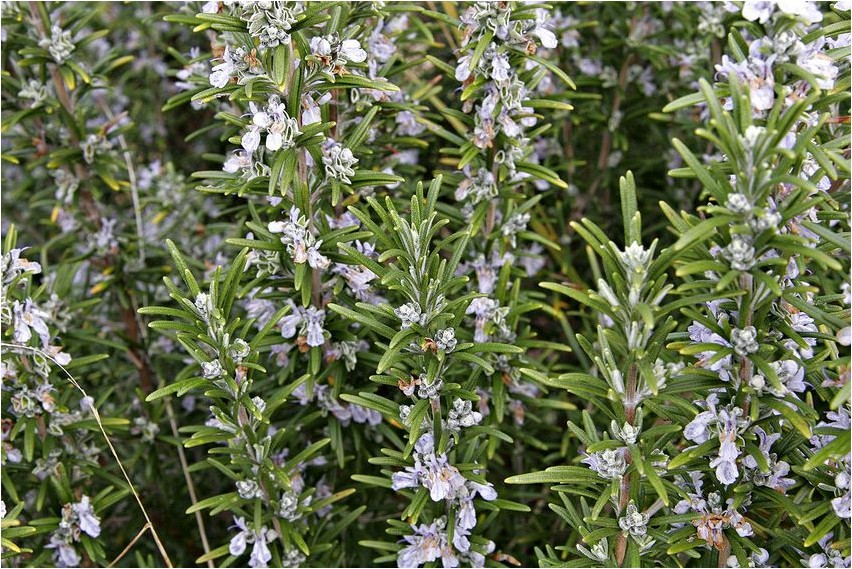
Rosemary officinalis is one of the plants of the family called Lamiaceae; in Latin the name of this plant will be as follows: Rosmarinus officinalis.
As for the name of the family of medicinal rosemary, in Latin it will be like this: Lamiaceae.
Description of rosemary officinalis
For the favorable development of this plant, it is recommended to provide it with a sunny light regime. As for watering throughout the summer season, it will need to be provided quite abundantly. At the same time, the degree of air humidity should be kept at an average level. The life form of rosemary officinalis is an evergreen shrub.
This plant can often be found in numerous winter gardens and greenhouses, as well as on insulated loggias and balconies. If you plan to grow rosemary indoors, it is recommended to give preference to the brightest rooms, and, if possible, also give the plant a cool winter. As for the maximum size in culture, the height of rosemary can be about one meter.
Description of the features of care and cultivation of rosemary officinalis
In order for this plant to develop favorably, care should be taken to replant regularly. It is recommended to carry out such a transplant every two to three years, with preference given to pots of standard sizes. As for the composition of the soil mixture, you will need to mix one part of turf soil and sand, and also add two parts of leaf soil. The acidity of such soil can be either neutral or slightly acidic.
It is important to remember that if the plant receives insufficient light in winter, the leaves of rosemary, which are located at the tops of the shoots, will become less dense and then bend away from the stem in the form of arches. It should be noted that this plant is particularly sensitive to possible drying out of the soil. It is noteworthy that even if it dries out for a very short time, rosemary officinalis can simply die. This plant tolerates cutting well; in this way it is quite possible to give the desired shape to rosemary officinalis.

It is important to note that this plant is practically not susceptible to attacks by various pests and diseases.
Throughout the entire dormant period of rosemary, it is important to ensure an optimal temperature between five and ten degrees. In this case, the plant should be watered in moderation, and air humidity can remain standard. When rosemary officinalis grows indoors, this period of dormancy is forced: it will begin in October and last until February. The reasons for the dormant period will be low light and insufficient air humidity.
Rosemary is rarely propagated for medicinal purposes through seeds. This plant will root very easily from semi-lignified cuttings, which can be done at any time of the year. Such rooting can be done both in water and in sand.
The specific requirements of this crop include the need for direct sunlight. In the summer, it is recommended to place a pot of rosemary in the fresh air. You should also remember that this plant does not tolerate spraying. It is recommended to keep the soil moist, but do not allow water to stagnate. The leaves and flowers of this plant are endowed with decorative properties.