Rebrocarp Ural
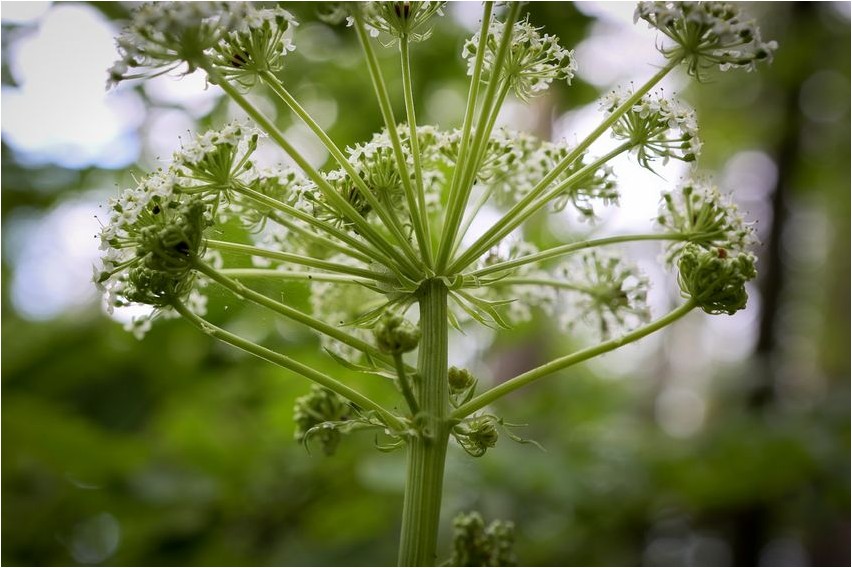
Ural ribwort is one of the plants of the family called Umbellaceae; in Latin the name of this plant will be as follows: Pleurospermum uralense Hoffm.
As for the name of the Ural ribocarp family itself, in Latin it will be like this: Apiaceae Lindl. (Umbelliferae Juss.).
Description of the Ural ribwort
Ural ribwort is a perennial herbaceous plant, the height of which will fluctuate between sixty centimeters and two meters. The stem of this plant is finely grooved, bare, single; at the top under the inflorescence, such a stem can be either stiff-haired or short-haired, and its thickness will be about one to two centimeters. The length and width of the leaves of this plant will be about ten to twenty-five centimeters, and at the base such leaves will be trifoliate. The terminal umbel of the Ural ribcarp will be quite large, its diameter will be about ten to twenty centimeters, it will be endowed with twenty to forty short-haired and hairless rays. In addition, such an umbrella will be surrounded by several smaller umbrellas, which are located at the very tops of the branches, which in turn emerge from the base of the final umbrella. In diameter, the length of such umbrellas will be equal to four to seven centimeters. The petals of the ribwort will be painted white, they will be ovoid in shape, and their length will be two to three and a half millimeters. The fruits of this plant are endowed with thin sharp ribs, their length is six millimeters and their width is four millimeters.
This plant blooms from June to July. Under natural conditions, the Ural ribwort is found in the Far East, Western and Eastern Siberia, as well as in the following regions of the European part of Russia: Zavolzhsky, Volga-Kama and Dvina-Pechora regions. For growth, this plant prefers deciduous forests, places among shrubs, tall grass glades, coniferous and mixed forests.
Description of the medicinal properties of Ural ribwort
The Ural ribwort is endowed with very valuable healing properties, and it is recommended to use the roots of this plant for medicinal purposes. The presence of such valuable healing properties is recommended to be explained by the content of saponins, coumarins, essential oil and polyacetylene compounds in this plant. The aerial part of the Ural ribocarp contains flavonoids, essential oil, coumarins and saponins; the stems and leaves, in turn, contain coumarins and saponins; the inflorescences contain kaempferol and quercetin.
As for traditional medicine, here this plant is very widespread. An infusion and decoction prepared on the basis of the roots of the Ural ribocarp are indicated for use in scrofula, pulmonary tuberculosis and bone fractures, and are also used as a hemostatic, analgesic and anthelmintic. In addition, poultices based on the roots of this plant are used for panaritiums.

It should be noted that the amount of coumarins that are contained in the Ural ribocarp are endowed with the ability to exhibit antitumor activity, and the essential oil of this plant will, in turn, exhibit weak antibacterial activity.
As a lactogenic agent, it is quite acceptable to use the aerial part of the Ural ribwort in veterinary medicine. In addition, it should be noted that the young stems of this plant are edible.





