Turnips
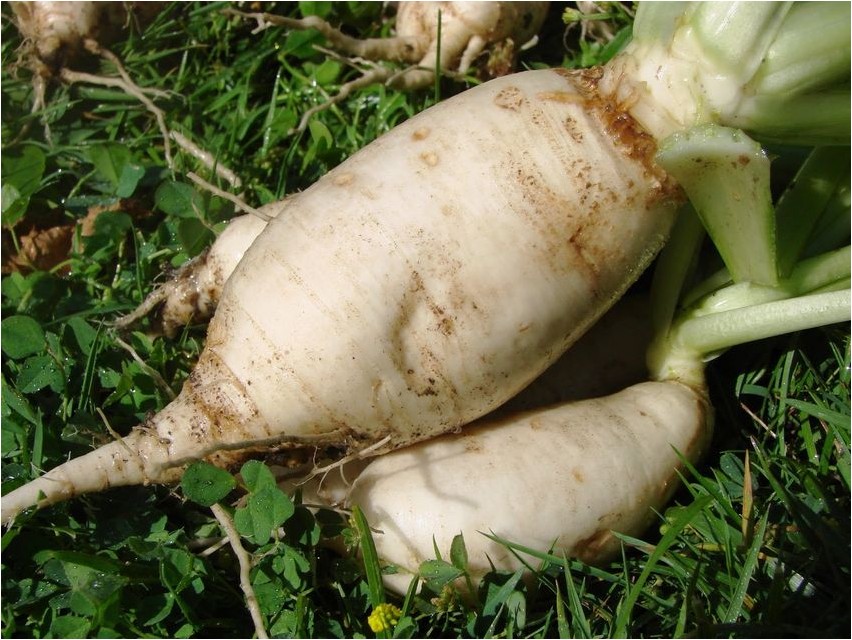
Turnip (lat. Brassica rapa) is a vegetable crop from the Brassica family, which is one of the varieties of rutabaga.
Description
Turnip is a useful biennial plant that forms basal leaf rosettes and root vegetables in the first year of life, and begins to bloom and form seeds in the second year. However, its southern forms often bloom in the first year.
Turnip roots in most cases have a round shape, although sometimes they can be oblong. Each root vegetable is covered with a whitish-purple thin skin, hiding underneath a very juicy and fairly dense pulp. And the color of the pulp can vary from rich white to yellowish hues.
Initially, turnips were used exclusively as livestock feed, but after some time, edible varieties were developed.
Where does it grow
Turnip came to us from Afghanistan and Southern Europe. And today it is grown on all continents of the globe. This crop is especially actively cultivated in Canada, the USA, Denmark, Germany, Australia and the UK.
Application
Delicious salads are most often prepared from turnips, ideally combined with various side dishes and meat dishes. These healthy root vegetables are stewed, baked, boiled and fried, and they are also actively added to all kinds of side dishes, soups and stews. They also make wonderful sauces.

Young turnip leaves are also suitable for consumption — their taste is somewhat reminiscent of mustard. True, in most cases they are used only for adding to salads (and a little less often in stews) in order to give them an unusual piquant flavor.
Turnips are also rich in various beneficial substances — they surpass even citrus fruits in ascorbic acid content. This vegetable is famous for its anti-inflammatory and diuretic effects, as well as its ability to act as an excellent wound healing and antiseptic. The bactericidal effect of this garden beauty is ensured by the presence of phytoncides and mustard oils in its composition. And turnip is also an excellent pain reliever.
Turnips are recommended for people suffering from diabetes and obesity. In addition, it has an excellent healing effect on the intestines and will be an excellent assistant for salt deposits, gout and polyneuritis. Turnip juice is also used, considered an indispensable expectorant and sedative. A decoction of turnips is indicated for asthma and bronchitis, is characterized by a mild laxative effect, actively helps normalize sleep and is even endowed with the ability to calm an excessively strong heartbeat. If you rinse your mouth with this decoction, you can quickly relieve toothache. An ointment is prepared from fresh root vegetables — this product is excellent in treating frostbite.
The beneficial properties of turnips do not end there — among other things, these healing root vegetables are also used as an antitussive and anthelmintic. And crushed boiled turnips are used for gout as an effective remedy for compresses.
Contraindications
Turnip is contraindicated for people suffering from duodenal and gastric ulcers. You should not use it for acute gastritis.
Growing
Turnips are grown by analogy with the well-known radishes, turnips and radishes. To prepare it for the winter, this vegetable is sown in early July, and to enjoy it in the summer, sowing is carried out in early spring.
Turnips will grow best on soddy-podzolic, loamy and sandy loam soils.





