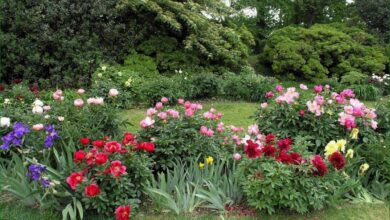
Daphne
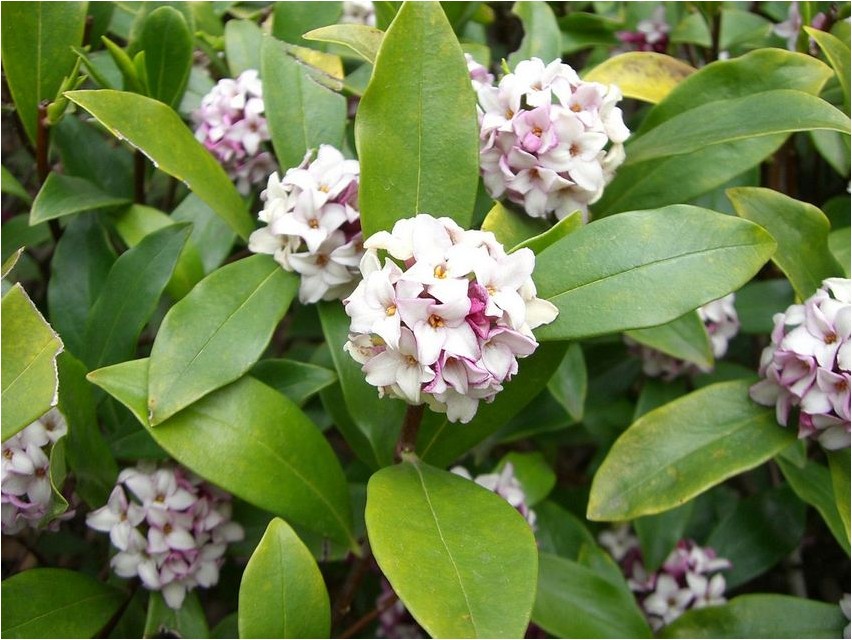
Daphne (Latin: Daphne) is a light-loving woody plant from the Wolf family. Other names are wolfberry or wolfberry. In addition, this plant also has a very impressive list of Russian folk names.
Description
Daphne is a low-branched deciduous shrub. Its leaves are simple, entire, and somewhat similar in appearance to laurel leaves. By the way, it was precisely because of this similarity that the plant began to be called daphne, in honor of the nymph Daphne — the Greek legend says that the nymph fleeing from Apollo who was pursuing her turned into a laurel tree.
Bisexual daphne flowers are predominantly pink in color, although sometimes it can be white. All of them are located on bare shoots sitting in the axils of last year’s fallen leaves, either singly or in small bunches, each of which includes two, three or five flowers.
Daphne fruits look like small juicy oval drupes of bright red color, and, as a rule, their size does not exceed the size of cherry seeds. Inside each drupe there are many shiny spherical seeds, and the stone itself is always broadly oval, shiny and dark brown. Daphne usually begins to bear fruit towards the end of July and in August. It is noteworthy that each kilogram contains approximately four thousand drupes and about thirty-three thousand seeds!
In total, the Daphne genus includes about fifty beautiful flowering shrubs.
Where does it grow
Daphne is quite widespread in Eurasia, while in Russia you can find about ten of its varieties. By the way, in central Russia, daphne has gained fame as the earliest flowering shrub plant! This plant can also often be seen in the Transcaucasus (in Azerbaijan, Armenia and northern Iran).

Usage
In landscape design, daphne is widely used as an excellent spring accent — this amazing plant will become a magnificent decoration for all kinds of shrub groups, mixborders and flower beds. Gardeners are very fond of daphne for its early flowering in the spring and for its bright fruits in the autumn.
Daphne has also found its use in folk medicine; in addition, it is also used in homeopathy — homeopaths use the essence from fresh bark collected before flowering of daphne.
The bark extracted from the branches of the daphne was once used to weave women”s hats and a variety of other small items. On the island of Hokkaido, the Ainu people have long extracted the plant”s sap, which they used to wet the tips of their harpoons while hunting walruses.
All parts of the daphne (its fruits are especially poisonous, while the bark is considered the least poisonous) are highly toxic (they contain a toxic, pungent sap), and this should never be forgotten! Poisoning from this plant manifests itself similarly to hemorrhagic gastroenteritis, and severe forms of this poisoning can even lead to death.
Cultivation and Care
Although some varieties of daphne thrive in shady areas in the wild, it is best planted in sunny spots in your garden. This beauty requires moist, clayey, fertile, and well-drained soil, and mulching the area around the tree trunk with wood chips or bark is very beneficial. Incidentally, loosening the soil around the daphne”s roots is strictly not recommended! As for pruning, this plant requires minimal pruning, if any.
Daphne propagation occurs both by semi-hardwood cuttings and layering, and by sowing freshly harvested seeds before winter.