Crinum
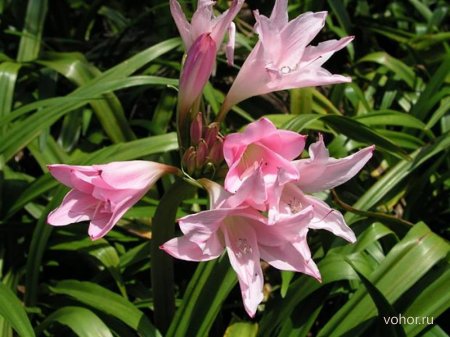
Crinum is a bulbous perennial plant grown indoors. Crinum powellii is suitable for outdoor cultivation. It is a very large plant, with leaves reaching up to 1 meter in length, and flowers up to 18 cm in length. Some species are used as aquarium plants. Flowering occurs in late summer to early fall, with flowers gathered in clusters of pink, white, or white-red flowers.
Crimun Care and Cultivation
For cultivation, use a mixture of turf and leaf mold, peat, humus, and sand. Large pots (tubs) with drainage holes are preferred. A layer of drainage material, such as expanded clay, is placed at the bottom of the pot. Crinum should be kept in a well-lit area at room temperature. It does not require protection from direct sunlight. Outdoor cultivation is possible. In winter, the plant is moved to a sunny location where the air temperature is maintained between 14-18 degrees Celsius. Water moderately but regularly. The soil should not dry out completely. Use soft, settled water for watering. To maintain moisture, the leaves are occasionally sprayed with water at room temperature and wiped with a damp cloth to remove dust.
Mineral fertilizers are applied twice a month when young leaves emerge (after the dormant period has ended). Fertilizers are applied as supplements to flowering plants. After flowering, remove wilted inflorescences. Fertilizers are removed, and watering is reduced over time. After flowering, the crinum enters a dormant period. Repot every 3-5 years; young specimens are repotted every 2 years. When planting, don’t bury the bulb too deeply; about 1/3 of it should be visible above the soil surface. Mature specimens don’t need to be replanted; simply replace the surface soil.

growing in open ground
Crinum grows best in sunny areas, protected from winds. Fertile, well-drained soil is preferred.

Water sparingly, not allowing the soil to dry out completely. Mineral fertilizers are applied throughout the summer 1-2 times a month. After flowering has completed, feeding is interrupted. Krinum urgently requires durable winter shelter; in most cases, plantings are mulched with a thick layer of straw and peat. The majority of gardeners plant the plant in tubs and take it out into the fresh air all summer; in the fall, the plant is transferred to a fresh room.

crinum propagation
Crinum is propagated by seeds and baby bulbs. At the beginning of March, the children are fenced off from the mother’s bulb using a sharp knife, so as not to disturb the earthen lump around the roots. The sections are sprinkled with crushed charcoal. After this, the children are planted in a nutrient substrate and watered in abundance. Planting of bulbs in open ground will take place in early May. Seed propagation is not used often, because flowering starts 4-5 years after sowing. Seeds are sown one at a time in not very large containers, in a substrate made of a mixture of peat and sand. The seeds are germinated in a mini-greenhouse.

note
some types of crinum are poisonous, therefore, after contact with the plant, you must thoroughly wash your hands with soap and keep under supervision so that children or representatives of the animal world do not tear off or chew the leaves and flowers.
Diseases and pests
Has the potential to experience suffering from mealybugs. spider mites, thrips.