Mandarin
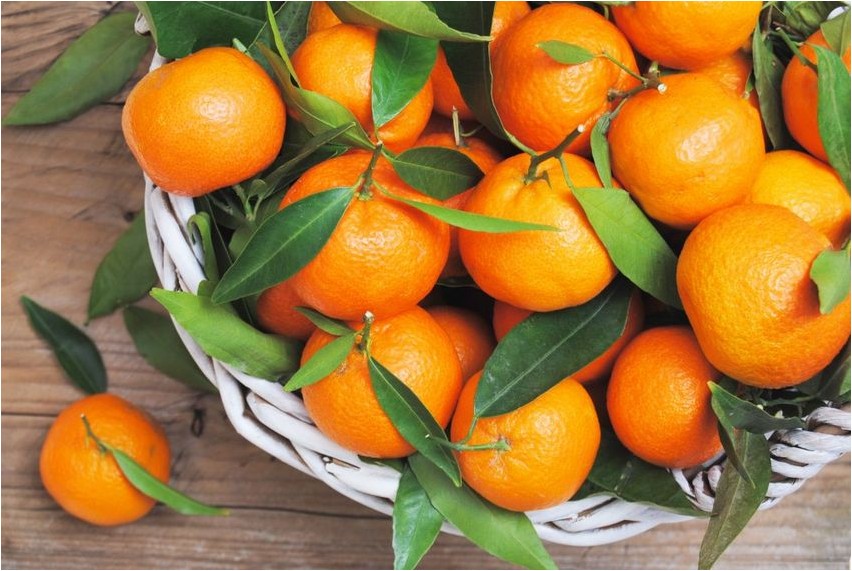
Mandarin (lat. Citrus reticulata) is an evergreen fruit shrub or low-growing tree. It is a prominent representative of the Citrus genus of the Rutaceae family.
The Russian name for the culture was borrowed from the Spanish language (according to other sources, from French). The name was derived from two words “se mondar”, which means “easy to peel” and refers to the property of the fruit’s peel. Currently, mandarin is widely cultivated in Japan, China, South Korea, Spain, Algeria, France, Egypt, Turkey, Morocco, Georgia, Azerbaijan, Argentina and Brazil. Tangerines are also grown on the Black Sea coast.
Characteristics of culture
Mandarin is a shrub or tree up to 4-5 m high with dark green shoots. The leaves are petiolate, medium in size, elliptical or ovoid in shape. The flowers are matte white, solitary or collected in twos in the leaf axils. The fruits are yellow or orange, round, usually flattened from apex to base. The peel of the fruit is thin, easily peeled, and aromatic. The pulp is yellow-orange or orange, juicy, sweet or sweet and sour. Mandarin blossoms in May — early June (which depends solely on climatic conditions), the fruits ripen in October-November.
The first fruits appear 3-4 years after planting. From one mature tree you can collect up to 100 fruits. Tangerines are extremely diverse; today there are quite a few interesting varieties that boast good frost-resistant properties, which makes it possible to grow the crop in regions with a temperate climate. Mandarin is a frequent guest of greenhouses; it is also cultivated as a houseplant.
The subtleties of growing tangerines indoors
Tangerines are photophilous, love rooms with intense lighting, and only need shading at midday. With the onset of stable warmth, containers with tangerines are taken out onto the balcony or into the garden, but always in a place protected from the wind. You can dig the tangerine into the soil in your garden plot without removing it from the container. The optimal temperature for crop development is 18-20C, in winter — 13-15C.
Mandarin is moisture-loving and takes well to regular spraying. It does not tolerate dry air; to increase air humidity, place a tray with water next to or under the container. Soils for growing tangerines are preferably well-drained and fertile. The following substrates can be used: turf and leaf soil, rotted manure and fatty clay (3:1:1:1) or turf and leaf soil, rotted manure and sand (2:1:1:1).

Mandarins are propagated by seeds and cuttings, often by grafting. Seeds are sown in the ground immediately after their fruit is extracted. Shoots appear in 30-40 days (subject to proper care and optimal conditions). Seedlings develop very slowly. Tangerines grown by sowing seeds begin to bear fruit at 6-7 years. Cuttings are also possible, but cuttings do not root well.
Grafted tangerines begin to bear fruit at 3-4 years. Among gardeners, eye grafting is the most popular. The method of propagating the crop by air layering is encouraged. In this case, a three-year-old branch is selected from the mother plant and the bark is removed in the form of a ring; its width should be about 2 cm. A container made of dense polyethylene is attached around the ring and filled with sand, soil and wet moss. This mixture is watered regularly. As soon as the cuttings take root, they are separated and transplanted into a separate pot.
Young tangerines are transplanted once a year, then once every three years. Every year the top layer of soil is changed for plants; this is one of the mandatory conditions. Transplantation is carried out using the transshipment method; it is not advisable to damage the earthen ball.
Care
Caring for tangerines involves abundant and regular watering. In winter, watering is reduced. For irrigation, warm and settled water is used. The culture has a negative attitude towards waterlogging and drying out. In both cases, complete death of trees is possible. Feeding is required. When growing tangerine as a houseplant, fertilizers are applied weekly from April to September. In winter, fertilizing is not needed or as needed. Tangerines are rarely affected by diseases and pests, but preventive treatments with natural preparations are not prohibited.
https://www. youtube. com/watch? v=eN7aJI2AJIU