Phalaenopsis
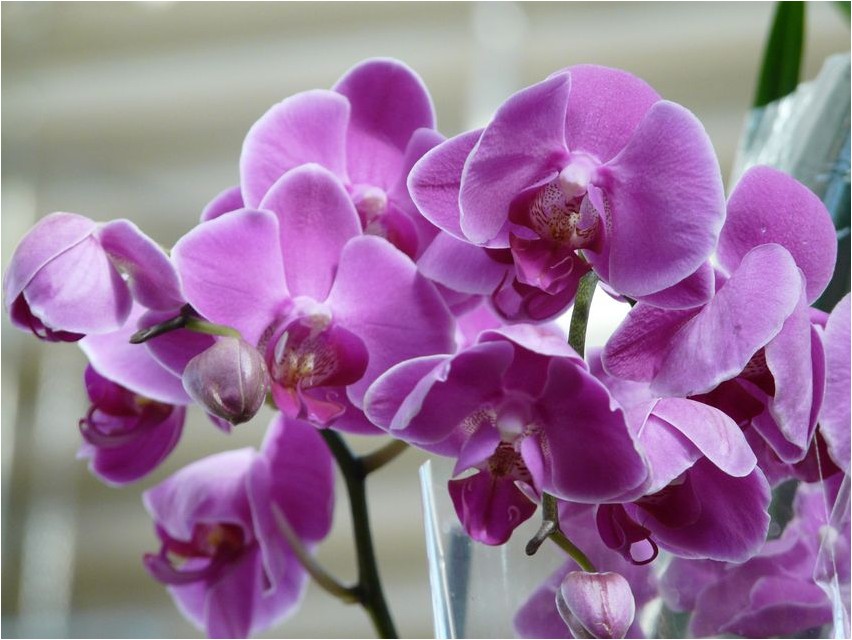
Phalaenopsis (lat. Phalaenopsis) is a houseplant; epiphytic plant of the Orchidaceae family. In nature, phalaenopsis grows in moist mountain and lowland forests of the Philippines, East Asia and the northeast coast of Australia.
The plant was discovered by the famous Dutch botanist K. Blume, from afar he mistook a clearing of flowers for a flock of butterflies, so the genus was named phalaenopsis, which translated from Greek means “phalaina” – butterfly, “opsis” – resemblance. Many varieties and hybrids of phalaenopsis are very popular in greenhouse and indoor floriculture; the plants are also represented in botanical gardens. Currently, about 40 species are known.
Characteristics of culture
Phalaenopsis is a monopodial plant with a greatly shortened stem and wide, dense leaves, having a single growing point. The roots are aerial, greenish, often flattened, covered with a layer of velamen over the entire surface. The roots contain chlorophyll and participate in photosynthesis.
The stem is branching, grows very slowly, reaches a height of 30-40 cm. The leaves are leathery, paired, succulent, 5-30 cm long, from light green to dark green, can be covered with white, red, brown or purple streaks or spots. An adult phalaenopsis usually has 4-6 leaves.
Peduncles are long, often branched, formed in the axils of the leaves from the base of the stem. Depending on the variety, from 3 to 40 flowers are formed on one peduncle. The flowers are large or medium-sized, reaching 2-12 cm in diameter, sometimes fragrant, and can be of a wide variety of colors.

Conditions of detention
Phalaenopsis is a light-loving plant; it prefers rooms with bright diffused light without direct sunlight. The optimal daytime growing temperature is 20-24C, night – 16-18C. At temperatures below 16C, plants stop growing and are more often affected by various diseases. The culture is not demanding on air humidity, unlike its relatives; 40-70% humidity is quite enough for the normal development of phalaenopsis.
When air humidity is below 40% and intense heat, the flowers of the plant dry out prematurely, the leaves lose their bright and rich color, becoming pale with a yellowish tint. To increase air humidity, gardeners recommend using special air humidifiers; you can also place a container of water next to the plant or place the pot on a tray with wet expanded clay and a lattice. The culture has a negative attitude towards drafts, but requires systematic ventilation of the room to prevent plant rotting and the appearance of various fungal diseases.
Reproduction
In indoor conditions, phalaenopsis is propagated vegetatively, or more precisely, by separating the lateral shoots formed from dormant buds located on the stem or peduncle. As soon as the shoots form roots of at least 4-5 cm in length, they are separated from the mother plant and planted in a separate container.
Care
In general, care for representatives of the Orchid family is approximately the same. It consists of standard procedures such as watering, fertilizing and replacing the substrate. Watering is carried out by immersing the pot in a container of water or in a manner acceptable for all other plants. Water the plants when their roots acquire a grayish tint and the substrate becomes dry. Water for irrigation is used that is settled and warm. Water containing a lot of salts is not suitable for phalaenopsis; it is advisable to first filter or boil it. It is important not to get it on the leaves of the plant when watering; if this happens, wipe them with a napkin.
Phalaenopsis is fed with special complex fertilizers for orchids during active growth once every 2-3 weeks. Fertilizers are applied only after watering. The substrate is replaced every 2-3 years, during which time it becomes very loose and has a sour smell, and is no longer suitable for normal growth of phalaenopsis. It is best to replant plants during the intensive growth of new roots, but this procedure should not be carried out during the period of development of peduncles and flowering.
Transparent plastic pots with holes are preferable for growing phalaenopsis; clay pots are not recommended. Mixtures are purchased either at specialized points or made independently. The substrate for orchids is fine and medium-sized bark; peat is often added to the substrate; it slows down the increase in pH.