Agapethes
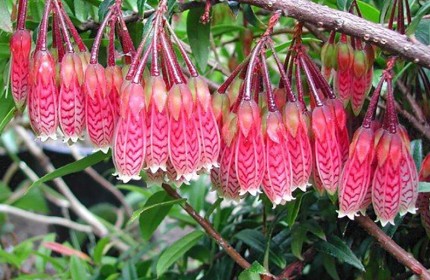
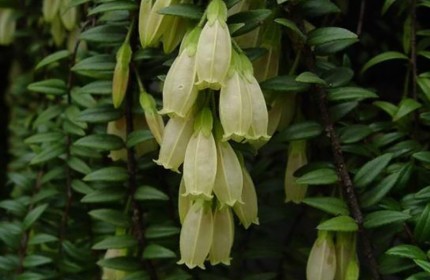
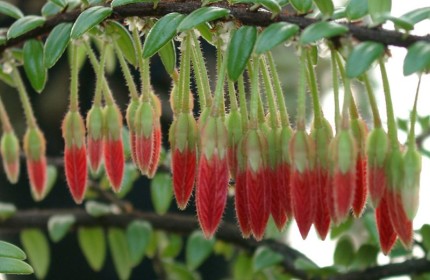
the agapetes plant looks unusually beautiful, as if from a fairy tale. Red elongated buds, open at the ends, lowered their “heads” on long branches with small leaves, delight many flower lovers. The Agapethes shrub belongs to the heather family, which is native to India, Australia, the Himalayas and the Pacific Islands. In nature, there are about 80 species of this plant. This plant grows slowly and reaches about 0. 60 — 0. 90 m in height, usually in rooms or greenhouses where the air temperature is relatively cool.
In home floriculture, only two types of agapetes are common — boxwood and serpentine.
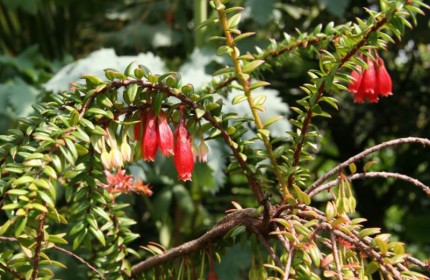
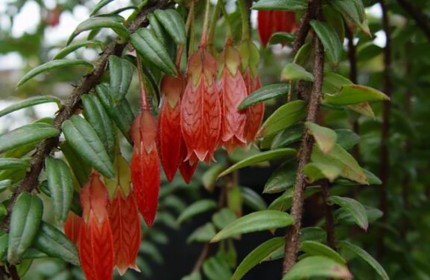
Agapethes boxwood grows up to 150 cm in height, the branches have a flat appearance, the leaves are small jagged, oval, glossy. The flowers are formed in the axils in pairs or one at a time, have a cylindrical shape and are bright red in color. Flowering can last up to 2 months.
Agapethes serpentine is a shrub that grows up to 300 cm in height, has a thickening on the tuber at the base of the stem, in which it accumulates moisture. Its branches are flexible, covered with brown bristles, the leaves are small, pointed, glossy, no more than 1 cm in length. Flowers grow in the axils in 1-2 pieces, about 0. 2 mm in size. Flowering lasts about 5 months. In apartment conditions, round blue berries no more than 1 cm in diameter can rarely be formed.
agapethes grows very slowly, so it is not subject to frequent replanting, since it does not develop a large root system. Once every two or three years is enough for replanting. The soil needs to be airy and permeable, with an acidic environment, of this composition — 2 portions of sphagnum moss, half a portion of humus, and one portion of leaf soil with high-moor peat. In order for agapetes to look more magnificent, young shoots need to be pinched or trimmed.
agapetes is grown at a temperature of 8-12 °C, in greenhouses in places shaded from the sun. At higher temperatures the plant will not bloom. It is necessary to water thoroughly during the growth period. In winter, watering should be reduced, as the plant accumulates moisture in its stem. The plant needs to be sprayed in the summer. Fertilize with the onset of spring, using mineral fertilizers once every 2 weeks. In winter, the plant does not need fertilizer.
agapethes propagates mainly by cuttings. They are rooted at a temperature of 16-18°C. Usually after 2 months they take root, but if they are placed under a film or cap, it is possible to take root even earlier. Next them transplanted in wide containers with good drainage. To stimulate flowering, the young plant is also pinched. They usually bloom 2 years after reproduction. Seeds are usually not propagated at home, as they germinate poorly or do not germinate at all.

agapethes is resistant to diseases and pests, but sometimes spider mites or weevils may appear on the leaves. Then insecticides should be used for treatment.