Enseta
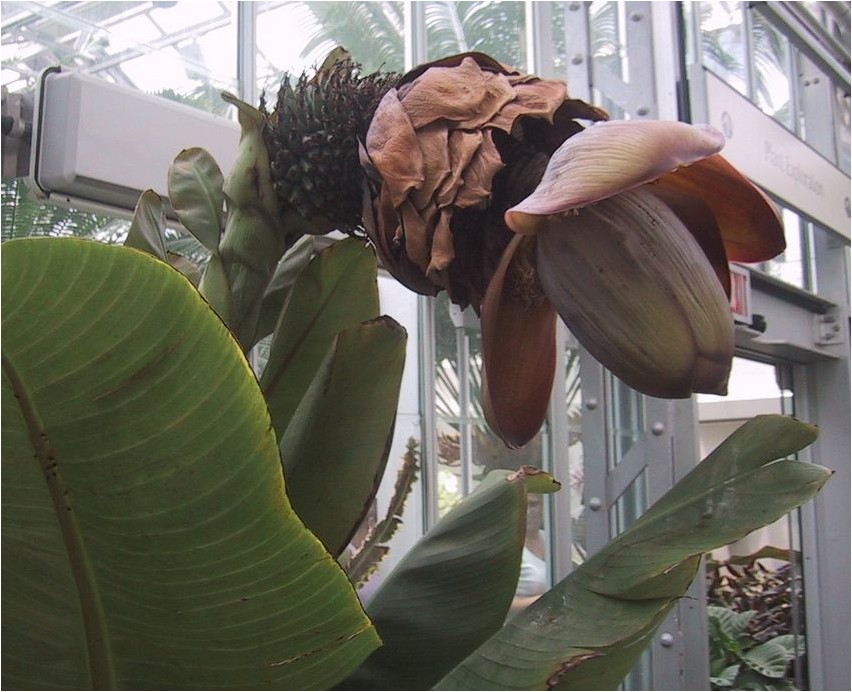
Enseta (lat. Ensete) is an exotic perennial from the Banana family, very similar in appearance to a banana tree.
Description
Enseta is an exotic plant whose paddle-shaped leaves often reach two and a half meters in length and seventy centimeters in width. And in natural conditions there are specimens with leaf lengths of ten to thirteen meters!
Enset”s rhizomes, located underground, are always very powerful, and its shortened stems usually have a tuberous shape. These stems practically do not rise above the soil surface, producing spectacular leaves arranged in a spiral almost from the ground itself.
Where does it grow
Enseta came to us from Africa: from the Northeast, Central and South. It can be found on river banks and forest edges. In general, she prefers sunny, open areas. Occasionally, this plant can be seen in shady forests, but in such conditions it quickly stops bearing fruit and gradually dies completely.
Usage
In Ethiopia, enseta is the most important source of starch — it is extracted from tubers (i. e. roots). However, in addition to dessert varieties, there are also decorative varieties of this plant, for example, enseta swollen, which is often called the “Abyssinian banana.”
Growing and care
Enset should be planted only in well-lit areas — soft, diffused light is especially favorable for its fancy leaves. If the plant was planted in a southern corner, then it must be shaded from the midday sun, since exposure to direct sunlight can cause burns. And in winter, the light-loving enset needs additional illumination — for this purpose, a fluorescent lamp can be installed about one meter from it.

Enseta is also characterized by being thermophilic, which means that the thermometer in the room in the summer should in no case fall below fifteen to twenty degrees. In winter, the temperature may be lower, but ideally it should not fall below twelve degrees. And this plant should be protected in every possible way from drafts that are destructive to it!
Fading and dry leaves, which noticeably spoil the appearance of the enset, should be removed in a timely manner. As for pests, this plant can be attacked by mealybugs, aphids or spider mites.
In autumn, enseta enters its most active growing season, requiring abundant watering more than ever. It”s important to remember that the root ball should always be well-saturated with nourishing moisture, but waterlogging should never be allowed to stagnate—waterlogged soil will only cause harm.
For watering, enseta should be used only with warm, soft water that has been settled for at least 24 hours. Towards the end of autumn, reduce the frequency and volume of watering, and winter watering should be quite sparing.
Enseta also requires frequent misting. The water used for misting should be at room temperature, and a fine-mist sprayer is ideal. In the spring, this green plant also needs to be fed with high-quality complex fertilizers—these fertilizers can also be added to the water used for irrigation.
Enseta is propagated primarily by seeds, but it”s important to keep in mind that a fairly warm temperature, ranging from 25 to 30 degrees Celsius, is necessary for their successful germination. However, if this plant is kept indoors, it”s almost impossible to obtain seeds from it, which is why indoor enseta is rarely propagated.