mulberry
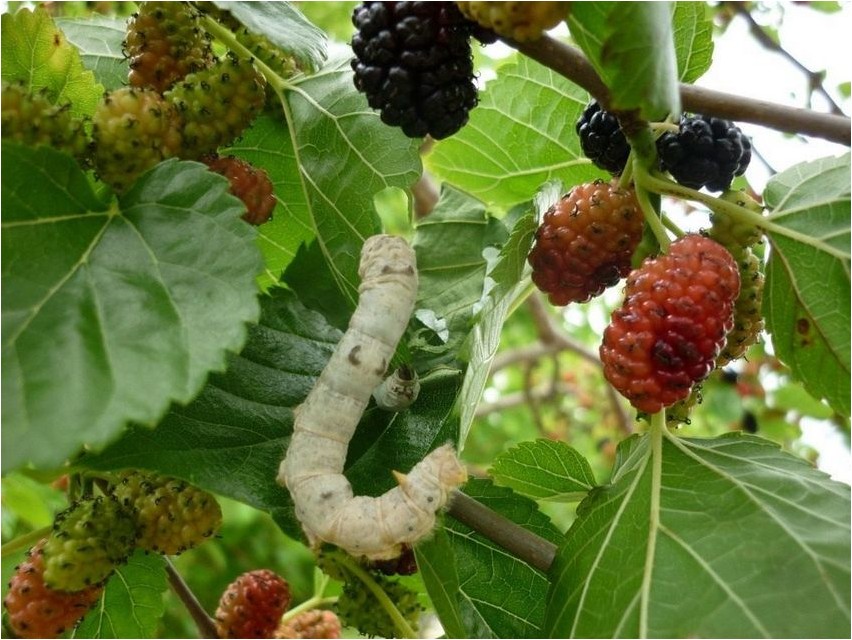
Mulberry (lat. Morus) is a genus of deciduous trees of the Mulberry family. The genus includes 17 species. The plant is known by the names — here, mulberry, mulberry, mulberry tree, mulberry.
In nature, it is found mainly in the subtropical and warm temperate zones of Africa, Asia and North America. On the territory of the Russian Federation, mulberry grows in the Belgorod, Voronezh, Astrakhan, Volgograd, Rostov and Saratov regions, as well as in the Stavropol and Krasnodar territories.
Characteristics of culture
Mulberry is a deciduous tree 16-35 m high with a spherical or broadly ovoid dense crown. The bark is fissured, brown in color. The leaves are dark green, leathery, glabrous or pubescent, ovate, alternate, asymmetrical, lobed or crenate, up to 15 cm long, equipped with early falling stipules. The flowers are dioecious, collected in earring-shaped inflorescences. The fruit is a false drupe, very juicy, fleshy, pink, white, purple or almost black, up to 5 cm long, and has a pleasant aroma. On average, mulberry lives about 200 years, although there are specimens 400-500 years old. The crop begins to bear fruit in the fifth year after planting. In the tenth year of life, up to 100-110 kg of berries can be collected from one tree.
Growing conditions
Mulberry is a light-loving plant, undemanding to soil conditions. Sites for growing crops are preferably well-lit with fertile, drained, slightly acidic or neutral soil, protected from cold winds. Mulberry does not accept saline, heavy clay, heavily waterlogged and swampy soils. The optimal growth temperature is 18-25C. Mulberry is cold-resistant and can withstand winter frosts down t o-30C.
Reproduction and planting
Mulberries are propagated by seeds, layering, green and lignified cuttings, root shoots and grafting. The last method is most relevant for decorative forms. The most effective way is considered to be propagation by green cuttings; their rooting rate, even without the use of growth stimulants, is 80-90%. Propagation by lignified cuttings gives much worse results.
When propagating by grafting, the white mulberry variety is used as the rootstock. When planting seedlings, prepare a hole 2-3 weeks in advance; the dimensions should be 80 x 80 x 60 cm. Fill one-third of the hole with a mixture of fertile soil, humus, or compost, fertilized with potassium salt, superphosphate, or any complex fertilizer. It is advisable to plant seedlings in the fall, although spring planting is also appropriate.

Care
Basic mulberry care involves weeding, loosening the soil, watering, and fertilizing. The soil around the trunk should be kept loose. Fertilizer is applied at planting and then when the first fruits appear on the trees. One additional feeding per season is sufficient for mulberry trees. Nitrophoska is an excellent fertilizer. Secondary feeding is carried out as needed. Mulberries can be periodically fed with slurry diluted 4-5 times. Bird droppings diluted 10-12 times can also be used. Fertilizing should not be done in the second half of summer, otherwise the shoots will not have time to prepare for winter. The plant requires annual sanitary and formative pruning. Mulberries are best grown in a bush form, in which case plant growth is limited to 3-4 meters. Regularly remove any thickening branches.
Uses
Mulberries are widely used in cooking. The edible fruits are used for pie fillings, wine, and soft drinks. Mulberry wood is a valuable material; it is used to make some musical instruments and building materials. The plant is also suitable for landscaping gardens. Mulberries look beautiful in group plantings, single plants, and avenue plantings. The trees are also used to create hedges. Mulberry Growing Features
When propagating by grafting, the white mulberry variety is used as the rootstock. When planting seedlings, prepare a hole 2-3 weeks in advance; the dimensions should be 80 x 80 x 60 cm. Fill one-third of the hole with a mixture of fertile soil, humus, or compost, fertilized with potassium salt, superphosphate, or any complex fertilizer. It is best to plant seedlings in the fall, although spring planting is also appropriate.
Care
mulberry
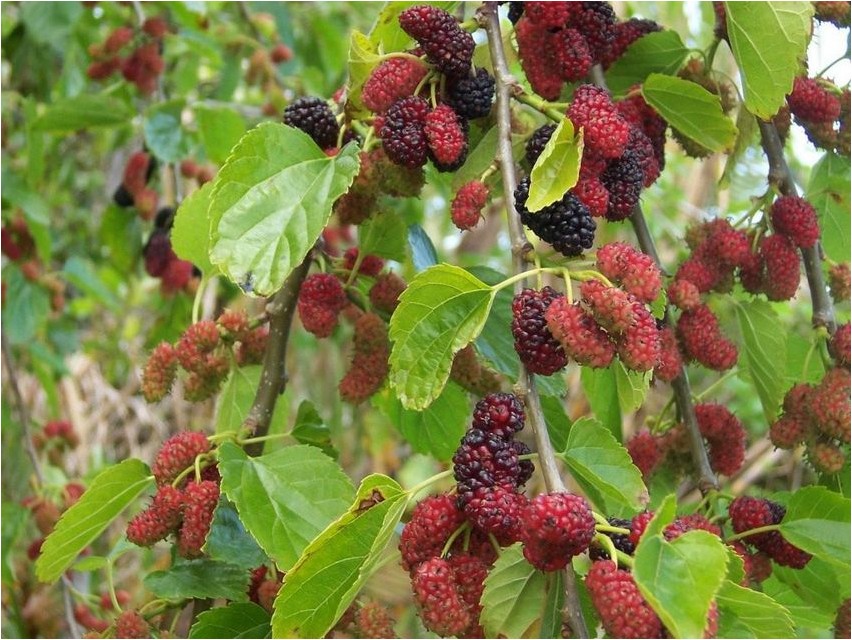
Mulberry (lat. Morus) is a genus of deciduous trees of the Mulberry family. The genus includes 17 species. The plant is known by the names — here, mulberry, mulberry, mulberry tree, mulberry.
In nature, it is found mainly in the subtropical and warm temperate zones of Africa, Asia and North America. On the territory of the Russian Federation, mulberry grows in the Belgorod, Voronezh, Astrakhan, Volgograd, Rostov and Saratov regions, as well as in the Stavropol and Krasnodar territories.
Characteristics of culture
Mulberry is a deciduous tree 16-35 m high with a spherical or broadly ovoid dense crown. The bark is fissured, brown in color. The leaves are dark green, leathery, glabrous or pubescent, ovate, alternate, asymmetrical, lobed or crenate, up to 15 cm long, equipped with early falling stipules. The flowers are dioecious, collected in earring-shaped inflorescences. The fruit is a false drupe, very juicy, fleshy, pink, white, purple or almost black, up to 5 cm long, and has a pleasant aroma. On average, mulberry lives about 200 years, although there are specimens 400-500 years old. The crop begins to bear fruit in the fifth year after planting. In the tenth year of life, up to 100-110 kg of berries can be collected from one tree.
Growing conditions
Mulberry is a light-loving plant, undemanding to soil conditions. Sites for growing crops are preferably well-lit with fertile, drained, slightly acidic or neutral soil, protected from cold winds. Mulberry does not accept saline, heavy clay, heavily waterlogged and swampy soils. The optimal growth temperature is 18-25C. Mulberry is cold-resistant and can withstand winter frosts down t o-30C.
Reproduction and planting
Mulberries are propagated by seeds, layering, green and lignified cuttings, root shoots and grafting. The last method is most relevant for decorative forms. The most effective way is considered to be propagation by green cuttings; their rooting rate, even without the use of growth stimulants, is 80-90%. Propagation by lignified cuttings gives much worse results.
When propagating by grafting, the white mulberry variety is used as the rootstock. When planting seedlings, prepare a hole 2-3 weeks in advance; the dimensions should be 80 x 80 x 60 cm. Fill one-third of the hole with a mixture of fertile soil, humus, or compost, fertilized with potassium salt, superphosphate, or any complex fertilizer. It is advisable to plant seedlings in the fall, although spring planting is also appropriate.
Care
Basic mulberry care involves weeding, loosening the soil, watering, and fertilizing. The soil around the trunk should be kept loose. Fertilizer is applied at planting and then when the first fruits appear on the trees. One additional feeding per season is sufficient for mulberry trees. Nitrophoska is an excellent fertilizer. Secondary feeding is carried out as needed. Mulberries can be periodically fed with slurry diluted 4-5 times. Bird droppings diluted 10-12 times can also be used. Fertilizing should not be done in the second half of summer, otherwise the shoots will not have time to prepare for winter. The plant requires annual sanitary and formative pruning. Mulberries are best grown in a bush form, in which case plant growth is limited to 3-4 meters. Regularly remove any thickening branches.
Uses
Mulberries are widely used in cooking. The edible fruits are used for pie fillings, wine, and soft drinks. Mulberry wood is a valuable material; it is used to make some musical instruments and building materials. The plant is also suitable for landscaping gardens. Mulberries look beautiful in group plantings, single plants, and avenue plantings. The trees are also used to create hedges. Mulberry Growing Features
When propagating by grafting, the white mulberry variety is used as the rootstock. When planting seedlings, prepare a hole 2-3 weeks in advance; the dimensions should be 80 x 80 x 60 cm. Fill one-third of the hole with a mixture of fertile soil, humus, or compost, fertilized with potassium salt, superphosphate, or any complex fertilizer. It is best to plant seedlings in the fall, although spring planting is also appropriate.