White cinquefoil
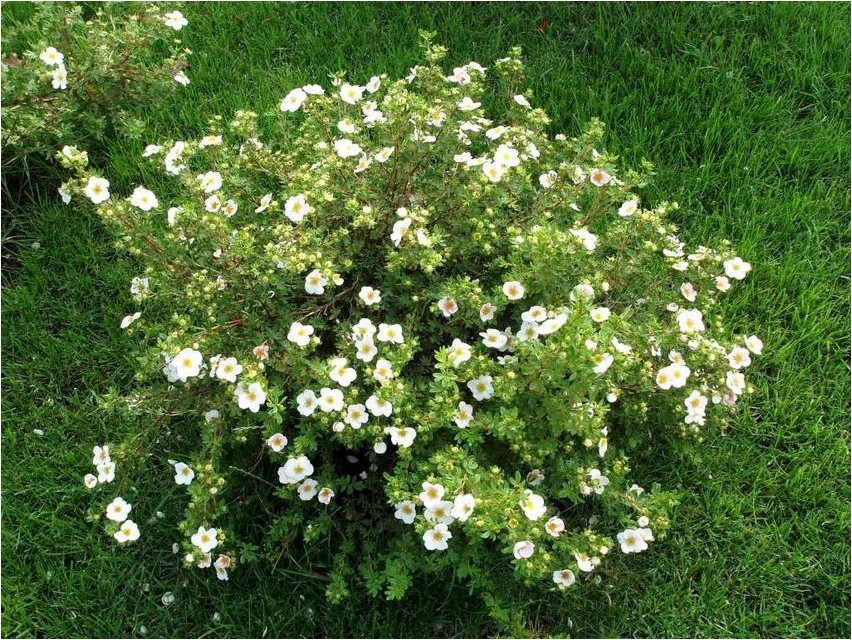
White cinquefoil is one of the plants of the family called Rosaceae; in Latin the name of this plant will be as follows: Potentilla alba L.
As for the name of the white cinquefoil family itself, in Latin it will be: Rosaceae Juss.
Description of white cinquefoil
White cinquefoil is a perennial herbaceous plant whose height will vary between eight and twenty-five centimeters. The rhizome of this plant is thickened, and it will be colored in black and brown tones. The entire plant, with the exception of only the upper side of the leaves of adult specimens, is covered with appressed silky hairs. The basal leaves of white cinquefoil will be palmate; usually this plant is endowed with five oblong-lanceolate leaves, which will have rather large stipules, colored in dark brown tones. The flowers of this plant are white in color, they are on long stalks, and they will be quite large in shape. The outer sepals of white cinquefoil are linear-lanceolate in shape, they will be shorter than the inner ones, which are ovate-lanceolate, and the petals themselves will be broadly obovate.
White cinquefoil blooms from May to June. Under natural conditions, this plant is found on the territory of Ukraine in the Dnieper region and the Carpathians, as well as in the Upper Volga and Zavolzhsky regions of the European part of Russia, and also in Crimea.
Description of the medicinal properties of white cinquefoil
White cinquefoil is endowed with very valuable healing properties, and it is recommended to use the rhizome of this plant for medicinal purposes. The presence of such valuable healing properties should be explained by the content of starch, phenolcarboxylic acids, saponins, iridoids, quercetin and tannins in this plant. It is noteworthy that the maximum tannins are found in white cinquefoil during the flowering period. The aerial part of this plant contains tannins, phenolcarboxylic acids, saponins, iridoids and rutin. The leaves also contain phenolcarboxylic acids and their derivatives, quercetin, cyanidin, kaempferol, coumaric and ellagic acids.
White cinquefoil will be endowed with antibacterial activity. As for traditional medicine, an infusion prepared from the roots of this plant has become quite widespread; such a healing remedy is recommended for use in cases of scurvy. A decoction of the roots of white cinquefoil is used for rheumatism, liver diseases, gastrointestinal colic, gout, jaundice, colitis, diarrhea, enterocolitis, stomach ulcers and dysentery. In addition, such healing agents are effective as astringents and hemostatic.

It is noteworthy that studies have shown the effectiveness of using such medicinal products based on this plant for various diseases of the thyroid gland, especially thyrotoxicosis. It is worth noting that in addition to its advantages, white cinquefoil is also an ornamental plant.
To prepare a decoction based on the roots of this plant, you will need to take eight to ten crushed dry roots of white cinquefoil in half a liter of water. The resulting mixture should be boiled for about ten to twelve minutes over fairly low heat, then left to infuse for an hour and strain thoroughly. In addition, it is recommended to bring the volume of the resulting mixture using boiled water up to the original volume. Take the resulting healing remedy based on white cinquefoil before meals three to four times a day.





