Artemisia annual
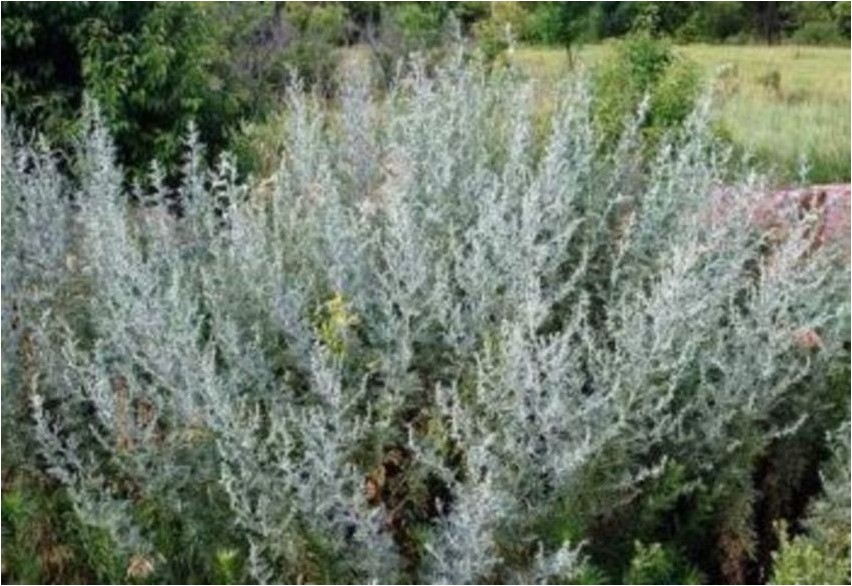
Annual wormwood is one of the plants of the family called Asteraceae or Asteraceae; in Latin the name of this plant will be as follows: Artemisia annua L.
As for the name of the annual wormwood family itself, in Latin it will be like this: Asteraceae Dumort. (Compositae Giseke).
Description of Artemisia annua
Annual wormwood is a herbaceous plant whose height can reach one meter. The stem of this plant is straight, bare and grooved, and at the very beginning of the growing season such a stem will be green in color, and at the end of this period it will become dark purple. The lower leaves of Artemisia annua are on petioles, they are three-pinnately dissected, their length is three to five centimeters. The upper leaves of this plant are softer and will also be sessile. The spherical baskets of Artemisia annua are collected into paniculate and pyramidal inflorescences. The flowers of Artemisia annua are located in baskets, they are numerous and will be colored yellow.
Artemisia annua blooms from August to September. Under natural conditions, this plant is found in the Caucasus, Central Asia, Ukraine, Moldova, the Caucasus, Belarus, the European part of Russia, as well as Eastern Siberia from Altai to Transbaikalia. As for its general distribution, this plant can be found in the wild in Central Europe, Japan, North America, the Mediterranean, Mongolia and Iran.
It should be noted that annual wormwood is endowed with increased disease resistance and drought resistance.
Description of the medicinal properties of wormwood annua
Annual wormwood is endowed with very valuable healing properties, and it is recommended to use the herb of this plant for medicinal purposes. The term grass includes flowers, stems and leaves. Young leaves of wormwood should be harvested in the spring, while the grass is harvested in the autumn.

The herb Artemisia annua contains essential oil, and its amount will increase from the moment the plant begins to flower and ends with the period of fruiting. This essential oil contains camphor, camphene, cineole, myrcene, pinene, borneol, artemisia ketone, butyric and acetic acids. It should be noted that Artemisia annua essential oil is also used in the perfumery and cosmetics industry.
The juice of the young leaves of this plant should be used to treat scabies, various pustular and skin diseases. Based on dry leaves of wormwood annua, it is recommended to prepare special ointments that are used to treat various skin diseases, including eczema.
It is recommended to use young leaves of this plant as a seasoning for meat dishes, while wormwood seeds should be added to cereal and flour dishes, as well as tea.
To stimulate the appetite, it is recommended to use the following very effective remedy based on this plant: to prepare such a healing remedy, you will need to take one tablespoon of wormwood herb and brew one glass of boiling water. The resulting healing mixture should be boiled for about ten minutes over low heat, after which this mixture is carefully filtered. Take this healing remedy based on wormwood annua before meals, one or two teaspoons. It is very important to strictly follow the instructions for taking such a remedy: in this case, maximum effectiveness will be achieved when taking such a remedy.





