Trachycarpus Palm
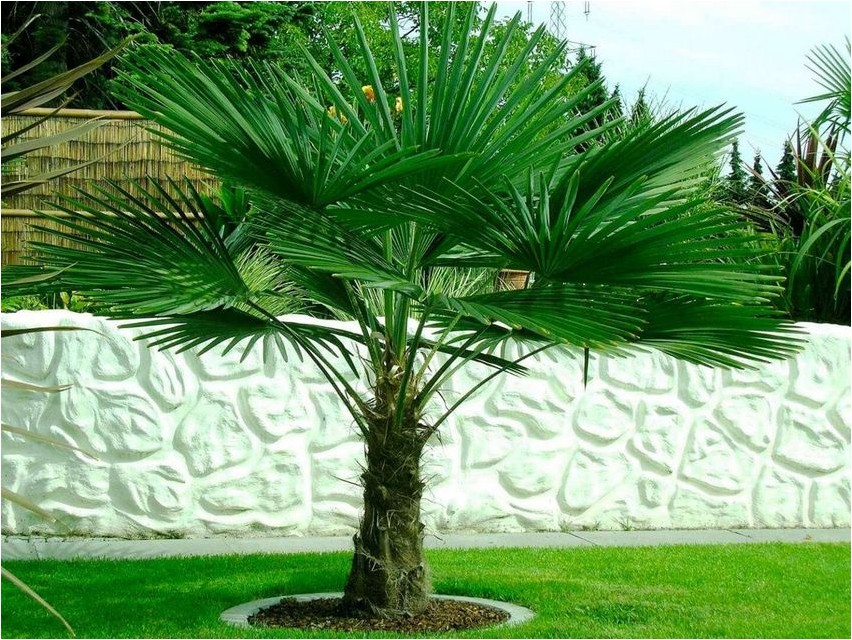
Trachycarpus palm (Latin: Trachycarpus) is a genus of evergreen palms in the Arecaceae family, or Palmaceae.
Today, the genus comprises nine species of palms, growing from the Himalayan East to eastern China. These very hardy palms are used as landscape ornaments in cold regions. For example, they grow year-round without additional cover at the New York Botanical Garden. In Asian countries, the palm leaves are used to make fibers for weaving strong ropes, making brushes, and creating artificial palms.
Description
Trachycarpus palms are fan palms.
The bare petioles end in a rounded fan formed by numerous leaflets. The leaf bases form strong fibers, giving the palm trunk its characteristic hairy, brownish-brown appearance. The maximum height of palm trees in the wild is twelve meters, with a trunk diameter of up to twenty centimeters. The top of the palm is crowned with a fluffy, lacy crown of complex fan-shaped leaves.
The racemose, branched inflorescence, up to one meter long, is formed by numerous small flowers. Typically, all species of the genus are dioecious, meaning female and male flowers appear on separate plants. However, nature sometimes makes an exception, producing male flowers on female plants, allowing the palm to self-pollinate.
The palm fruit is a drupe with a dry pericarp.

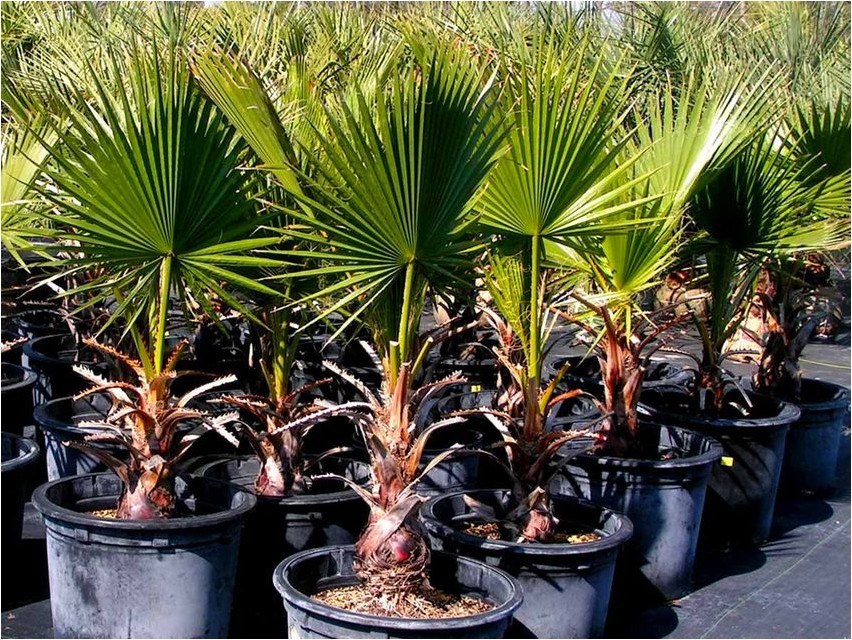
Palms of the genus “Trachycarpus” are very popular among palm enthusiasts for their ability to withstand cold. This is especially important in areas with cool, humid summers and relatively mild winters, with temperatures reaching as low as minus fourteen degrees Celsius. They can even tolerate snow, making them the hardiest of all palm species on Earth.
Being dwarf palms, they are suitable for growing as houseplants.
Varieties
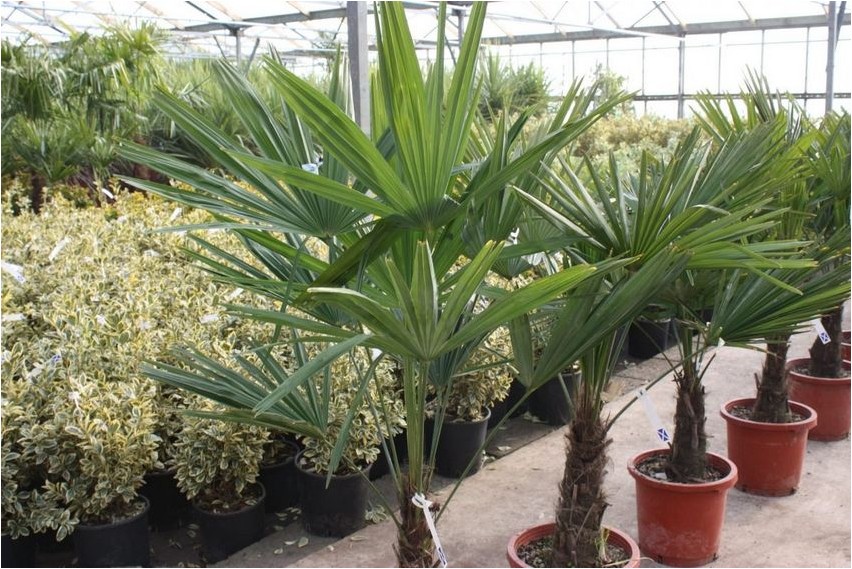
The most widely cultivated species is “Trachycarpus fortunei,” or “Windmill palm,” which is the northernmost palm species on the planet.
Several hardy varieties of the genus Trachycarpus grow outdoors year-round at the New York Botanical Garden, with little or no additional protection.
The species “Trachycarpus wagnerianus”, which is a dwarf form of palm tree, is widely popular. This species is considered a synonym of the species “Trachycarpus fortunei”, it is very similar to it, differing only in smaller and stiffer leaves. The dwarf palm tree has not yet been found anywhere in the wild.
The resulting hybrids between these two species are intermediate in size and fully fertile, that is, fertile, fertile.
Also in cultivation is the species “Trachycarpus takil” (Coumaron palm), which is similar in appearance to “Trachycarpus fortunei”, but is even more resilient.
Other species in the genus are too rare, generally cold intolerant, and have not yet been studied enough to draw conclusions about their full potential.
Usage
In addition to the decorative function in decorating landscapes, the leaf shells of palm trees of the genus Trachycarpus are used in Asian countries to obtain textile fibers, from which very strong ropes and all kinds of household brushes are made. This use gives rise to another popular name for palm trees of this genus — “Hemp-palm” (Hemp palm). The fibrous membrane of the leaves is often used to create stems of artificial palm trees that decorate offices, shops and various institutions.