Field mint
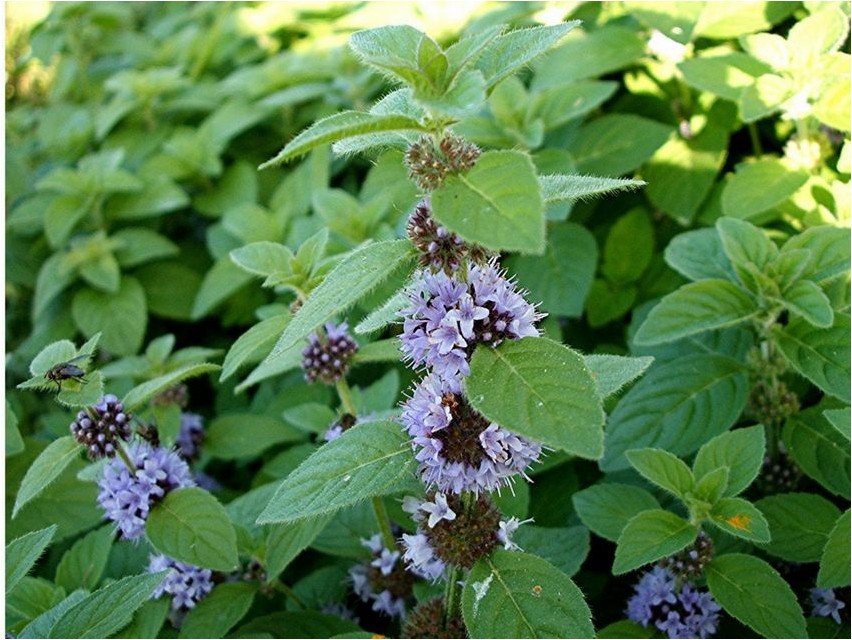
Field mint is one of the plants of the family called Lamiaceae; in Latin the name of this plant will be as follows: Mentha arvensis L.
As for the name of the field mint family itself, in Latin it will be like this: Lamiaceae Lindl.
Description of mint
Field mint is also known by the following popular names: mother mint, wild mint, wild oregano, bog mint, perekop, forest mint and flea mint. Field mint is a perennial herbaceous plant endowed with a rather long creeping rhizome. The stems of this plant can be either erect and ascending, or recumbent. For the most part, such stems are branched, and their height will vary between fifteen and forty-five centimeters. The leaves of field mint will be opposite, ovate, petiolate, serrate-toothed, oblong-lanceolate or oval. Field mint flowers will be colored in pink-purple tones, they are quite small in size, and they will be in dense spherical whorls and quite far apart from each other, which in turn will be located in the axils of the stem leaves. The length of the corolla of this plant is about three to five millimeters, they can be painted in pink-purple or pink tones. The fruits of field mint will consist of four round nuts, which will be enclosed in a cup.
Field mint blooms in summer and autumn. Under natural conditions, this plant is found in Ukraine, Belarus, the Far East, the southern regions of Eastern Siberia, as well as throughout Russia, with the exception of the Far North. For growth, this plant prefers the banks of water bodies, damp meadows, grassy swamps, swampy forests, places along ditches, weedy places and fields. It should be noted that field mint will be cultivated as an essential oil plant.
Description of the medicinal properties of field mint
Field mint is endowed with very valuable healing properties, and it is recommended to use the herb of this plant for medicinal purposes. The concept of grass includes the leaves, flowers and stems of this plant. It should be noted that such raw materials should be harvested during the period from June to September.
It is noteworthy that the biochemical composition of this plant has not yet been fully studied, however, it is known for certain that the herb of mint will contain essential oil, which contains terpene derivatives and menthol. In addition, field mint contains carotene, glucose, ascorbic acid, betaine, rhamnose and the flavonoid hesperidin. It should be noted that the herb of this plant can be used for the same purposes for which peppermint herb is used. But, at the same time, field mint still cannot be called a full-fledged substitute.

This plant is endowed with a very effective diaphoretic, anti-inflammatory, sedative, antispasmodic, analgesic, anticonvulsant, diuretic, carminative, tonic and hemostatic effect.
As for traditional medicine, medicinal products based on this plant are very widely used here. An infusion prepared from field mint has the ability to increase appetite and improve digestive processes, will reduce the increased acidity of gastric juice, stop or reduce both pain and spasms of the stomach and intestines. In addition, this remedy is used for diarrhea, gastritis, dysentery, gastrointestinal colic and atony of the gastrointestinal tract. A decoction of the herb and juice of mint leaves will be used for coughs and whooping cough, as well as for pulmonary tuberculosis.





