Pittosporum
Pittosporum (Latin: Pittosporum) is a genus of shrubs and trees in the family Pittosporaceae. It is also known as Pittosporum.
The genus includes approximately 200 species, native to tropical and subtropical regions, specifically Africa, Southeast and East Asia, Australia, and Oceania. Only one species, Pittosporum tobira, is widely cultivated as a garden and houseplant.
Culture Characteristics
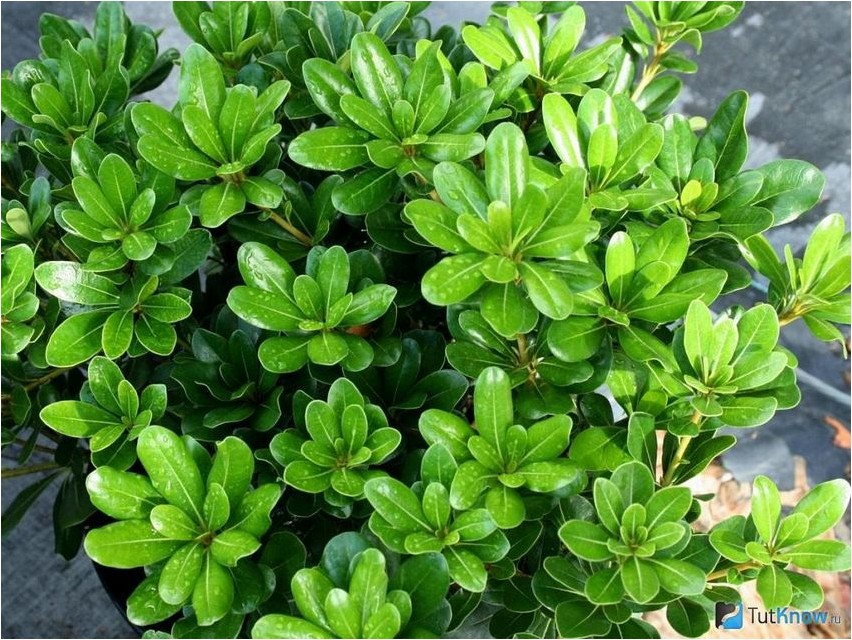
Pittosporum is an evergreen shrub or tree up to 30 m tall. The leaves are simple, green, leathery, slightly toothed or entire, alternate, up to 15 cm long, and arranged spirally. The flowers are small, five-petaled, white, yellow, or red, solitary or gathered in umbels or corymbose inflorescences, axillary or sessile. The flowers have a sweet, distinct aroma. The fruit is a capsule containing numerous seeds covered in a sticky resinous substance.
Growing Conditions
Diffuse light is preferred, avoiding direct sunlight, which can adversely affect the foliage and, moreover, cause severe sunburn. Light shade is acceptable, but the plant will flower poorly in such areas. The optimal temperature for growth and development is 20°C (68°F). Indoor temperatures range from 18°C (64°F) to 22°C (72°F), and from 10°C (50°F) to 15°C (50°F) in winter. High humidity is essential; the plants do not tolerate dry air well. Loose, fertile, moderately moist soil with a neutral pH is desirable. Propagation and Planting
Resinoserum is propagated by seeds and cuttings. Seeds are sown immediately after collection in seedling containers or pots. Seedlings are pricked out when they have two true leaves. The pots are filled with a soil mixture composed of turf, leaf mold, and sand in a ratio of 1:1:1. Resinoserum propagated by seed blooms in the third year after sowing.
Cuttings are taken in the summer. Cuttings are taken from healthy shoots and planted in the same substrate as for seed propagation. The soil in the containers is watered regularly and shaded from direct sunlight. Rooted plants are transplanted into individual 7-9 cm diameter pots and further grown. After a year, the plants can be planted outdoors. It is important to remember that resinoserum is a heat-loving plant. They can withstand temperatures down t o-12°C, so growing them outdoors is only possible in regions with warm climates.

Care
Timely watering using soft, settled water. During prolonged drought, watering is abundant and frequent. Resin seeds grown as indoor crops are watered as the substrate dries; in winter, watering is limited. It is impossible to over-moisten the soil in the tree trunk zone, as this can lead to souring. It is important to regularly spray the plants with warm water. Spraying is carried out in the evening or early in the morning.
Fertilizers are applied during the period of active growth. When growing resin seed in the garden, 2-3 fertilizing is sufficient; in indoor conditions, fertilizing is carried out once every two weeks. It is recommended to use both organic and mineral fertilizers (alternately). Crown pruning is carried out in early spring. Plants respond well to pruning. Pruning is also carried out during intensive leaf shedding.
Resin seed plants are painful to transplant; it is better to limit yourself to standard transshipment. Specimens grown in pots are replanted once a year at the age of 1 to 3 years, and once every three years at the age of 5-10 years. Plants are often affected by various pests and diseases, in particular: mealybugs, false scale insects, spider mites, thrips, as well as fusarium and other types of spotting. It is important to detect the problem in time and carry out treatment.
Resin seed tobira | Life in the South