Indigofera
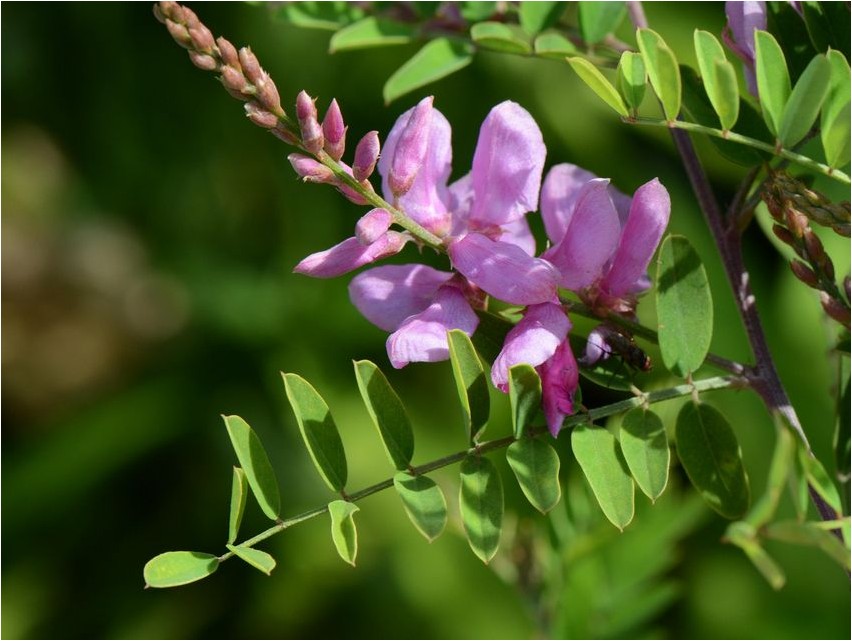
Indigofera (lat. Indigofera) is a genus of flowering plants of the Legume family. Another name is Indigonos. The genus has about 300 species.
The natural range is tropical countries and temperate latitudes of East Asia. In Russia, only one species is cultivated – Indigofera Gerardiana (lat. Indigofera gerardiana), represented by beautiful flowering deciduous shrubs.
Characteristics of culture
Indigofera are herbaceous plants, subshrubs or shrubs. The leaves are imparipinnate, alternate, and consist of short-petiolate, entire leaflets equipped with subulate-shaped stipules. There are forms with simple or trifoliate leaves. The leaves bloom in late May – early June. The flowers are pink, white or purple, moth-type, collected in axillary racemes. The calyx is small, bell-shaped, with five identical teeth, less often one elongated tooth. The fruit is an oblong or linear-oblong bean, often round or spherical, faceted or flat. When ripe, the fruit cracks.
Subtleties of cultivation
Indigofera is a heat-loving plant; it prefers sunny areas with protection from cold northern winds. Soils for growing crops are desirable to be well-drained, loose, moderately moist with a neutral or slightly acidic pH. It is not recommended to plant indigofera in areas with swampy, waterlogged and highly acidic soil.
Indigofera is propagated by seed. Sow seeds in warm greenhouses (in autumn) or in open ground (early spring), followed by picking up seedlings for growing in a warm room or nursery. Summer cuttings are not prohibited. This procedure is carried out in June-July. The cuttings are planted in a nutrient substrate under glass or plastic film. Indigofera grown by sowing seeds blooms in 3-4 years, but with the condition of an optimal climate and careful care.
When growing crops in areas with a temperate climate, the plants freeze to the soil surface with the onset of persistent cold weather, but by June the shoots are restored. Therefore, it is more advisable to prune the shoots annually, leaving 15-20 cm. For the winter, the plants must be mulched with peat or humus; it is not forbidden to cover the indigofera with spruce branches. Young shoots that form in the spring easily tolerate light frosts (this applies to species grown in a temperate climate zone).

Indigofera needs rare watering during long droughts and fertilizing with mineral fertilizers. The second procedure stimulates the formation of flowers, and also affects the size of the inflorescences and the intensity of their color. The culture has a positive attitude towards weeding and loosening of the stem or trunk zone. Mulching is also beneficial.
Application
The beautifully flowering indigofera has long won the love of gardeners living in many parts of the world, including Russia. Subshrubs and shrubs are ideal for landscaping gardens. Plants are often used to create autonalia, or gardens of autumn flowers. Indigofera looks especially harmonious in group plantings. Moreover, it combines with a wide variety of perennial and annual flowers and ornamental shrubs.
Some types of indigofera are used to produce indigo dye intended for dyeing fabrics. Basma, a natural hair dye, is also made from plants. The thing is that indigofera leaves contain indican – a colorless glycoside, which, under the action of enzymes, is split into two substances, one of which, when exposed to air, is oxidized and converted into indigotine. It is this substance that, when mixed with other components, gives the paint a violet-blue tint.
Indigofera is also used in folk medicine. Indigofera tinctures are used to treat wounds and abrasions, boils and skin diseases of various kinds, inflammatory processes in the throat or larynx. Cancer, leukemia and liver diseases are susceptible to the action of indigofera. The plant is famous for its antiseptic properties, so it is used in cosmetology.





