Rowan elderberry
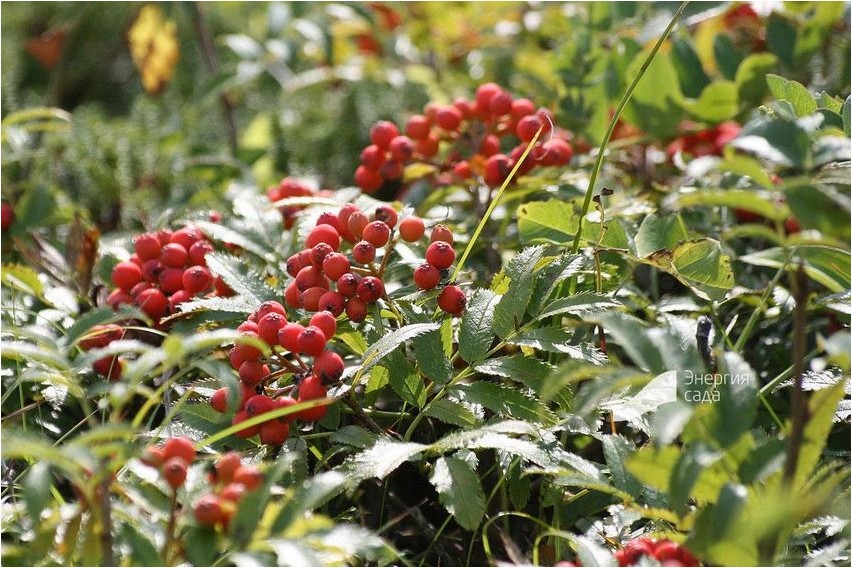
Elderberry is one of the plants of the family called Rosaceae; in Latin the name of this plant will be as follows: Sorbus sambucifolia (Cham. et Schlecht). M. Roem.
As for the name of the elderberry rowan family itself, in Latin it will be: Rosacea Juss.
Description of rowan elderberry
Elderberry rowan is a shrub whose height can reach up to two meters. The young branches of this plant are straight, they are painted in dark brown tones and are endowed with a bluish bloom, while the old branches, in turn, will be yellowish-gray or gray in color with brightly visible lenticels. Almost elderberry rowans are sharp, they will be more or less sticky. The leaves are pinnate, with oval leaflets from seven to fifteen pieces; at the top they are painted in dark green tones, and are paler below. The inflorescence of this plant is a complex shield, which is about five to ten centimeters in diameter. The flowers of elderberry rowan are about twelve millimeters in diameter; they can be either white or reddish in color. The fruits of this plant are juicy and sour, they are endowed with a rather pleasant taste and are colored in bright red tones.
Elderberry rowan blooms from June to July, while fruiting lasts from September to October. Under natural conditions, this plant is found in the Far East, the Kuril Islands, Southern Sakhalin, and the Eastern Arctic. To grow, elderberry mountain ash prefers the undergrowth of forests, and this plant will grow in thickets. It is noteworthy that elderberry rowan is not only a perganos, but also a very valuable honey plant.
Description of the medicinal properties of rowan elderberry
Elderberry rowan is endowed with very valuable healing properties, and it is recommended to use the fruits of this plant for medicinal purposes. The presence of such valuable healing properties should be explained by the content of hyperoside, isoccercitrin, quercetin sophoroside, 3-sophoroside kaempferol, astralgin, cyanogenic compounds amygdalin and prunasin in this plant. The fruits of elderberry rowan will contain carotene, flavonoids, vitamins C and P, as well as parasorbic acid.
In the Far East, the fruits of this plant are used as a very effective antiscorbutic remedy. It is noteworthy that the fruits of the elderberry rowan are edible, and their use will be similar to the common rowan.

For vitamin deficiencies and scurvy, it is recommended to use the fruits of this plant in dried and fresh form as both a therapeutic and prophylactic agent. In addition, such fruits will be included in various vitamin preparations.
The fruits of this plant are indicated for use as a mild laxative, diuretic and high-vitamin agent. In addition, such medicinal elements are used for kidney stones and hypertension, as well as for atherosclerosis.
As for traditional medicine, here this plant is quite widespread. Infusion, tinctures and decoctions prepared from the fruits of this plant are used as a hemostatic, diuretic, mild laxative and appetite improver. For scurvy, dysentery and hemorrhoids, it is recommended to use both the fruits and fresh juice of this plant. In addition, such healing agents are also used as a means to regulate the menstrual cycle.





