Hold-tree
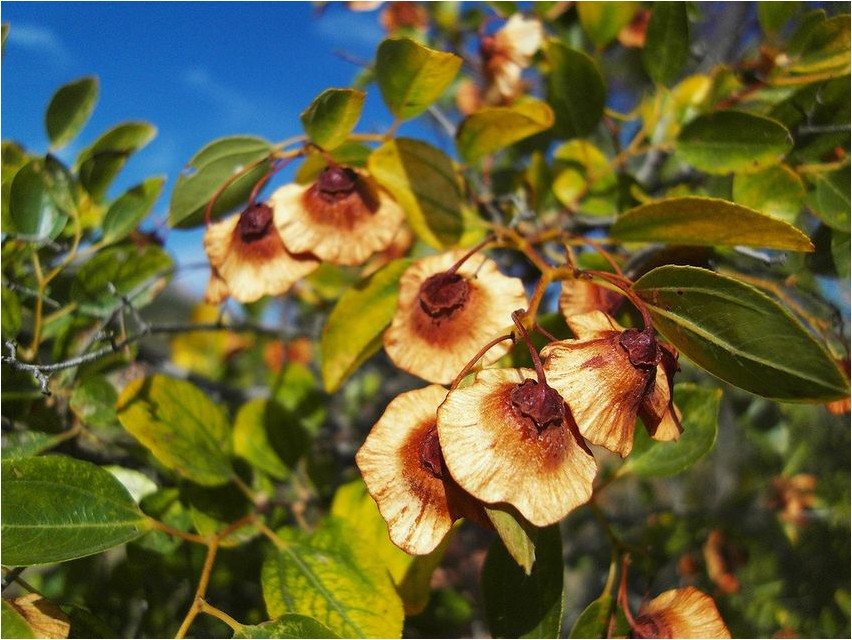
The hold-tree is one of the plants of the family called buckthorn, in Latin the name of this plant will be as follows: Paliurus spina-christi Mill.
As for the name of the tree-tree family itself, in Latin it will be: Rhamnaceae Juss.
Description of the keep-tree
The keep-tree is a shrub whose height can reach three meters. The leaves of this plant are alternate, they are arranged in two rows on branches with rather short petioles; the length of such leaves will be about two to four centimeters, and their width will be one and a half to three and a half centimeters. Such leaves are wide and obovate, such leaves will taper upward; they can be either serrated or entire. This plant has only two stipules, which look like spines. The flowers of the tree are bisexual; they are collected in rather small false umbrellas. The corolla and cup of this plant consist of five leaves, which are colored yellowish-green. This plant has only five stamens, the pistil consists of carpels endowed with a two-three-locular semi-inferior ovary; the fruit of the tree is a hemispherical lignified drupe endowed with two or three seeds. The fruit of this plant is covered with a leathery and semi-lignified woolly disc, colored in yellowish-brown tones, which will increase the size of the tree fruit by two to three centimeters. The seeds are flat and obovate; they will not open even after ripening. The flowering of the keep-tree occurs from May to July. It should be noted that this plant is not only ornamental, but also a very valuable honey plant.
Under natural conditions, this plant can be found in the Crimea, Central Asia and all regions of the Caucasus. To grow, the tree prefers places on pebbles along river banks, and the plant is also found in gorges, on dry gravelly, clayey and rocky slopes up to one and a half thousand meters above sea level. It should be noted that most often this plant prefers to grow in thickets.
Description of the medicinal properties of the tree
The hold-tree is endowed with quite valuable healing properties, and it is recommended to use the bark, fruits, leaves and roots of this plant for medicinal purposes. The presence of such valuable healing properties is explained by the content of alkaloids, saponins, tannins and sucrose in the plant, as well as the following flavonoids: hyperine, rutin and isoquercitrin.
It is noteworthy that a decoction of the roots, fruits and leaves of this plant is used as a diuretic. A decoction and infusion of the leaves and bark of the tree is used for eye diseases and diarrhea. An infusion prepared from the seeds of this plant is recommended to be drunk for various pulmonary diseases.

As for traditional medicine, the fruits of this plant are used as a laxative, as well as for eczema and against high blood pressure. It should be remembered that in high doses this plant can cause irritation of the kidneys and digestive tract. It is noteworthy that the wood of the tree is very suitable for tanning leather. The unripe fruits of this plant turn wool and silk pink, while the ripe fruits turn green.
As a diuretic, it is recommended to take the following remedy based on the tree: to prepare such a remedy, you will need to take one teaspoon of crushed roots in two glasses of water. The resulting mixture should be boiled for five to six minutes, and then left to steep for an hour, after which it is carefully filtered. Take this remedy one tablespoon three to four times a day.





