Alder
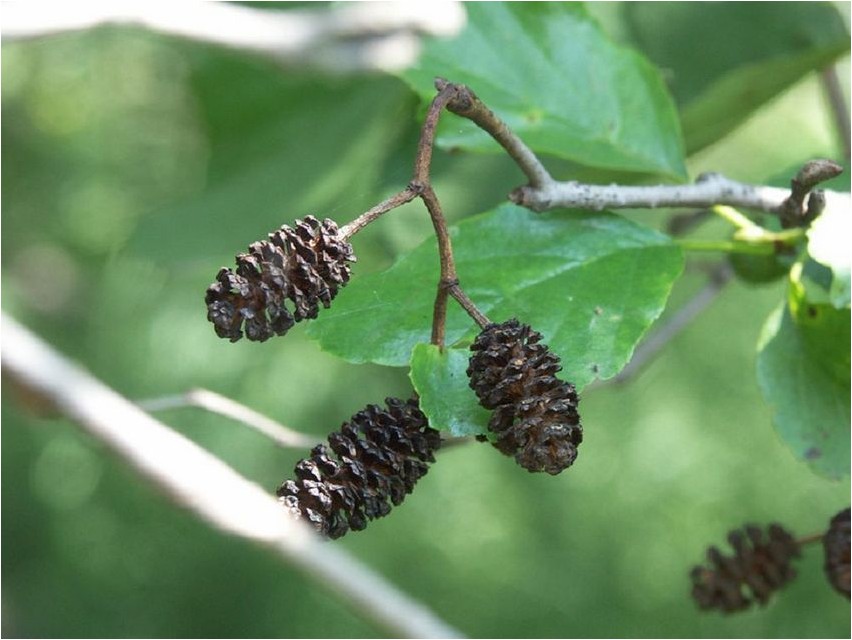
Alder (lat. Alnus) is a genus of woody plants of the Birch family (lat. Betulaceae). The genus is not numerous, numbering about 35 species, represented in nature by monoecious shrubs and trees.
They are able to enrich the soil with nitrogen and heal the wounds of the Earth. They have healing abilities. Fire resistant.
What”s in your name
The Latin name of the plant genus “Alnus” has its roots in the Proto-Indo-European language, which is the ancestor of the most widespread language family — Indo-European. It had the root “EL-“, meaning “red” or “brown”.
From there, through Proto-Slavic, the Russian name of the genus “Alder” comes from.
Description
Plants of the Alder genus are partly reminiscent of plants of the Birch genus, from which they were once separated into an independent genus.
These are, as a rule, deciduous deciduous shrubs and trees that are monoecious plants, that is, both male and female catkin inflorescences are located on one individual. The height of trees can reach just over 30 meters, while shrub species, for example, Green Alder (lat. Alnus viridis), do not exceed 5 (five) meters in height.

The cylindrical shoots are covered with simple, often whole, leaves arranged in regular order on short petioles. Pronounced transverse oblique veins give the leaf edge a wavy-toothed appearance. The shape of the leaf plate is almost round. Some species have pubescent and glandular leaves. Small stipules fall off early.
Flowering in many species begins before the leaves appear, which nature has linked to the method of pollination. After all, flowers are pollinated by the wind, which is easier to do its “work” when the leaves are not in the way. Male flowers, collected in longer catkins, are located in the upper part of the branches, and female flowers form shorter catkins and are located lower on the branch. There are species whose flowers are born in autumn.
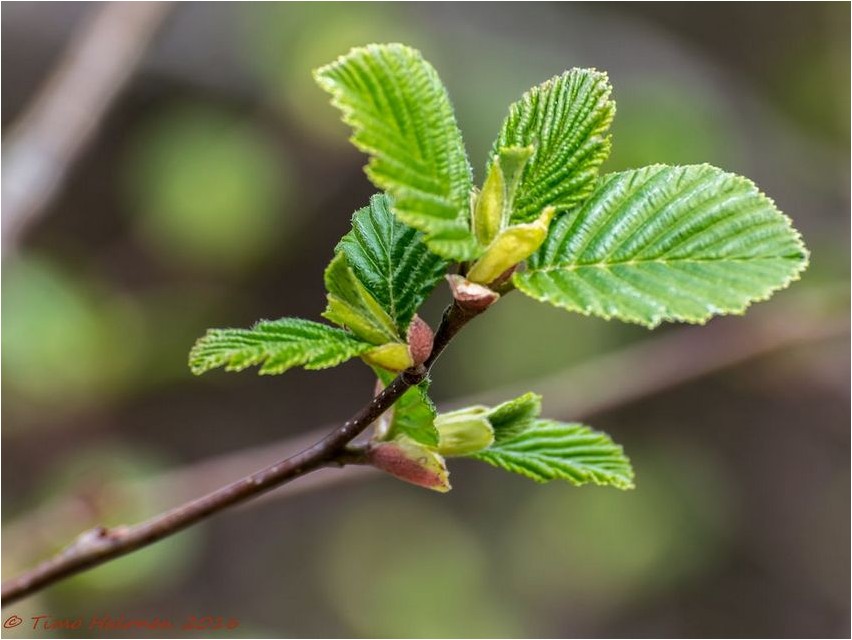
The crown of the growing season is a winged or wingless fruit in the form of a nut with one seed. Lignified female cones, having released their children, remain on the branches for a long time, causing sadness.
The Commonwealth of Alder and Bacteria
As often happens in nature, Alder, like plants of the legume family, is friendly with soil bacteria, which it allows to settle on its roots. A mutually beneficial exchange has been established between them: the tree shares the products of its photosynthesis — sugars — with the bacteria, and the bacteria absorb free nitrogen from the air, converting it into an accessible form for the roots. Thus, Alder provides food not only for itself, but also for its closest neighbors, improving soil fertility.
Research by botanists has shown that shrubby species of Alder enrich the soil with enough nitrogen to transform sterile glacial landforms into fertile soil on which coniferous forests can grow. Alder, along with Birches and Aspens, is the first inhabitant of areas of land disturbed by fires, landslides, and floods. True, later, when coniferous trees come after Alder, which, growing up, shade the sun-loving Alder, it begins to lose its position, giving way to coniferous giants.
Fire resistance of Alder
Alder groves resist the onslaught of fires much more effectively than coniferous trees, often turning into a natural barrier to the spread of fire. A light surface fire does not harm the thin but stable bark of trees, and leaves on branches and fallen leaves do not support the fire”s appetite.
Usage
The earring inflorescences of some Alder species are rich in protein and are quite edible.
Alder wood is used for smoking seafood; guitars and furniture are made from it.
Traditional medicine uses the healing abilities of the bark to treat diseases of the lymph nodes, skin irritations, tuberculosis, and various tumors.
Red and yellow dyes are extracted from the bark.